Germany Armenia relations are older and more tangled than most visitors expect. They include a pastor from Potsdam who tried to stop the deportations of 1915, a linguist from Strasbourg who proved that Armenian is a language branch of its own, a priest-composer who studied in Berlin, and a parliamentary vote in 2016. We are a Yerevan-based team, so this guide sticks to what we could verify and tells you where sources disagree. It also shows what a visitor can actually see in Armenia.
| Question | Short answer |
|---|---|
| Bundestag genocide resolution | 2 June 2016, one vote against, one abstention |
| Best-known German witness | Johannes Lepsius (1858-1926), pastor and orientalist |
| Where to learn more in Germany | Lepsiushaus, Potsdam (memorial and research centre since 2011) |
| Linguist who placed Armenian in Indo-European | Heinrich Hübschmann, 1870s |
| Komitas in Berlin | From 1896, back in Etchmiadzin in 1899 |
| German POW traces | Cemeteries (Abovyan, Gyumri) and post-war construction, details disputed |
| Entry for Germans | Visa-free, up to 180 days per year (as of 2026, check before travel) |
| Flight time from Germany | About 4 to 4.5 hours nonstop |
What role did the German Empire play in 1915?
The German Empire was the Ottoman Empire’s main military ally in the First World War. German diplomats, officers, teachers and missionaries were on the ground and wrote home about what they saw. According to a study of the period, Ambassador Wangenheim’s telegram of 31 May 1915 was the first to report the destruction of the Armenians to the Foreign Office in Berlin. On 6 October 1915 the German government ordered the press to keep silent on the subject until the end of the war.
The Bundestag text of 2016 puts it plainly: the Reich, despite clear information from diplomats and missionaries, did not try to stop the crimes. That is the German view. The Turkish government rejects the term genocide, and you should know that when the subject comes up in conversation. We describe the history as it is documented and leave political arguments to historians.
Who was Johannes Lepsius, and what can you see in Potsdam?
Johannes Lepsius was born in Berlin in 1858 and died in Meran in 1926. After the massacres of 1895-96 he travelled to the region, published a report and founded the Armenian relief organisation in Berlin in 1897. He led the Deutsche Orient-Mission, which published the journal Der Christliche Orient, and the German-Armenian Society.
In 1915 he received permission to travel to the Ottoman Empire, arrived in Constantinople on 24 July and met War Minister Enver Pasha on 10 August. Enver did not accept his proposals. Back in Germany he wrote a confidential report of about 300 pages. In 1916 roughly 20,000 copies were mailed to Protestant pastors and supporters, and German censorship later banned the report. In July 1916 he went into exile in the Netherlands. In 1919 he compiled the document collection Deutschland und Armenien 1914-1918. Historians have pointed out that it was edited, so read it with that in mind. Franz Werfel called him the guardian angel of the Armenians.
The Lepsiushaus in Potsdam is the villa where he lived and worked from 1908 to 1926. It opened as a memorial and research centre in 2011 and hosts exhibitions, lectures and conferences. Opening times change, so check before a visit.
Who else documented what happened?
Armin T. Wegner served as a medical orderly on the staff of Field Marshal von der Goltz and took photographs on the march from Constantinople towards Baghdad. These images later helped inform the European public about the deportations.
Martin Niepage, a German teacher in Aleppo, helped Lepsius with the 1916 mailing and was later sentenced to death in absentia by the Ottoman government.
What did the Bundestag decide in 2005 and 2016?
On 15 June 2005 the Bundestag adopted a cross-party motion on remembering the expulsions and massacres of 1915 and referred to the “inglorious role” of Germany. The 2016 resolution went further. It is titled “Erinnerung und Gedenken an den Völkermord an den Armeniern und anderen christlichen Minderheiten in den Jahren 1915 und 1916” and was adopted on 2 June 2016 with one vote against and one abstention.
It names the events genocide, covers Assyrian-Aramaic and Chaldean Christians as well as Armenians, and stresses the co-responsibility of the German Reich. In Yerevan, German politicians visit Tsitsernakaberd from time to time. In June 2023, for example, Bundestag foreign affairs chair Michael Roth visited the memorial.
Which German traces can you find in Armenia itself?
After the Second World War, German prisoners of war were held in the Armenian Soviet Republic and worked on building sites. We have to be careful here, because sources are uneven. The Lazarev sanatorium in Arzni, in the Hrazdan Gorge near Yerevan, is often described as having been finished with POW labour. It is abandoned, and we do not recommend entering such buildings. Local nicknames such as “German quality” circulate for Soviet-era buildings, but we could not verify which Yerevan buildings were really built by prisoners, so we name none.
Graves are better documented. The Volksbund lists a war cemetery in Abovyan with 97 prisoners of war, enclosed by granite and basalt and restored in 1999. A local explorer’s account describes a larger cemetery in Gyumri with 369 German graves; treat that number as unconfirmed.
The living link is the Goethe-Institut. A Goethe Centre was announced in Yerevan in December 2017, and in August 2026 Armenian media reported an agreement between the Education Ministry and Goethe-Institut Armenia on German teaching and testing. The institute lists German courses from A1 to C2 and an address on Moskovyan Street; check goethe.de for current details.
How did German scholars and musicians shape Armenian culture?
Heinrich Hübschmann (1848-1908) held the chair of comparative philology in Strasbourg from 1877. He showed that Armenian is an independent branch of Indo-European and not a dialect of Iranian, in a lecture published in 1875 and an article in 1877. In 1897 he published Armenische Grammatik I, an etymological work. He also translated the historian Sebeos in 1875.
Komitas travelled to Berlin in 1896. He studied at Richard Schmidt’s private conservatory and, a few months later, at the Friedrich-Wilhelms-Universität, today’s Humboldt University. His teacher Oskar Fleischer founded the Internationale Musikgesellschaft in 1898, with Komitas as a founding member. His article on Armenian church music appeared in the society’s first volume in 1899, the year he returned to Etchmiadzin.
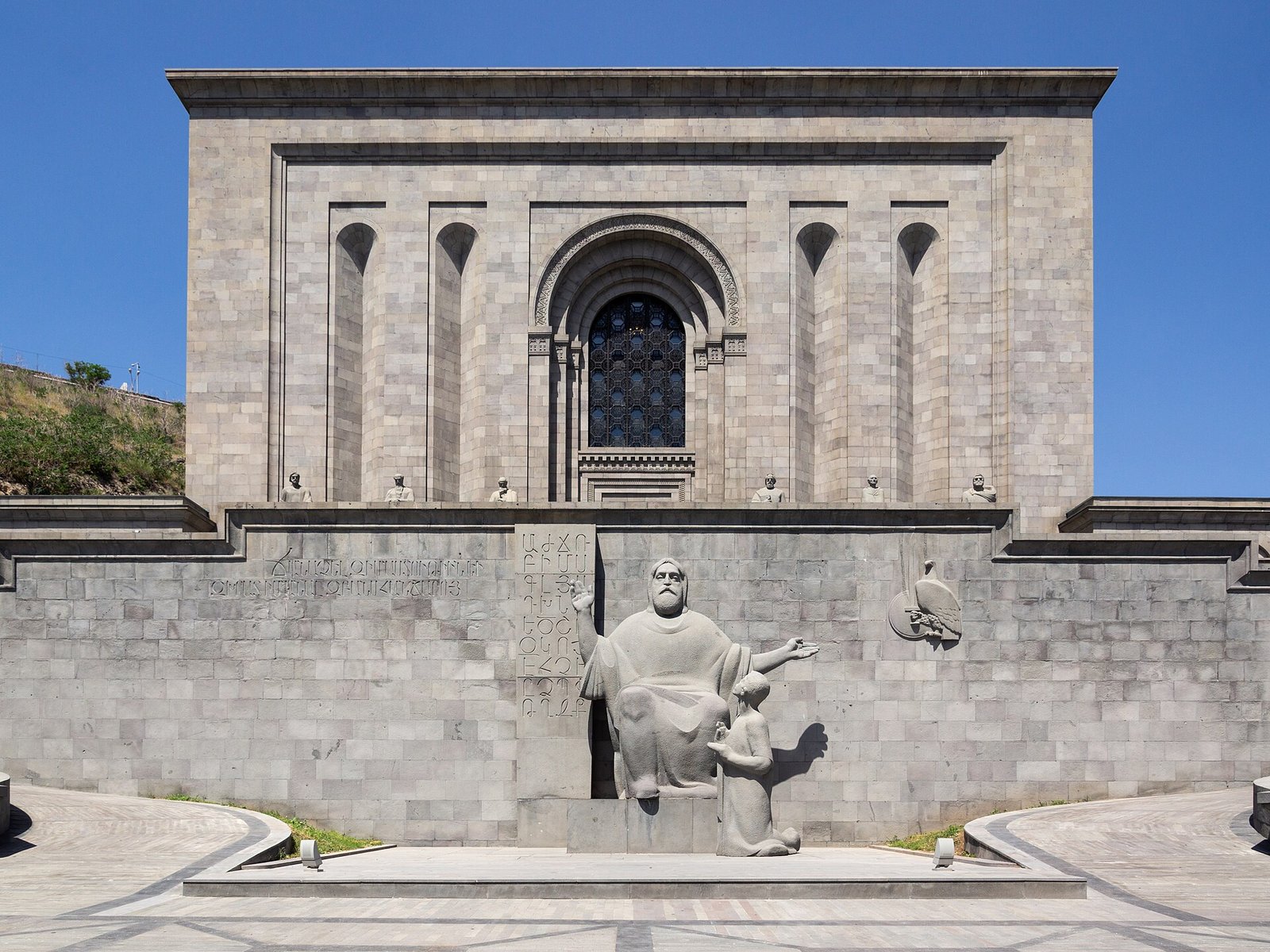
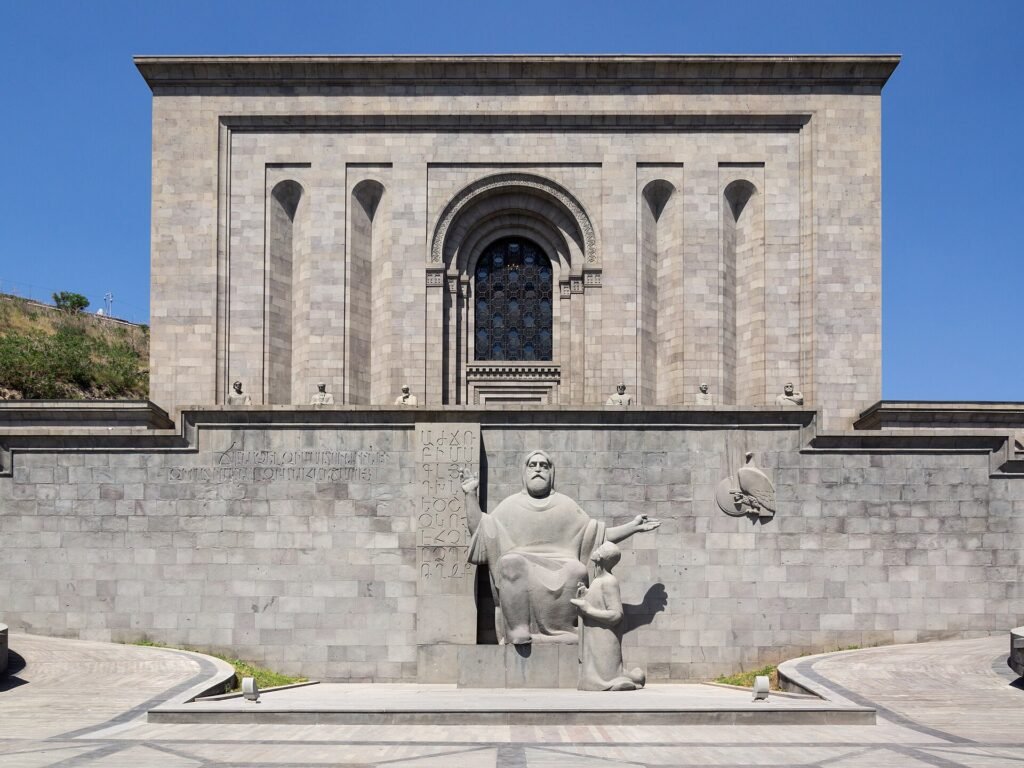
To see the written culture these scholars worked with, visit the Matenadaran in Yerevan, which holds tens of thousands of manuscripts. As of 2026 it is open Tuesday to Saturday, roughly 10:00 to 18:00; check the fee and booking rules for foreign-language tours in advance.
How big is the Armenian community in Germany?
Numbers are uncertain. In 2015 the Armenian embassy in Berlin estimated 50,000 to 60,000 ethnic Armenians in Germany. Some sources give up to about 100,000. The federal statistics office counted 32,815 Armenian citizens in 2024, which is lower because many people of Armenian descent came from Turkey, Iran, Syria or the former Soviet Union and hold other passports.
The seat of the Armenian Church’s diocese in Germany is the Surp Sahak Mesrop church in Cologne, whose community moved in during 1989. If you travel with German friends of Armenian descent, they may already know the churches and cultural associations in Berlin, Hamburg, Cologne and Munich better than any guidebook.
How do you fit this into a trip from Germany?
Our flights guide lists nonstop options from Frankfurt, Dortmund, Memmingen, Hamburg, Cologne and Berlin, some of them seasonal. Flight time is about 4 to 4.5 hours. Check the current timetable before booking. Germans can enter visa-free for up to 180 days per year; the details are in our step-by-step planning guide, and remote workers will find visa and cost notes in the digital nomad guide.
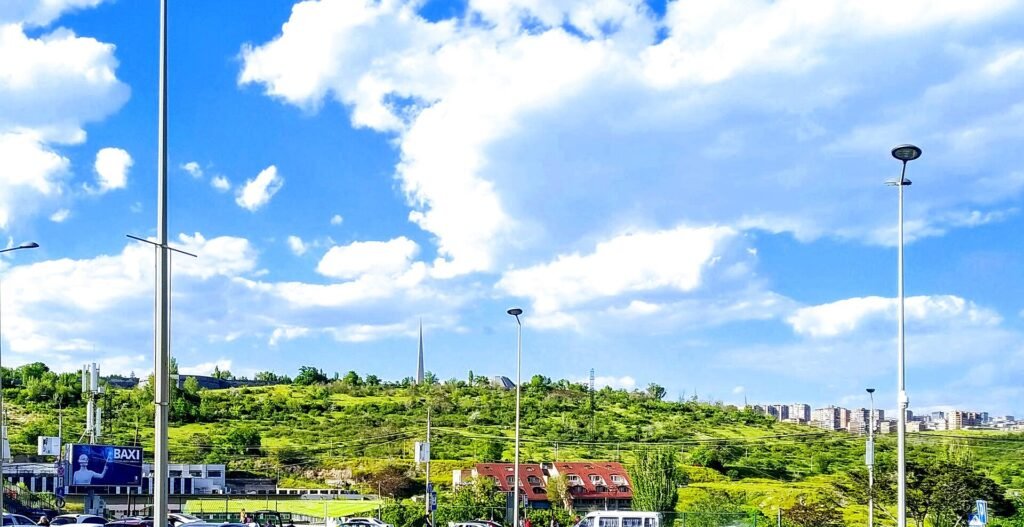
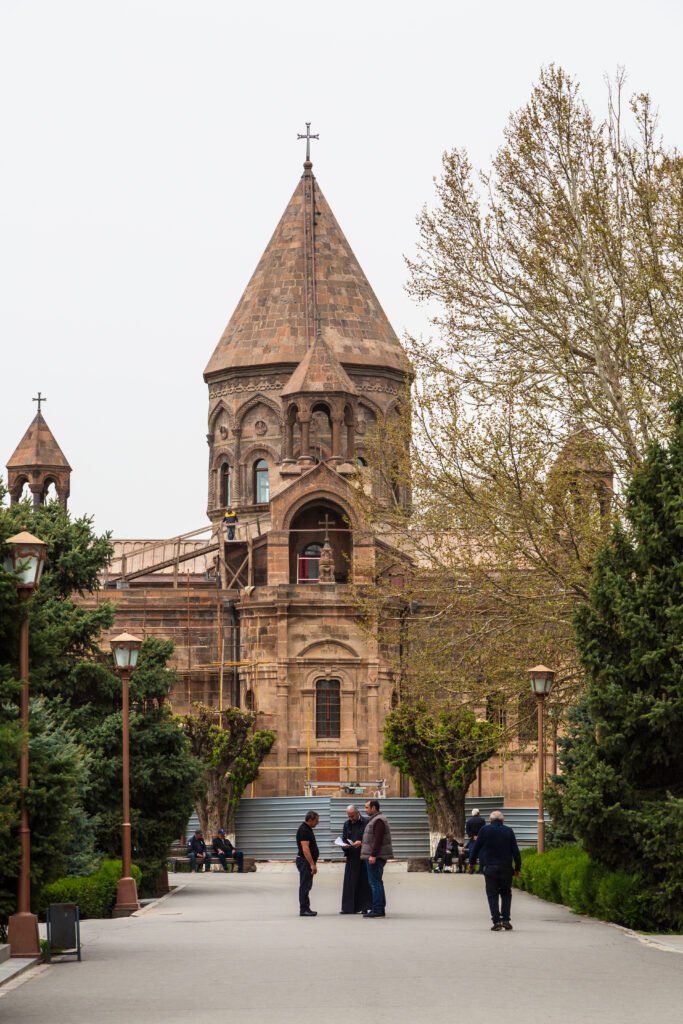
A good half day in Yerevan combines Tsitsernakaberd (the memorial dates from 1967, the museum from 1995; admission has been free, closed Mondays) with the Matenadaran. Our article on Tsitsernakaberd, Matenadaran and other Yerevan museums has the practical details. Add Etchmiadzin if you have a car or a tour. Manners at memorials and churches are covered in our culture and etiquette guide, and the general overview is in the Armenia travel guide 2026.
What are the limits, and who might skip this?
This is not a German heritage trail. Most of the German-Armenian story happened in Berlin, Potsdam, Strasbourg and Constantinople, not in Armenia, and the physical traces in Armenia are modest: memorials, manuscripts, cemeteries and the Goethe-Institut. If you want landscapes and monasteries only, you can skip the deeper history and still enjoy a trip.
If you do raise the subject with Armenian hosts, ask respectfully and listen. Avoid debating terminology or comparing it to the current conflict with Azerbaijan. Many Armenians appreciate that Germany has acknowledged its own role, but individual opinions differ. Note also that opening times, fees and flight routes change, and we have marked the points where you should check locally.
Want to see Yerevan’s memorials, manuscripts and cathedrals with a local guide? Browse our small-group and private tours, or start with the Yerevan city walking tour and ask us for a tailor-made route via the contact page.
Frequently asked questions
When did the Bundestag recognise the Armenian Genocide?
On 2 June 2016 the Bundestag adopted a resolution that uses the word genocide (Völkermord) for the 1915-1916 events and stresses the German Reich's co-responsibility as the Ottoman Empire's main military ally. There was one vote against and one abstention.
Who was Johannes Lepsius?
A German pastor and orientalist (1858-1926) who documented the persecution of Armenians, travelled to Constantinople in 1915 and circulated a long report in 1916. His house in Potsdam is now a memorial and research centre.
Can I visit Armenian sites as a German traveller without a visa?
German citizens can enter Armenia visa-free for up to 180 days per year, with a passport valid for the whole stay. Rules can change, so check the Armenian foreign ministry or your own foreign office before you travel.
Are there German war graves in Armenia?
Yes. The Volksbund Deutsche Kriegsgräberfürsorge lists a prisoner-of-war cemetery in Abovyan with 97 dead, restored in 1999. Other POW graves exist, for example in Gyumri, but counts differ between sources.
How many Armenians live in Germany?
Estimates vary widely. The Armenian embassy in Berlin gave 50,000 to 60,000 in 2015, some sources say up to about 100,000, while official statistics count only Armenian citizens, around 33,000 in 2024.