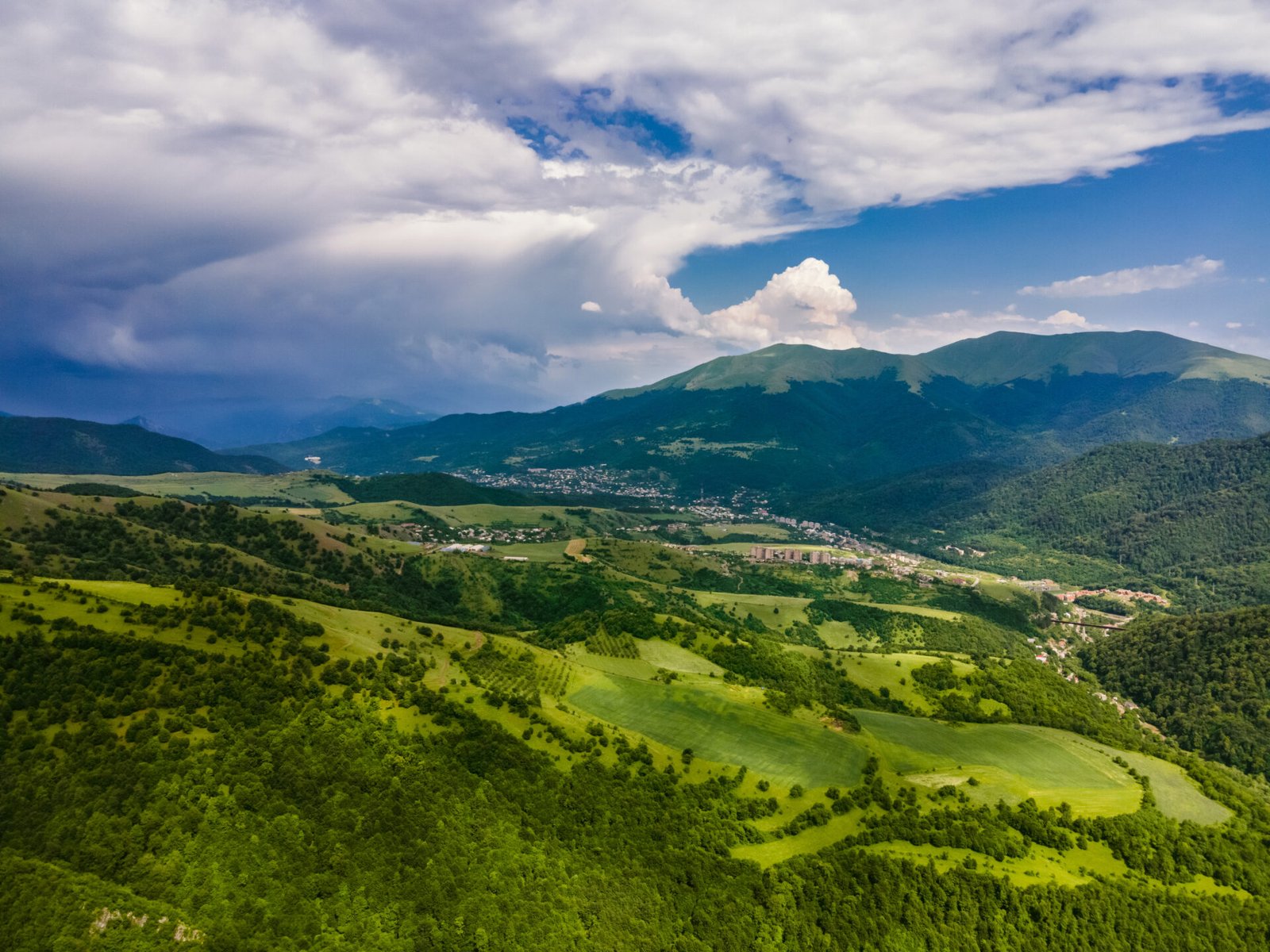
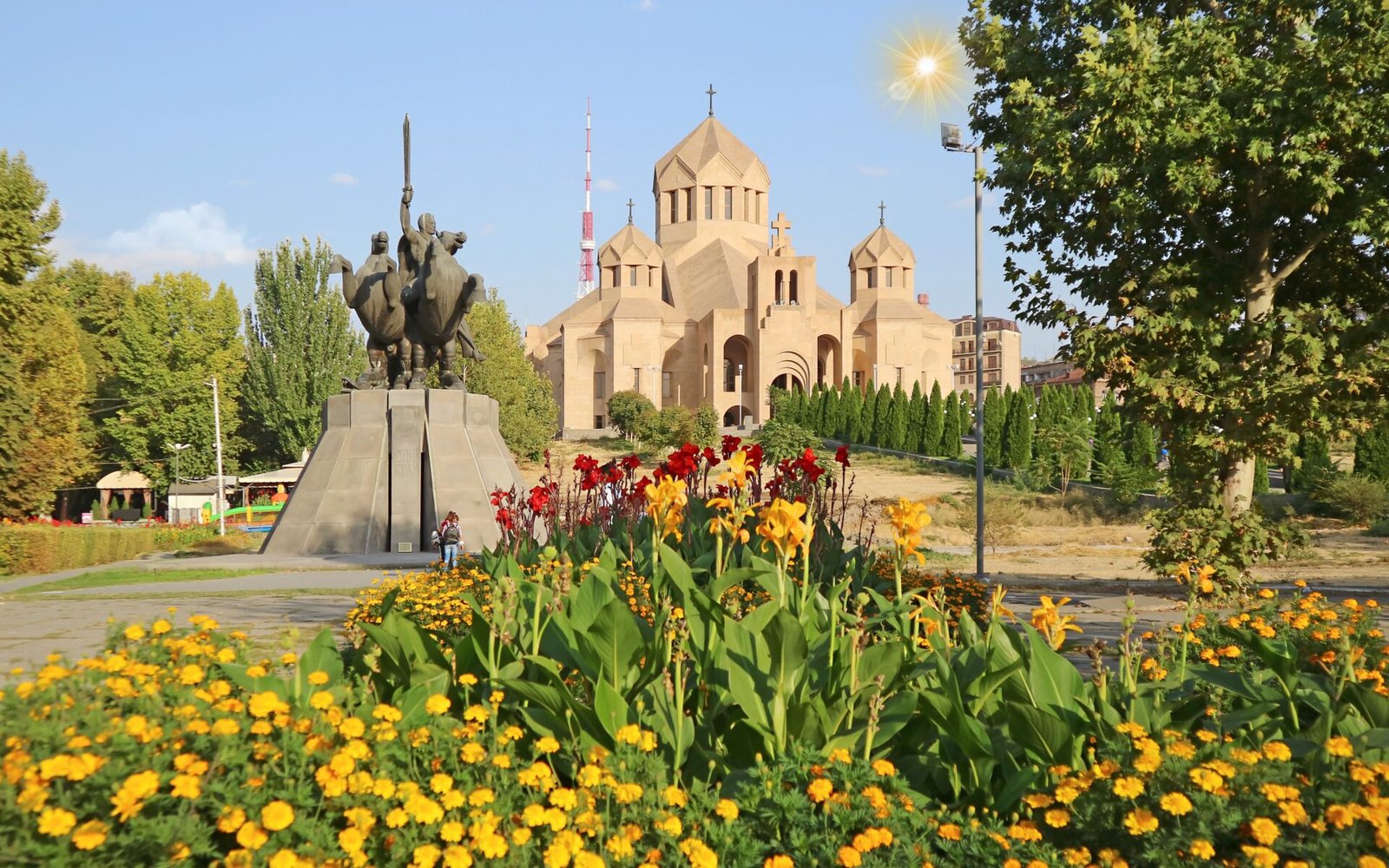
Weather in Armenia is mostly a question of altitude. The country sits on a high plateau: about three quarters of its territory lies between 1,000 and 2,500 m, and the average height is roughly 1,850 m. So the same day can bring 35 °C in Yerevan and a cold, windy drizzle at Lake Sevan, only one to one and a half hours away by road. This guide covers the climate region by region, with typical numbers rather than forecasts. For the month-level view of when to go, see our best time to visit Armenia guide.
| Question | Short answer |
|---|---|
| Climate type | Highland continental: hot dry summers, cold winters, large swings between day and night. |
| Yerevan in July | Typically around 33 °C (91 °F) by day and 19 °C at night; 40 °C days happen in most summers. |
| Yerevan in January | Typically about 0 to 3 °C by day and -6 °C at night, mostly dry, with occasional snow. |
| Gyumri (about 1,500 m) | July around 27 / 13 °C, January around -3 / -13 °C (day / night). |
| Driest areas | Ararat valley and the Meghri area: roughly 200 to 300 mm a year. Mountains get 800 mm or more. |
| Wettest period | Late spring (May is the wettest month in Yerevan), with a smaller wet spell in October and November. |
| Mountain snow | Typically from late October or November to April; high passes can close in storms. |
| Safest seasons for most trips | May to June and September to October, but check the forecast; years differ. |
How does altitude shape the weather in Armenia?
Rule of thumb: the higher you go, the cooler and wetter it gets, and the earlier winter arrives. Yerevan lies at roughly 900 to 1,000 m, Gyumri at about 1,500 m, Lake Sevan at about 1,900 m and Jermuk at about 2,000 m. Mount Aragats reaches about 4,090 m. One official-style summary puts the national July average at 16 to 17 °C, but 24 to 26 °C in the Ararat valley, which shows how much the average hides.
Rain follows the same logic. The national average is somewhere around 550 to 600 mm a year, yet the Ararat valley and the Meghri area get only around 200 to 250 mm, and high mountains more than 1,000 mm. Different weather datasets disagree by a degree or two and by a few tens of millimetres, so treat every figure below as typical, not exact. Armenia has also been warming, so older guidebook numbers tend to be on the cool side.
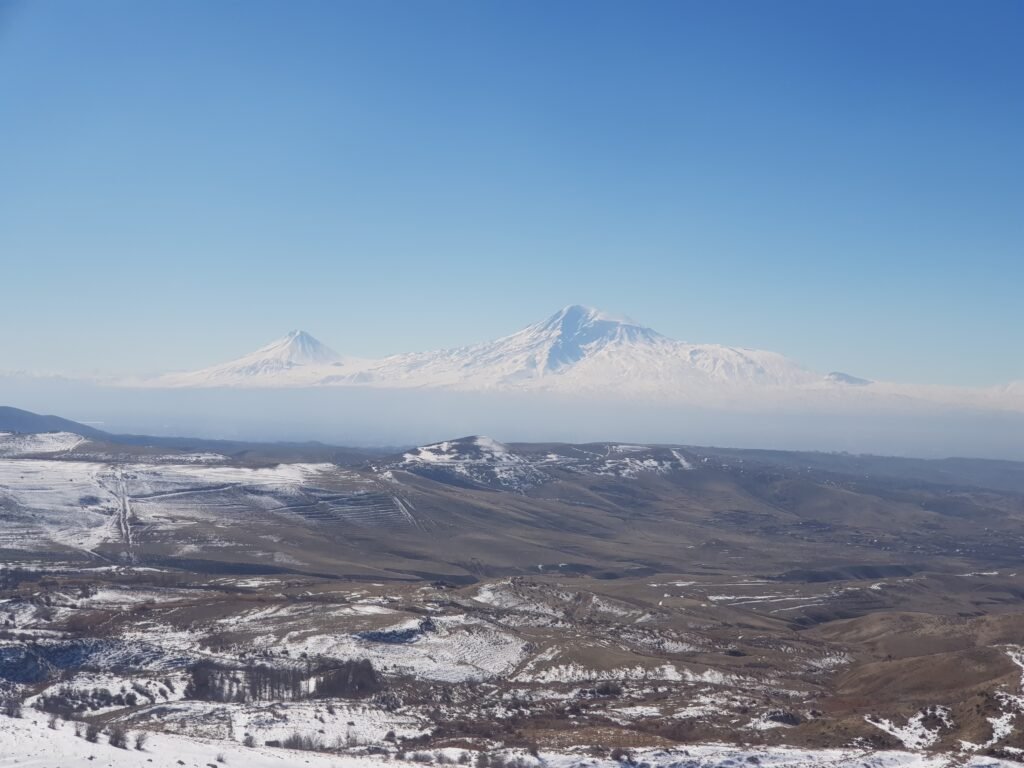
What is Yerevan’s weather month by month?
These are rounded 1991 to 2020 style normals for Yerevan: typical afternoon high, typical night low and rainfall. The wettest and driest months are the useful part.
| Month | High / low (°C) | Rain (mm) | What to expect |
|---|---|---|---|
| January | 1 / -6 | 25 | Cold, mostly dry, occasional snow, winter smog possible |
| February | 4 / -4 | 23 | Cold, snow melts and returns |
| March | 11 / 1 | 33 | Changeable, first warm days |
| April | 18 / 7 | 46 | Mild, showers |
| May | 23 / 11 | 48 | Pleasant, wettest month, storms and hail possible |
| June | 28 / 16 | 28 | Warm to hot, long sunny days |
| July | 33 / 19 | 15 | Hot and dry, 40 °C possible |
| August | 33 / 19 | 8 | Hottest and driest |
| September | 28 / 14 | 10 | Warm, dry, excellent for sightseeing |
| October | 21 / 9 | 23 | Mild, cooling quickly |
| November | 12 / 2 | 30 | Cool, grey spells, early snow in the hills |
| December | 3 / -3 | 23 | Cold, smog on still days |
How hot does it get in summer?
Hot enough to plan around. Armenia’s hydrometeorological centre has noted that 40 °C, once seen about every five years, now occurs in most summers, and that heat waves since 2010 have lasted about 5 to 7 days on average. In the extreme summers of 2017 and 2018, 40 to 42 °C held in Yerevan and the Ararat valley for 10 to 15 days. The highest temperature ever recorded in Armenia is 43.7 °C, in summer 2011.
The heat is dry, which makes mornings and evenings pleasant. In July and August we start sightseeing early, rest in the afternoon, and move higher: Lake Sevan in summer is roughly 10 degrees cooler than the capital, and the swimming season is mostly July and August.
What are the mountains like, month by month?
Gyumri is a good stand-in for the northern highlands at about 1,500 m. At Sevan and Jermuk (about 2,000 m) subtract another couple of degrees and expect more snow and wind.
| Month | Gyumri high / low (°C) | What to expect above 1,500 m |
|---|---|---|
| January | -3 / -13 | Deep cold, snow cover, icy roads |
| February | -2 / -12 | Snowiest month in several datasets |
| March | 5 / -6 | Thaw, mud, snow still on high passes |
| April | 13 / 1 | Spring showers, snow above 2,000 m |
| May | 18 / 5 | Greening, wettest period, hail and storms |
| June | 23 / 8 | Alpine meadows open up, afternoon thunderstorms |
| July | 27 / 13 | Warm days, cool nights, best hiking |
| August | 27 / 12 | Stable, clearest weather |
| September | 23 / 7 | Crisp, clear, first frosts at altitude |
| October | 16 / 1 | Autumn colour, first snow on the highest ground |
| November | 8 / -4 | Snow arrives, short days |
| December | 0 / -10 | Winter sets in, ski season opens |
What about Sevan, Syunik and Meghri?
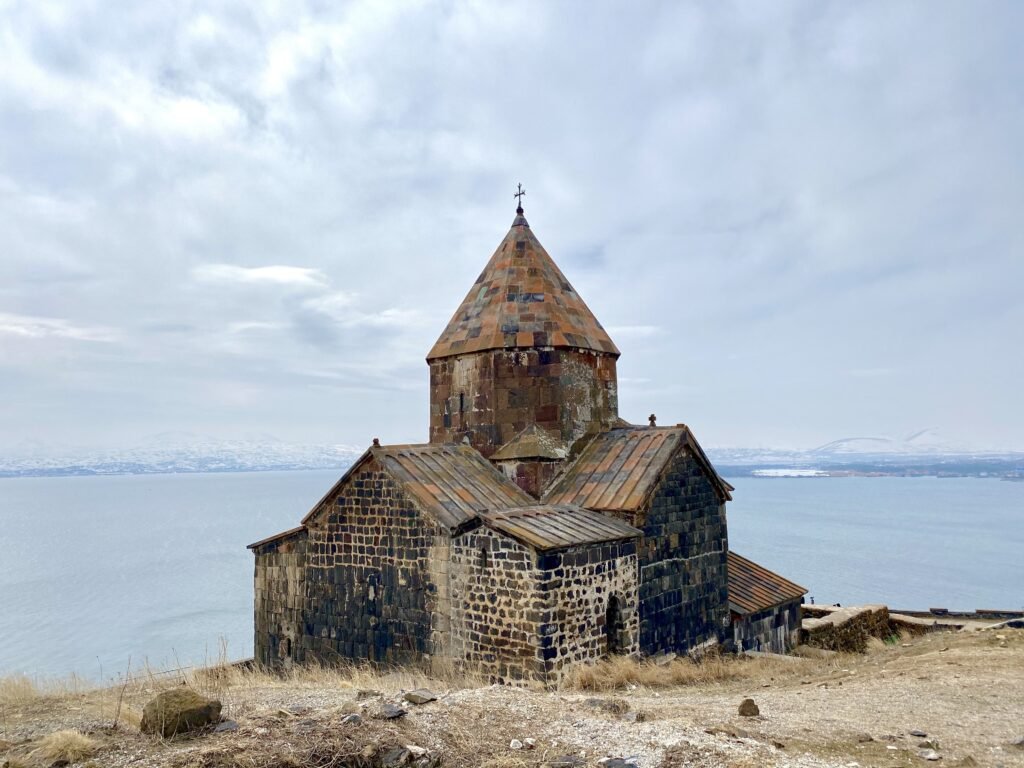
Sevan is the cool one. Typical July highs are around 20 to 23 °C with nights near 14 °C, January is around -7 to -1 °C, and the basin is windy: an older Ramsar description gives average winds around 6 m/s in winter. The lake freezes over in winter, with ice from late January to early April in that description. Sunshine is strong, with about 2,600 to 2,800 hours a year, so a cold breeze and a sunburn can arrive together.
In the south, Goris, Sisian and the Vorotan area sit around 1,300 m or higher and get real winters (a weather-model average for a village near Goris shows snow from about late October to early April). Down at Meghri, roughly 600 m on the Iran border, summers are the hottest in the country, July averages around 27 °C, annual rain is only about 280 to 320 mm, and mild winters let gardens bear fruit that struggles elsewhere. People sometimes call it subtropical, but winters can still bring snow: a road report from March mentioned snow in Meghri.
When do snow and storms close the roads?
Two passes matter. The Vardenyats (Selim) Pass between Sevan and Vayots Dzor is about 2,410 m, and the Vorotan Pass near Sisian, on the road to Goris, is about 2,344 m. Armenian road reports regularly mention the Vardenyats Pass closing or becoming hard to pass in snowstorms in winter and even in March. Drivers are advised to use winter tyres, and black ice is common on the Sisian to Goris road.
Practical points: snow can start in the mountains in late October or November and linger into April, higher routes such as Aragats can still hold snow in early summer, and the Ministry of Emergency Situations publishes road conditions. If you are on a tour with us, we check this and adjust the route. See also Armenia in winter and our ski guide.
Which weather hazards matter for hikes and drives?
- Afternoon storms and hail: late spring and early summer bring thunderstorms; a 2013 hailstorm caused an estimated US$60 million of damage, mostly to farms. On Aragats start early and be off the ridge by early afternoon (see Aragats and Lake Kari).
- Wind and cold at Sevan: carry a windproof layer even in July.
- UV: the WHO notes that UV rises with altitude and is reflected by fresh snow, so sunscreen, sunglasses and a hat matter at 2,000 m or more.
- Low visibility: snowstorms and cloud can cut visibility on mountain roads.
- Winter smog: Yerevan’s air quality problem is mainly a winter one, when still air and a temperature inversion trap pollution; officials say spring, summer and early autumn are mostly fine.
Which weather suits which kind of trip?
- City and monasteries: mid-April to June and September to October.
- Swimming at Sevan: July and August (details in our Sevan water temperature guide).
- High-altitude hiking: roughly July to mid-September; see hiking in Armenia.
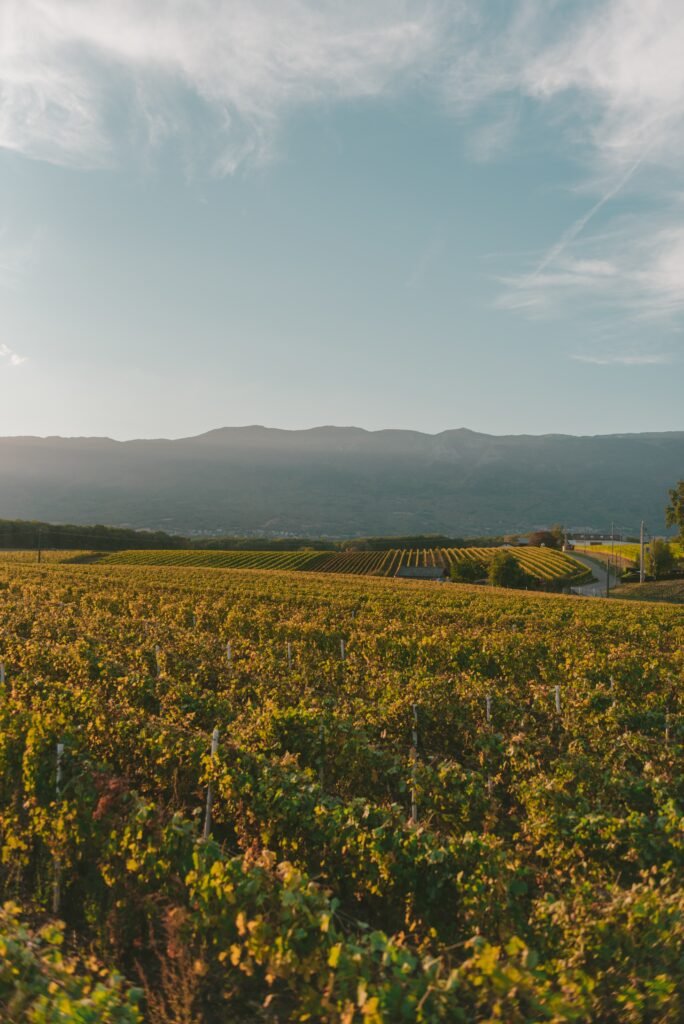
- Wine harvest and colour: September and October.
- Skiing and snowy monasteries: December to March.
What should I pack for each season?
Spring: layers and a light rain jacket. Summer: sun hat, sunscreen, light long sleeves and a warm layer for evenings and Sevan. Autumn: layers again, plus a fleece for mountain mornings. Winter: warm coat, gloves, boots with grip. The complete list is in our Armenia packing list.
Who should plan more carefully?
Travellers who dislike heat should avoid Yerevan in the middle of July and August, or keep afternoons free. Anyone driving a rental car into the mountains between November and April should expect closures and need winter tyres. Heat waves and early snow do not follow the calendar, and what we give here are typical ranges, not forecasts: check a current forecast and local road information a few days before you go.
If you would rather leave the weather checks to someone local, our small-group and private tours across Armenia are timed and routed around the conditions. Tell us your dates through the contact page and we will suggest what works best that week.
Frequently asked questions
What is the weather like in Armenia?
Armenia has a highland continental climate: hot, dry summers and cold winters, with big differences by altitude. Yerevan's typical July high is around 33 °C, while Gyumri, Sevan and Jermuk are noticeably cooler and snow lies in the mountains for months.
How hot does Yerevan get in summer?
A typical July afternoon in Yerevan is around 33 °C, and heat waves of 40 °C or more now happen in most summers according to Armenia's hydrometeorological service. The recorded national maximum is 43.7 °C, set in 2011.
Does it snow in Yerevan?
Yes, but usually only a few days a winter and it rarely stays long. In the mountains, snow typically lies from around November to April, and the Vardenyats (Selim) Pass at about 2,410 m is sometimes closed by storms.
Which region of Armenia is the warmest?
The Ararat valley around Yerevan and the far south around Meghri (roughly 600 m) are the warmest and driest areas, with about 200 to 300 mm of rain a year. Meghri has recorded about 43.7 °C.
When is the best weather for sightseeing?
For most trips, May to June and September to October give warm days without Yerevan's peak heat. Check the forecast for the exact week, because conditions vary from year to year.