Understanding Armenian culture and etiquette turns a good trip into a memorable one. The rules are not complicated, but they are real: you will be fed relentlessly, drink on someone else’s timetable, take your shoes off indoors, and at some point be asked what you think about 1915. Here is what to expect and how to handle it gracefully.
Hospitality is not a courtesy here, it is an obligation
The Armenian word hyurasirutyun translates as hospitality, but the concept behind it is closer to duty. A guest in the house confers honour on the host, and a host who fails to feed that guest into immobility has failed publicly. This is not performance for tourists. It is how people treat each other, and you have simply walked into the middle of it.
Practically, this means that offers are not polite gestures to be waved away. If a stranger at a village church invites you for coffee, they mean it. If a guesthouse owner puts out food at eleven at night because you arrived late, arguing is worse manners than eating. The single most useful adjustment a European visitor can make is to say yes more often than feels reasonable.
| Situation | What is expected |
|---|---|
| Entering a home | Shoes off, slippers on, bring something |
| Being offered food | Accept; refusing outright reads as rejection |
| Drinking at a meal | Wait for the toast; never drink alone |
| Toasting with beer | Avoid it; beer is not for serious toasts |
| Entering a church | Shoulders and knees covered, quiet, no hats for men |
| Photographing people | Ask first, especially older people and clergy |
| Flowers as a gift | Odd numbers only |
| Splitting the bill | Rare; someone will insist on paying, let them sometimes |
The table, the toasts and the tamada
A proper Armenian meal is not a meal with drinks; it is a structured event with its own officer. The tamada, a role inherited from the wider Caucasus, is the toastmaster. He is appointed, usually the eldest man or the most rhetorically gifted, and he controls the drinking absolutely. You do not sip your wine or brandy whenever you like. You wait for the toast, everyone raises together, and everyone drinks together.
The toasts follow a rough order that varies by family but usually opens the same way: to peace, to this gathering, to the parents, to those who are no longer with us, and only later to the guests, to the women at the table, to friendship between our countries. The toast to the dead is drunk seriously and often standing, and it is not the moment for a joke.
Two things worth knowing. First, never toast with beer. Beer is for sitting in a garden on a hot afternoon; serious toasts are made with wine, brandy or homemade fruit vodka called oghi. Second, if you are asked to make a toast, and as a foreign guest you will be, keep it short, thank the host by name, say something true about the place or the people, and raise your glass. Nobody expects eloquence in a second language. They expect that you tried.
On the drink itself: Armenian brandy carries enormous national pride, wine is going through a serious revival covered in our Armenian wine guide, and homemade oghi made from mulberries or apricots is far stronger than it tastes. You can slow down. Sip instead of downing, keep your glass topped so it cannot be refilled, and blame an early start tomorrow.
Being fed: the campaign against your appetite
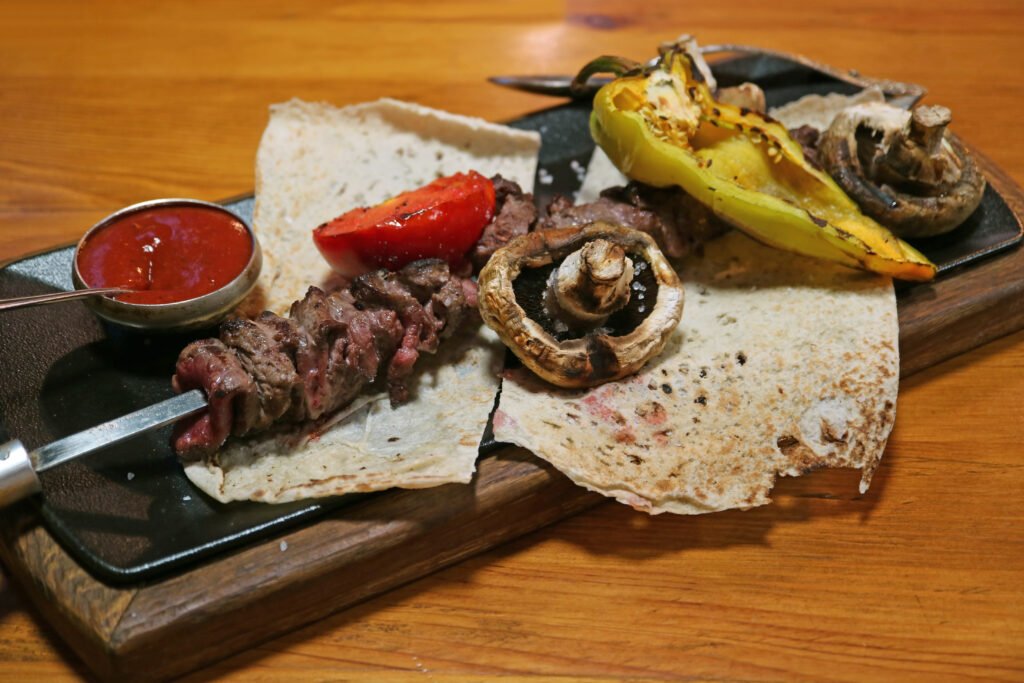
Armenian tables are loaded before anyone sits down, with a dozen small plates of cheeses, greens, pickles, salads and lavash, and this is not the meal. This is the prelude. The meal arrives afterwards, usually grilled meat, and then fruit, and then cake, and then coffee, and then possibly more cake.
Your tactics, learned the hard way:
- Take small portions of everything rather than large portions of anything. Enthusiasm for variety counts more than volume.
- Never clear your plate completely. An empty plate is an invitation, and it will be filled.
- Praise specific dishes by name. This delights the cook and slows the pace.
- Say you are full early and often. It will be treated as politeness rather than fact, but repetition eventually works.
- If you have dietary restrictions, say so at the start and be clear. Vegetarianism is understood; “no meat” sometimes still arrives with chicken, so specify. Armenian food has superb vegetable dishes, as our Armenian food guide explains.
Church etiquette
Armenian churches are working places of worship, not museums, even the medieval ones on empty hillsides. The Armenian Apostolic Church is one of the world’s oldest Christian institutions and matters enormously to national identity.
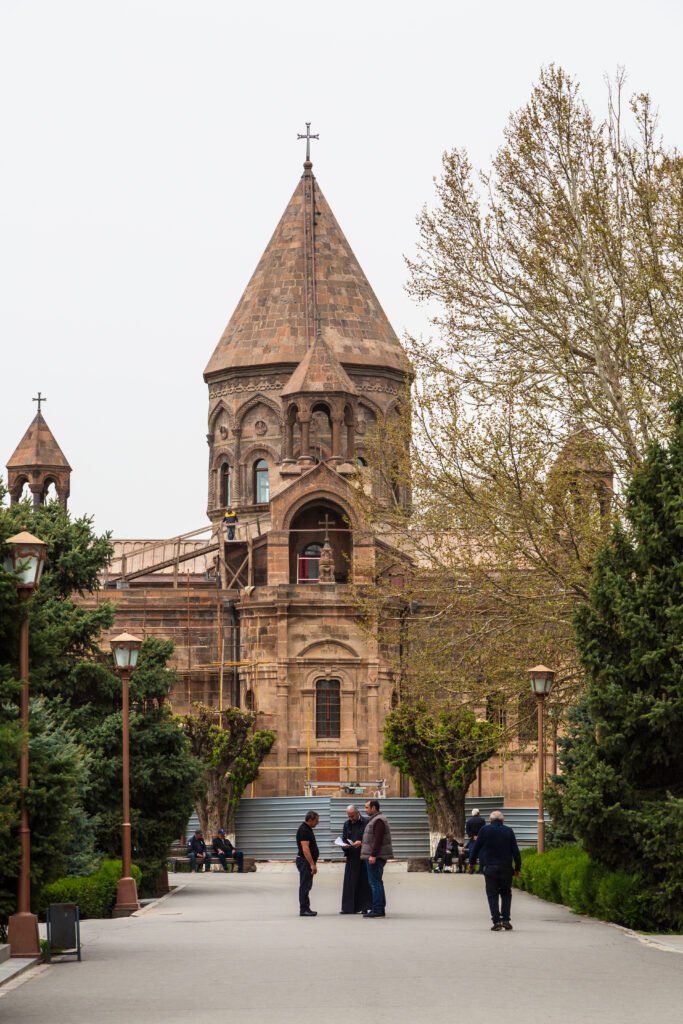
The basics. Cover shoulders and knees. Men remove hats; women are not required to cover their heads, though some do at major sites like Etchmiadzin. Speak quietly. Do not walk in front of someone praying or photograph them. Candles are lit and placed in sand-filled trays, usually for the living on one side and the dead on another, and lighting one as a visitor is welcome rather than presumptuous; leave a small coin in the box.
When leaving, many Armenians do not turn their back on the altar, stepping backwards for a pace or two. You are not expected to, but noticing it is part of understanding where you are. If a service is underway, you can stay and listen. Armenian liturgical singing in a stone church is one of the great experiences of visiting this country, and our round-up of the best monasteries in Armenia flags the ones where you are most likely to hear it.
Shoes, homes and the fear of cold feet
Shoes come off at the door of a home, always. You will be given slippers, frequently enormous ones, and you should wear them. Walking on a cold floor in bare feet or thin socks will genuinely worry your hosts, because there is a widespread belief that cold reaching the feet or the lower back causes illness. Related: do not be surprised when someone closes the car window on a hot day to prevent a draught, or tsurt, blowing on you. Arguing with this is futile and slightly rude.
Gifts
Never arrive at a home empty-handed, even for coffee. The standard offerings are pastries or a cake from a good bakery, chocolates, seasonal fruit, or a bottle of brandy or wine. Something from your own country is better still and will be displayed to visitors for weeks.
If you bring flowers, bring an odd number. Even-numbered bouquets are for funerals and cemeteries, and this rule is taken seriously. For children, small gifts are fine and will be accepted with delight, though the parents will perform a brief refusal first.
Greetings and personal space
Men shake hands firmly, and shake hands again on parting, and again if they meet you an hour later. Between friends and relatives, a light kiss on one cheek, usually the right. When a man greets a woman, let her extend a hand first; an older woman may prefer a nod.
Personal space is smaller than in northern Europe. People stand closer, touch your arm while talking, and interrupt each other with enthusiasm rather than rudeness. Conversations are loud and animated and this is not conflict. Direct questions about your age, salary, marital status and children arrive within ten minutes of meeting and are simple curiosity, not intrusion. Learning a handful of words changes everything; barev dzez for hello and shnorhakalutyun for thank you will be met with real warmth, and more are in our useful Armenian phrases guide.
The genocide as a subject
It will come up. Not necessarily on day one, but it will, and you should not be caught flat-footed by it.
In 1915 and the years around it, the Ottoman authorities carried out the systematic destruction of the Armenian population of Anatolia. Roughly a million and a half people were killed, and the survivors scattered into the diaspora that today outnumbers the population of Armenia itself. Almost every Armenian family carries a version of this story, with a lost town, a great-grandmother who walked, a name changed. The Turkish state continues to reject the term genocide, which is why recognition by other parliaments carries such weight here.
How to handle the conversation is simple. Ask, then listen. Do not argue about terminology, do not offer a both-sides framing, and do not raise the modern conflict with Azerbaijan as a counterweight. Acknowledgement is what is wanted, not analysis from a visitor.
Visiting Tsitsernakaberd, the memorial on the hill above Yerevan, is worth doing and is quietly appreciated when mentioned. It is a calm place, free to enter, with a museum that is thorough and hard going. If you are here on 24 April, the day of commemoration, the entire city walks up the hill with flowers and the mood of the country changes completely.
Photography manners
Armenians are generally relaxed about cameras and often pleased to be photographed, but ask first, especially with older people, clergy and anyone at prayer. A gesture at the camera and a raised eyebrow is enough; the answer is usually yes and sometimes leads to coffee.
Do not photograph military installations, checkpoints, border positions or soldiers. This is not nervousness, it can land you in a genuinely unpleasant conversation with the authorities, as we note in our guide to whether Armenia is safe for travellers. Inside churches, photography is usually permitted but flash is not, and never during a service or a baptism. Drones need permission in many places and are prohibited near anything military.
Small things that go a long way
- Accept the coffee. It is the beginning of everything.
- Learn barev dzez, shnorhakalutyun and kenatst, the last being what you say when raising a glass.
- Do not whistle indoors; it is said to chase money out of the house.
- Let the eldest person at the table start eating first.
- Fighting over the bill is a ritual, not an argument. Lose graciously, then pay next time.
- Compliment someone’s home, garden or cooking specifically rather than generally.
- If you are shown a family photograph, look at it for longer than feels necessary.
The best way into all of this is around a table with people who live here. Our small-group and private tours are built around exactly those encounters, from a half day at Garni and Geghard to a week travelling the country.
None of this is a test you can fail. Armenians are forgiving of foreign visitors and delighted when you try. Show up with something in your hands, take your shoes off, eat more than you planned, wait for the toast, and you will be treated less like a customer and more like someone who came back. For the practical side of planning, the full Armenia travel guide covers the rest.
Frequently asked questions
What is a tamada at an Armenian table?
The tamada is the appointed toastmaster who runs the drinking at a serious meal. He decides when everyone drinks, proposes each toast in a fixed order beginning with peace, parents and the dead, and nobody drinks alone in between. If you are handed the role as a guest, keep your toasts short and sincere and you will do fine.
Do I take my shoes off in an Armenian home?
Yes, almost always. Shoes come off at the door and you will be handed a pair of house slippers, often several sizes too big. Refusing the slippers and padding around in socks is fine but your host may worry about your feet getting cold, because cold feet are believed here to cause illness.
What should I bring when invited to an Armenian home?
Never arrive empty-handed. A cake or pastries from a good bakery, good chocolate, fruit in season, or a bottle of Armenian brandy or wine all work well. Something from your own country is even better and will be shown to every visitor for the next month. Flowers are given in odd numbers only, since even numbers are for funerals.
How do I politely stop being given more food?
You largely cannot, so manage it from the start. Take small portions, eat slowly, praise everything, and leave a little on your plate, because an empty plate is read as a request for more. Saying you are full is treated as politeness rather than information, so repeat it warmly and keep smiling.
Is it rude to ask Armenians about the genocide?
Not at all, if you ask respectfully and then listen. The 1915 genocide is present in almost every Armenian family history and people generally want it acknowledged rather than avoided. What does cause offence is arguing about terminology or repeating denialist framing. Visiting the Tsitsernakaberd memorial in Yerevan is quietly appreciated.