France Armenia relations go back further than most visitors expect: a medieval Armenian kingdom whose last king died in Paris, the refugees of the 1920s who built Armenian neighbourhoods in Marseille, Lyon and the Paris suburbs, and two men who became national figures on both sides, Charles Aznavour and Missak Manouchian. If you have ever hummed La Bohème, you already know one thread of it.
We are a Yerevan-based team, and this guide sticks to what we could verify. It also tells you what to see in Armenia if you want to follow the French connection on foot.
| Question | Short answer |
|---|---|
| Oldest link? | The Armenian Kingdom of Cilicia (end of the 12th century to 1375), allied with Crusader states |
| Last Armenian king of Cilicia? | Levon V of the House of Lusignan, who died in Paris on 29 November 1393 |
| Armenians in France? | Roughly 400,000 to 500,000 people of Armenian origin (estimates vary); about 60,000 refugees arrived in the 1920s |
| Charles Aznavour? | Born in Paris in 1924, died 1 October 2018; statue in central Yerevan unveiled 18 July 2025 |
| Missak Manouchian? | Resistance leader shot 21 February 1944; entered the Panthéon on 21 February 2024 with his wife Mélinée |
| French recognition law? | Law no. 2001-70, promulgated 29 January 2001 |
| Francophonie? | Full OIF member since 2012; host of the XVII Summit, 11 to 12 October 2018 |
| Best way to see it? | Two relaxed days in Yerevan, plus Etchmiadzin if you have a third |
What did medieval Armenia have to do with France?
In the 12th century Armenian princes ruled in Cilicia, on the south-east coast of today’s Turkey, next to the Crusader states. At the very end of that century (1198 or 1199, depending on the source) Levon II became the first king there, with the involvement of representatives of the Pope and the Holy Roman Empire. The kingdom lasted until 1375, when the Mamluks took the capital Sis after a siege.
The French thread is the Lusignan family, French in origin and kings of Cyprus. The last Armenian king, Levon V (some lists count him as Levon VI), belonged to it. He was crowned in Sis on 14 September 1374 and held out only a few months. Later he settled in Paris, where Charles VI gave him the castle of Saint-Ouen and a pension. He died there on 29 November 1393 and was buried in the Célestins convent. His original tombstone was recovered after the Revolution, and a cenotaph was set up in the Basilica of Saint-Denis in 1815.
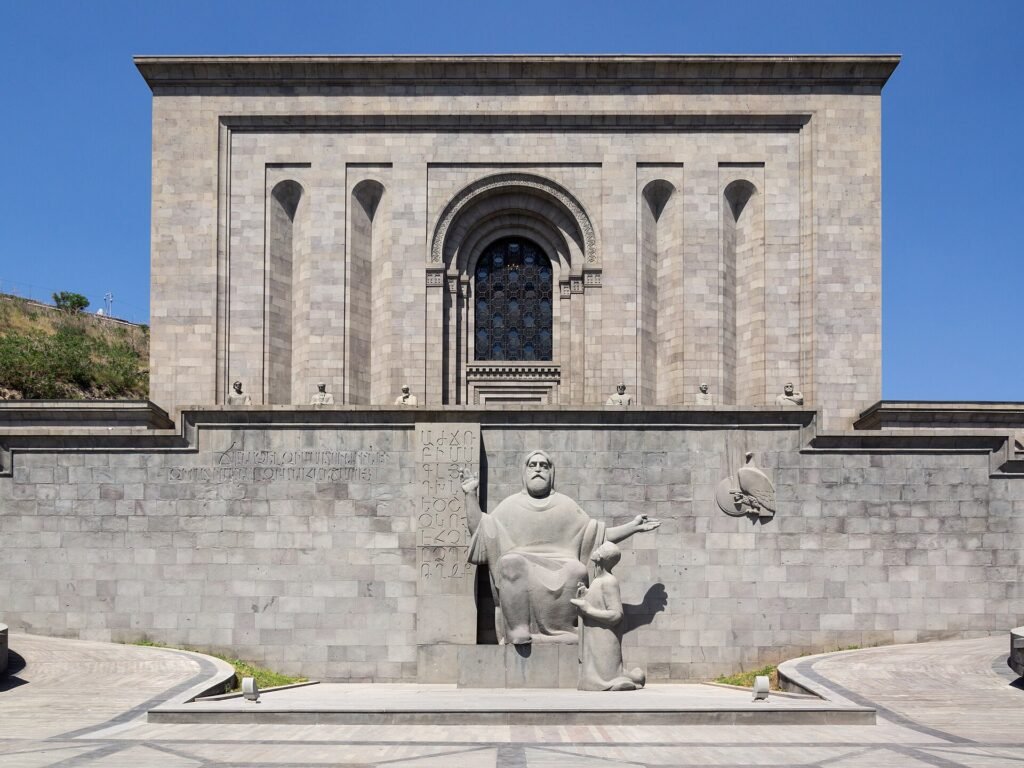
In Yerevan, the Matenadaran is where this period lives on in manuscripts. Its collection includes works from the Cilician era, but check at the desk which ones are on display. We cover the museum in our guide to Tsitsernakaberd, the Matenadaran and other Yerevan museums.
Why are there so many Armenians in France?
Because of 1915 and what followed. France took in roughly 60,000 Armenian refugees in the 1920s, and most of them landed at Marseille between 1922 and 1927. More than 40 per cent of the arrivals stayed in the city. Others went to the textile towns around Lyon and Isère, and to the Paris region, where Alfortville, Issy-les-Moulineaux and Arnouville became Armenian “villages”. Décines near Lyon and Valence in the Drôme also became centres.
Most of the refugees were stateless and were naturalised after 1946. Today estimates range from about 400,000 to 500,000 French people of Armenian origin, so you will meet them in every sector, from cafés to the national stage. For an Armenian in Yerevan, a cousin in Marseille or Alfortville is entirely ordinary.
Who was Charles Aznavour, and where do you find him in Armenia?
Charles Aznavour (born Aznavourian) was born in Paris in 1924 to an Armenian family that had fled the Genocide. He died on 1 October 2018 at the age of 94. Armenia declared 6 October, the day of his funeral, a national day of mourning. After the 1988 Spitak earthquake he founded the charity Aznavour for Armenia, and Armenia made him a National Hero and, from 2009, its ambassador to Switzerland and permanent representative to the UN office in Geneva.
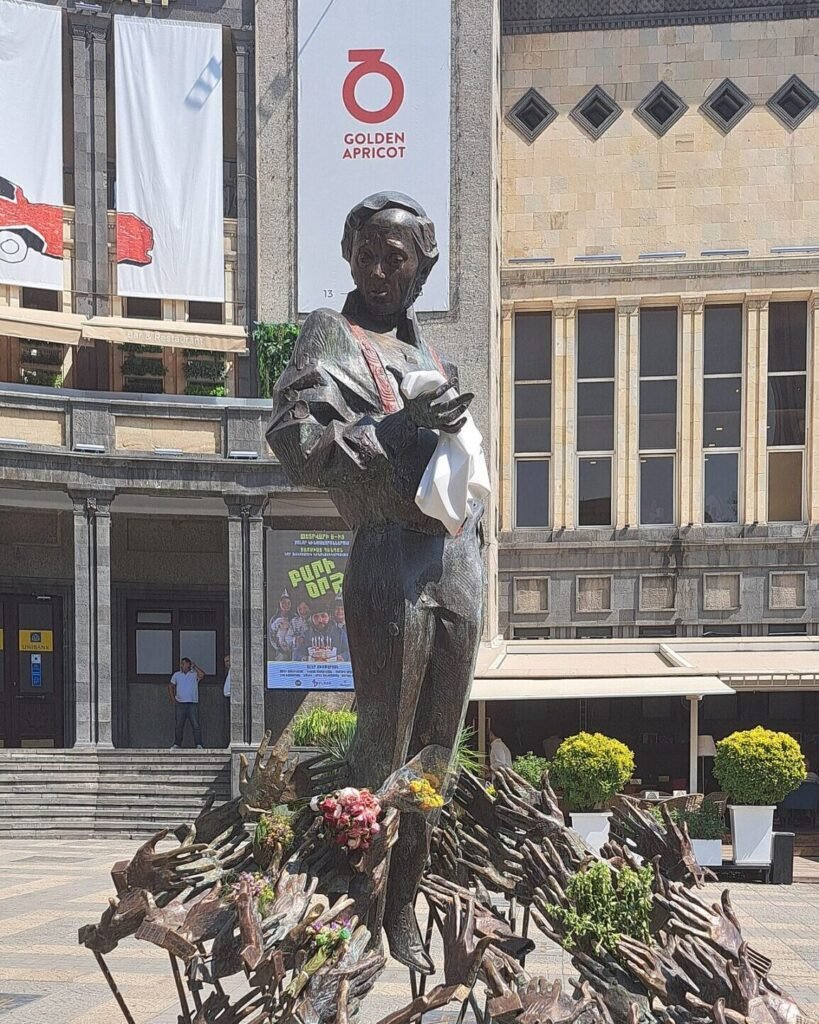
What you can see:
- The statue. Yerevan’s municipality unveiled it on 18 July 2025, opposite the Grand Hotel Yerevan and the Moscow cinema. The mayor called the spot “a place of encounter and remembrance”.
- Gyumri. A statue of Aznavour also stands in Gyumri, according to Armenian press.
- The house museum and the planned Aznavour Centre. A house museum opened in downtown Yerevan in June 2017, and in October 2018 the Aznavour Centre project was presented in the presence of Presidents Macron and Sarkissian. We could not confirm current opening hours or whether the Centre is open, so check before building your day around it.
Who was Missak Manouchian and why does the Panthéon matter?
Missak Manouchian, born in 1906 in the Ottoman Empire, led the FTP-MOI, the immigrant branch of the Communist Resistance in France, from 1943. He was shot by the Germans on 21 February 1944 at Mont-Valérien near Paris. President Macron brought him into the Panthéon on 21 February 2024, exactly 80 years later, together with his wife Mélinée, and closed his speech with the words “a grateful France welcomes you”. The ceremony was also a tribute to foreign resistance fighters in general.
For many Armenians this is the French story they know best. It is a reminder that the link is not only about refugees, but about people who chose to fight for France.
What is France’s position on the Armenian Genocide?
France’s National Assembly voted a recognition law in first reading on 29 May 1998, the Senate adopted it on 7 November 2000, and after the final vote on 18 January 2001 the law was promulgated on 29 January 2001 as law no. 2001-70. Its single article says that France publicly recognises the Armenian Genocide of 1915. This is a matter on which positions differ between countries, and we state it neutrally as the content of the French law.
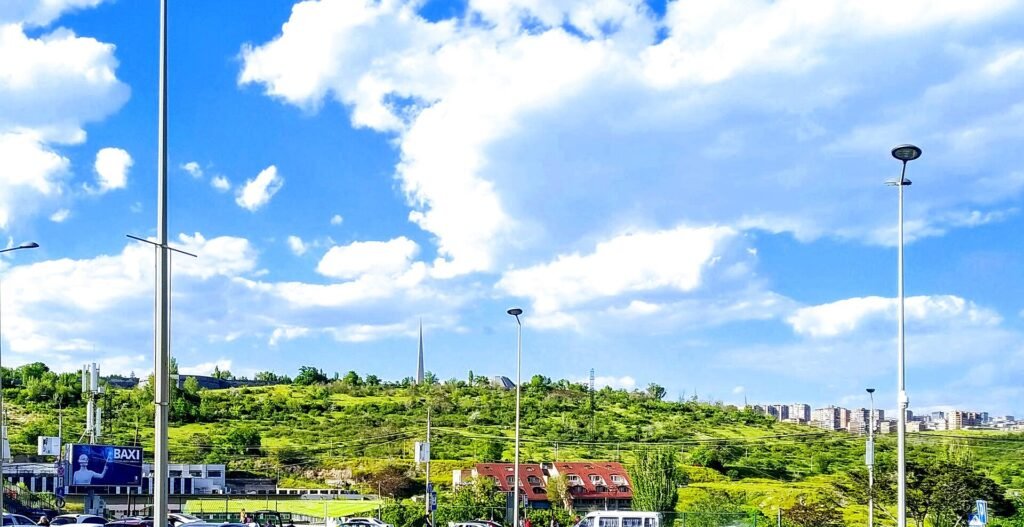
If you want to understand why this matters in Armenia, visit Tsitsernakaberd and its museum. Allow about two hours, and keep the rest of the morning light.
How French is Armenia today?
More than most visitors expect, in institutions. Armenia became an observer of the Organisation internationale de la Francophonie in 2004, a full member in 2012, and hosted the XVII Summit in Yerevan on 11 and 12 October 2018. The Université française en Arménie (UFAR), founded in 2000, works with Lyon 3 and Toulouse 3 and had about 1,300 students in 2021.
In daily life, you will hear English and Russian far more than French. Expect French at embassies, the university and cultural events, not at the market. If you want a French-speaking guide, tell us when you enquire.
What should you do in Yerevan if you want the French connection?
- Morning: Tsitsernakaberd and the Matenadaran, our two anchors.
- Afternoon: a stop at the Aznavour statue on the walk through the centre, then the Cascade and Republic Square, which our Yerevan city walking tour covers.
- Evening: an Armenian brandy tasting. French readers often ask about it because cognac is a protected French name, so Armenian producers sell theirs as brandy. See how to taste it at the Yerevan Brandy Company.
- Day two or three: Etchmiadzin and the Armenian cathedral area, or the Garni and Geghard half-day tour.
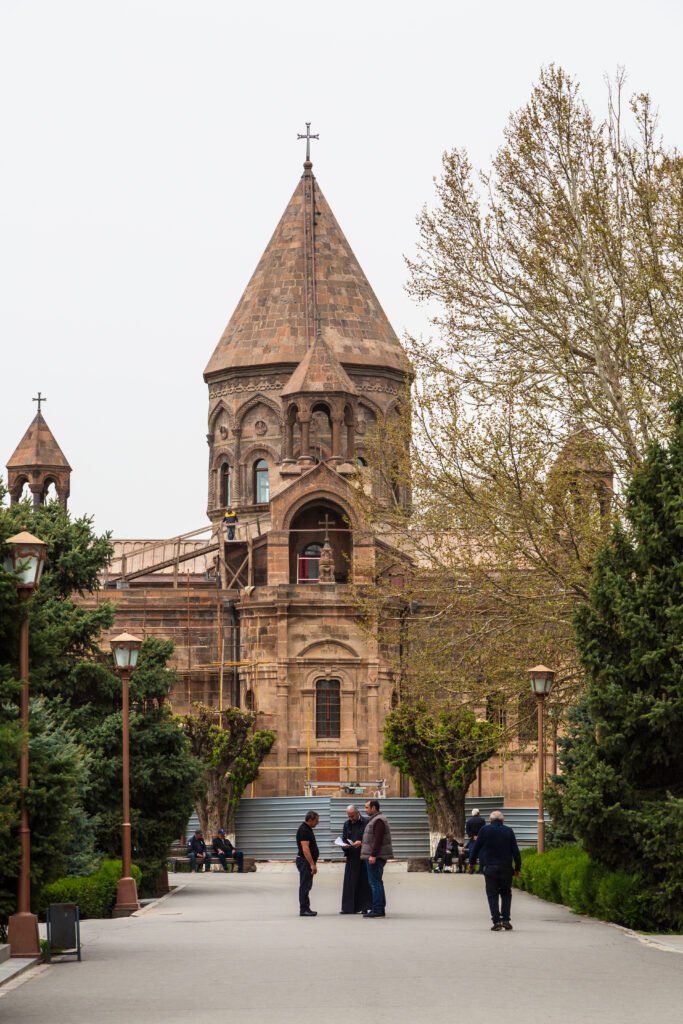
For manners, food and how to be a good guest, read our guide to Armenian culture and etiquette, then our Armenian food guide.
How do you get there from France?
Direct flights from Paris to Yerevan have operated in recent years, and flying time is roughly five hours. Schedules and airlines change, and we have not verified the 2026 timetables for Lyon, Marseille or Nice, so check your airline and consider a connection if there is no direct option. Our flights guide for Armenia explains the arrival at Zvartnots, and the Armenia travel guide 2026 covers the rest of the planning. Check the current entry rules for your passport before you book.
Who should skip this, and what are the limits?
If you only have one day, this is a theme, not a reason to travel: the museums and statues are small stops inside a wider Yerevan visit. Do not expect a “French quarter”. There is none, and we do not claim French architects built anything that we have not been able to verify. Opening hours of the Aznavour house museum and the planned Aznavour Centre should be checked locally. Tsitsernakaberd is emotional, so allow time afterwards.
Want to follow this story with a local guide? See our small-group and private tours in Armenia, or take the Classic Armenia 7-day tour. For French-speaking guiding or a custom route, write to us via the contact page.
Frequently asked questions
Why do so many people in France have Armenian roots?
After 1915 France took in roughly 60,000 Armenian refugees in the 1920s, many of whom landed in Marseille. Estimates today put the number of French people of Armenian origin at roughly 400,000 to 500,000.
When did France officially recognise the Armenian Genocide?
Law no. 2001-70, promulgated on 29 January 2001, states in a single article that France publicly recognises the Armenian Genocide of 1915.
Where is the Charles Aznavour statue in Yerevan?
It stands in a small square in central Yerevan, opposite the Grand Hotel Yerevan and the Moscow cinema, and was unveiled on 18 July 2025. Its title is La Bohème.
Is Armenia a member of La Francophonie?
Yes. Armenia joined as an observer in 2004, became a full member in 2012 and hosted the XVII Francophonie Summit in Yerevan on 11 and 12 October 2018.
Do you offer French-speaking guides?
We can often arrange them on request for private and tailor-made trips. Write to us via the contact page with your dates and we will confirm what is possible.