Yerevan street food is cheap, filling and mostly eaten standing up or on the go: lahmajun from a wood oven, shawarma wrapped in lavash, warm bread from a tonir bakery, fruit and nuts by the kilo, and a strong little coffee afterwards. A full day of snacks in 2026 can cost the price of one restaurant dinner. This guide covers what to try, what it costs, how to order, and where to be a little careful.
| Question | Short answer |
|---|---|
| Must-try snack | Lahmajun, thin flatbread with spiced minced meat, eaten rolled with herbs and lemon |
| Fast food favourite | Shawarma, called shaurma, in lavash or a bun |
| Lahmajun price (2026) | Roughly 400 to 900 AMD each |
| Shawarma price | Roughly 1,000 to 2,200 AMD |
| Traditional coffee | About 600 to 1,200 AMD; specialty coffee 1,000 to 1,800 AMD |
| Sweets to try | Gata, pakhlava, sujukh, dried fruit |
| Markets | GUM market near Movses Khorenatsi Street for fruit, nuts, lavash and sujukh |
| Vegetarian? | Yes: lavash with cheese and herbs, fruit, nuts, pies, sweets |
What should you eat between meals in Yerevan?
Armenian food is built around bread, grilled meat, cheese, herbs and fruit, and the best snacks follow that logic. Our companion piece on Armenian food covers sit-down dishes; here we focus on what you eat with your hands.
Lahmajun
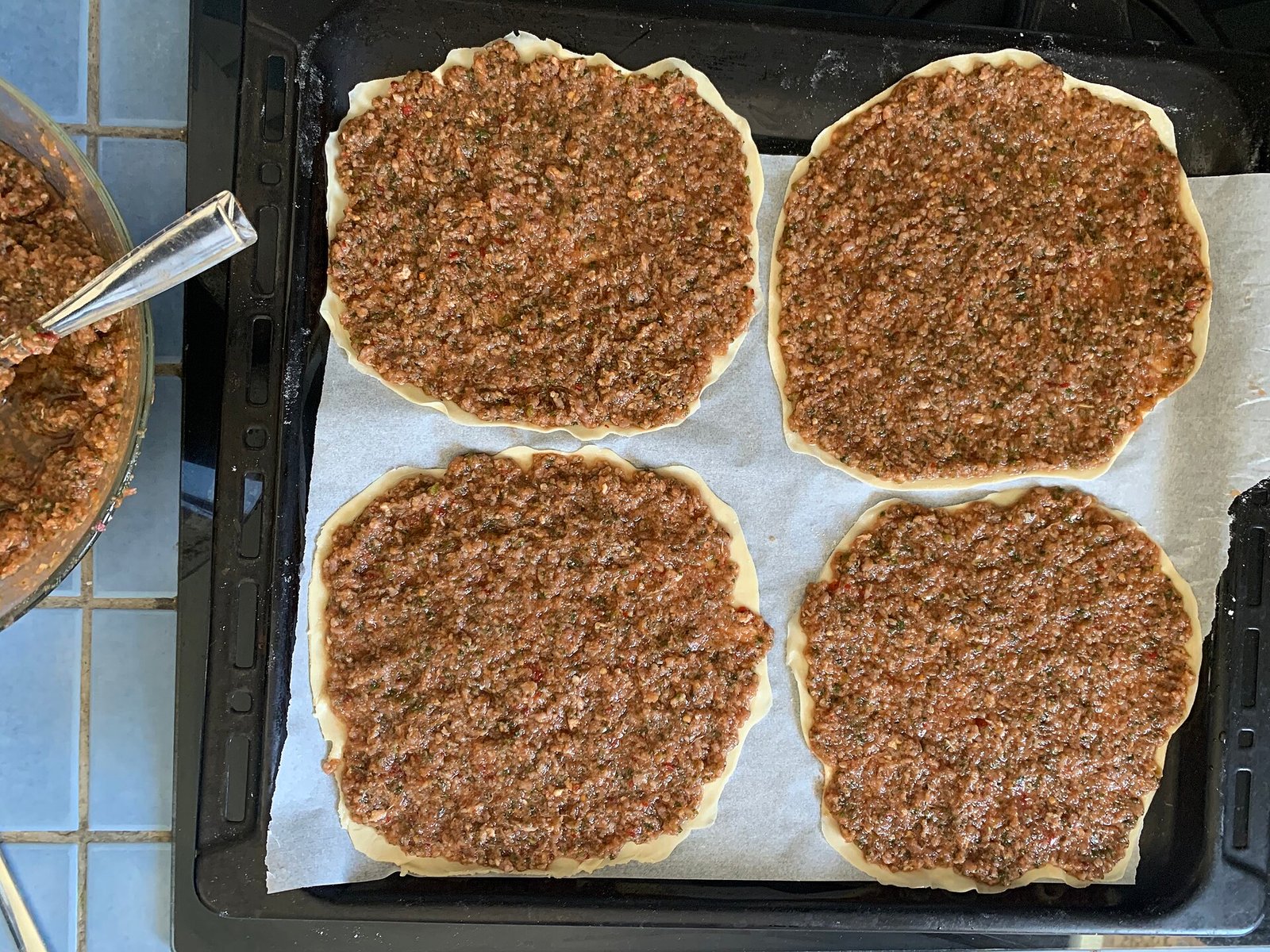
Lahmajun is a thin round dough topped with minced meat, tomato, onion and spices, baked in a hot oven. Locals squeeze lemon on it, add herbs and parsley and roll it up. It is often confused with pizza, but it is thinner and spicier. Ask for it fresh from the oven and try it with a glass of tan. Expect roughly 400 to 900 AMD per piece in 2026, and most people eat two.
Shawarma (shaurma)
Shawarma is everywhere in Yerevan, usually chicken or beef carved from a vertical spit, wrapped in lavash with pickles, vegetables and sauce. It is the standard late-night snack. Quality varies a lot, so pick a stand with a queue and a fast turnover. A typical portion is about 1,000 to 2,200 AMD, depending on size and meat.
Bakeries and lavash
Lavash, the thin flatbread baked in a clay oven, is recognised by UNESCO as part of Armenian cultural heritage. Small bakeries sell it warm by the sheet, and you can buy a few sheets and wrap them around cheese and herbs for a cheap, vegetarian lunch. Many bakeries also sell stuffed breads and pies.
Khorovats from a stand
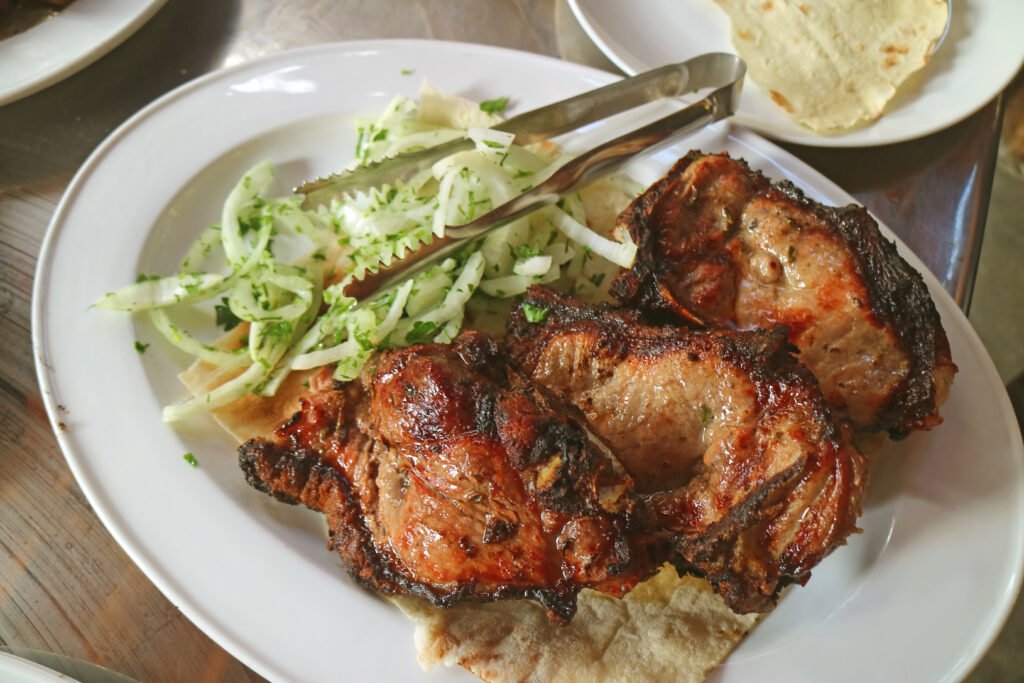
Khorovats is Armenian barbecue, usually pork, lamb or chicken on skewers over charcoal. Proper grill restaurants charge more, but small stands and casual grills serve skewers with bread and onions for a lower price. See our Yerevan cafes, nightlife and where to stay guide for areas where you will find them.
Which Armenian sweets are worth trying?
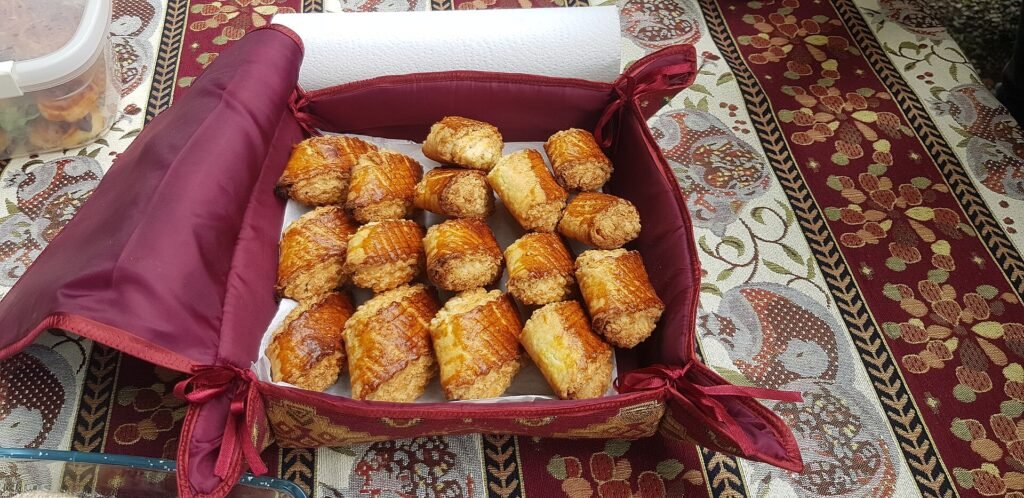
Gata is a sweet, buttery yeast bread with a sugar, flour and butter filling, sold in slices or whole rounds and found in nearly every pastry shop. Pakhlava is the Armenian version of baklava: thin layers of dough with walnuts, spice and syrup, usually cut into diamonds. Sujukh is a string of walnuts or other nuts dipped repeatedly in thickened grape juice and dried, chewy and good for hiking. It is similar to Georgian churchkhela, though the name and local recipes differ. Look also for halva, nazook, dried apricots and fruit leather. A slice of cake or gata in a pastry shop typically costs a few hundred to about 800 AMD.
How do you order Armenian coffee, and what about specialty coffee?
Armenian coffee, soorj, is finely ground and boiled in a small pot called a jazzve (cezve), served in a small cup with the grounds at the bottom. Sip it slowly, stop before the sediment, and ask for it sweet, medium or without sugar when you order. A traditional cup typically costs about 600 to 1,200 AMD. In recent years Yerevan has also developed a lively specialty coffee scene, with espresso, filter and cold brew in cafes around the Cascade and the centre, at about 1,000 to 1,800 AMD. Both are worth trying, and many cafes serve both. Remote workers will find many laptop-friendly places; see digital nomads in Armenia.
What about ice cream, tan and cold drinks?
Tan is a salty, thin yogurt drink, close to Turkish ayran, and it is the classic partner for lahmajun and kebab on a hot day. Fresh juices, compotes and mineral water from Jermuk and Bjni are also common. Ice cream in a cone or from a cafe is widely sold in summer. Prices are low by European standards: a bottle of tan or a scoop of ice cream is typically a few hundred AMD.
Where are the markets: GUM and beyond?
The GUM market, sometimes written Gum or Gumi Shuka, is a large covered market just behind the Saint Gregory the Illuminator Cathedral on Movses Khorenatsi Street. Dried and candied fruit, nuts, spices and sujukh are sold at the front, and fresh produce, herbs and pickles toward the back. Vendors often offer samples, but you are expected to buy something. Go in the morning; opening hours are usually daytime and can change, so check before you go. Dried fruit is sold by weight, so ask for a price per kilo and a small amount first. For gifts and open-air stalls, see what to buy in Armenia. We could not verify the current status of every smaller covered market, so ask your host for a neighbourhood recommendation.
What should vegetarians know?
Vegetarians eat well on Yerevan street food, though meat is the default in many snacks. Fresh lavash with cheese and herbs, cheese pies, bean dishes, vegetable salads, dried fruit and nuts, fruit stalls and most sweets are meat-free. Say “without meat” (in Armenian, mis chuni) and check that pies and soups are not made with meat stock. Vegans have fewer choices but can build meals from bread, herbs, nuts, fruit and vegetables.
What do travellers complain about, and how do you stay healthy?
Common complaints are tourist-area prices, shawarma of uneven quality, and the occasional upset stomach. Choose busy stands where food is cooked fresh, wash or peel fruit, and be sensible with salads and ice if you have a sensitive stomach. Carry hand sanitiser, bottled water if you prefer it, and basic stomach medicine. Our guide to health, tap water and insurance in Armenia goes into detail. Also note that many small stands take cash only, so carry small notes of drams.
How do you order and pay at a street food stand?
Point and say the number you want, then ask for it “to go” or eat standing at the counter. Prices are usually on a board, but if not, ask before you order. Say “barev” (hello) and “shnorhakalutyun” (thank you); Russian is widely understood and English is common among younger staff. Pay in drams, ideally with small notes. Tipping is not expected at stands, and in cafes leaving around ten percent for table service is normal. A realistic budget for a full day of snacks, coffee and one sweet treat is roughly 5,000 to 10,000 AMD in 2026, depending on how much you eat. Prices rise in the most touristy streets, so walk a few blocks away from the main squares for better value.
A simple street food walk for one day
Start with warm lavash and cheese, then a traditional coffee at a cafe in the centre, lahmajun for lunch, a visit to GUM market for dried fruit and sujukh, shawarma or khorovats in the evening and gata with specialty coffee for dessert. If you have only a few days in the city, our 3 days in Yerevan itinerary fits these stops around the main sights.
If you want a local guide to take you through the markets, bakeries and grills without guesswork, our private and small-group tours can include food stops. See our tours.
Frequently asked questions
What is the best street food in Yerevan?
Lahmajun (thin flatbread with spiced minced meat), shawarma, which locals call shaurma, fresh lavash from a bakery with cheese and herbs, and khorovats from small grill stands are the staples. Add sweets such as gata, pakhlava and sujukh, and you have a full day of cheap eating between meals.
How much does street food cost in Yerevan?
In 2026 a lahmajun is roughly 400 to 900 AMD, a shawarma about 1,000 to 2,200 AMD, a slice of gata a few hundred AMD and a traditional coffee about 600 to 1,200 AMD. These are approximate ranges, and tourist-area prices run higher, so check the menu board.
Is street food in Yerevan safe to eat?
Generally yes, if you choose busy places where food is cooked to order and served hot. Avoid anything that has been sitting out, wash or peel fruit from markets, and be cautious with ice and tap water if your stomach is sensitive. Normal travel hygiene applies, and the same sense you would use at home.
Can vegetarians eat well on Yerevan street food?
Yes, with a bit of planning. Fresh lavash with cheese and herbs, cheese or potato pies, fruit and nut stalls, bean and vegetable dishes, and sweets are widely available. Ask whether a pie or soup is made with meat stock, because some fillings and broths contain it.
What is the difference between Armenian coffee and specialty coffee?
Armenian coffee, often called soorj, is finely ground coffee boiled in a small pot called a jazzve or cezve, served in a small cup with the grounds left at the bottom. Specialty coffee shops serve espresso and filter coffee from roasted beans, and Yerevan has a growing number of them.