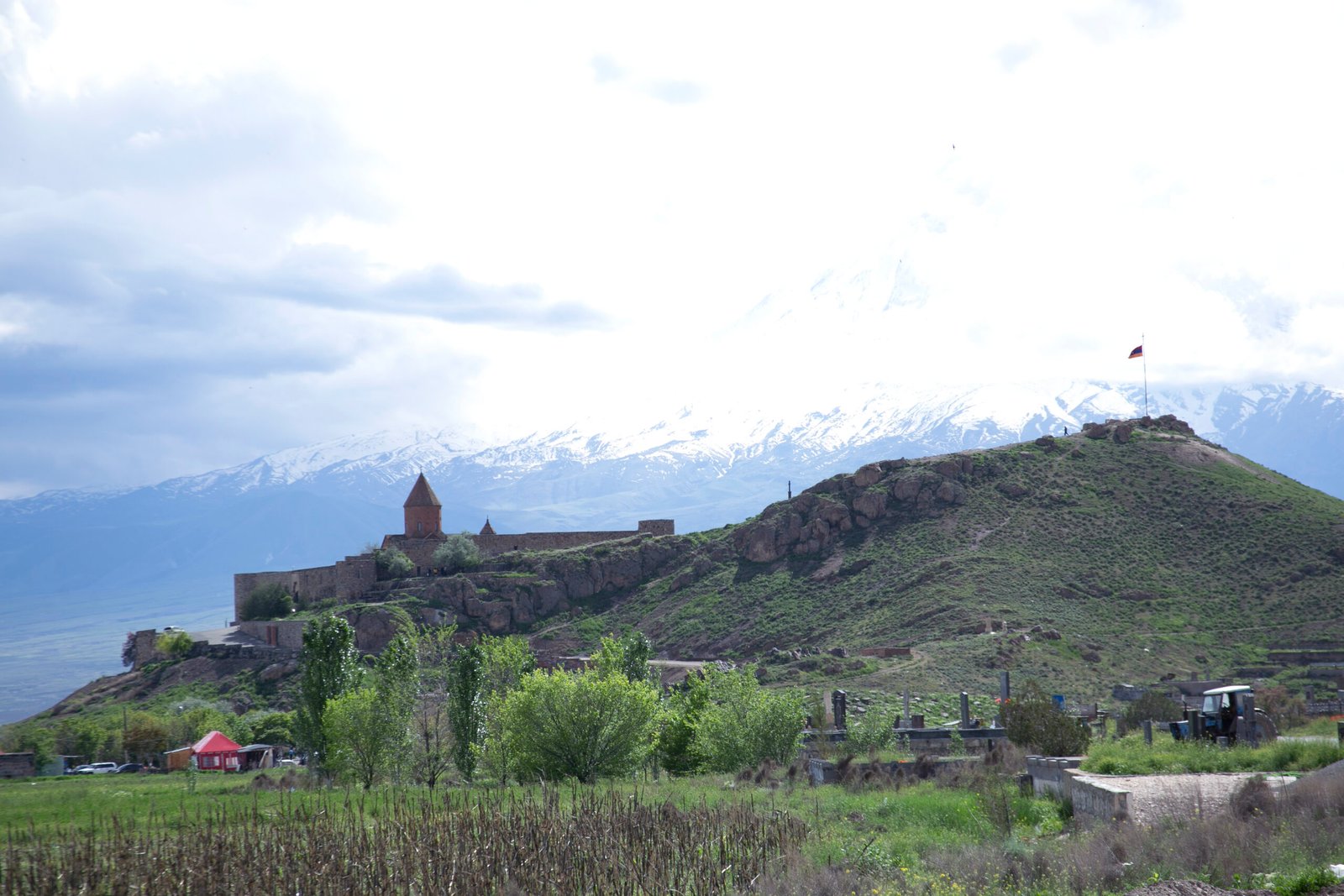
Khor Virap and Mount Ararat are the single most photographed pairing in Armenia, and for once the photographs undersell it. A small fortified monastery on a low hill in the Ararat plain, and behind it a 5,137 metre volcano that fills the entire horizon. This is where Armenia became Christian in 301 AD.
We drive here constantly, usually before dawn, and the number of things people get wrong about the visit is remarkable: the hour, the season, what is actually underground, and where the border runs. All of it below.
| Quick facts | Detail |
|---|---|
| Distance from Yerevan | About 35 to 40 km, roughly 45 minutes |
| Meaning of the name | Khor Virap, the deep pit |
| Main church | Surb Astvatsatsin, 17th century |
| Chapel over the pit | Surb Gevorg, rebuilt 1662 |
| Greater Ararat | 5,137 m, in Turkey, about 32 km away |
| Little Ararat | 3,896 m, the sharp cone to the right |
| Entrance | Free |
| Best light | The first two hours after sunrise |
| Time needed | 1 to 1.5 hours on site |
Why a small monastery matters this much
Architecturally Khor Virap is modest. Nobody comes here for the carving. They come because this hill is where the story of Christian Armenia begins, and because the view behind it is the national self-portrait.
The hill itself is older than the monastery by a long way. It stands on the edge of Artashat, the capital founded by King Artashes I in 176 BC. Ancient authors record that Hannibal, living in exile at the Armenian court after fleeing Rome, advised on where to put the city. Whether that is history or a good story, Artashat was the political centre of Armenia for centuries, and the dungeon beneath the modern chapel belonged to it.
Gregory the Illuminator and the pit
Gregory was the son of a nobleman who had assassinated the Armenian king. Raised Christian in Cappadocia, he returned and entered the service of King Trdat III, who eventually learned both his faith and his father’s crime. Gregory refused to sacrifice to the goddess Anahit and was thrown into the royal dungeon, where he is said to have survived thirteen years on food lowered secretly by a widow.
What happened next is the founding narrative of the Armenian Church. Trdat, tormented by illness after executing the Christian nun Hripsime and her companions, was cured after Gregory was brought up from the pit. The king converted, and Armenia adopted Christianity as its state religion in 301 AD, traditionally the first kingdom to do so. Gregory became the first Catholicos. The cathedral at Etchmiadzin, thirty minutes west of Yerevan, was founded within a few years.
Going down
In the floor of the small chapel of St Gevorg, to the right as you enter the courtyard, there is a hole about a metre across with a steel ladder disappearing into it. The chamber below is roughly six metres down, warm, dimly lit, and smaller than you expect, with an altar and candles at the bottom. There is a second, shallower chamber elsewhere in the complex that is sometimes shown instead.
The ladder is vertical and the rungs are polished by decades of hands. Wear something you can climb in, go down backwards, and let people coming up clear the shaft first, because there is no passing place. Plenty of visitors look, decide against it, and lose nothing. The pit is a powerful few minutes, not a highlight reel.
The buildings above ground
The first chapel over the dungeon was raised in 642 by Catholicos Nerses III the Builder. What you see now is mostly seventeenth century: the chapel of St Gevorg rebuilt in 1662 and the larger church of Surb Astvatsatsin, both inside a low fortified wall with round corner towers. The complex works less as architecture than as a stage set, a dark compact silhouette placed exactly right in front of the mountain.
Walk the perimeter wall. From the north-west corner you get the classic composition with the bell tower against the snow, and from the back of the hill you see the vineyards and apricot orchards of the plain running south towards the frontier.
Mount Ararat: the mountain that is not in Armenia
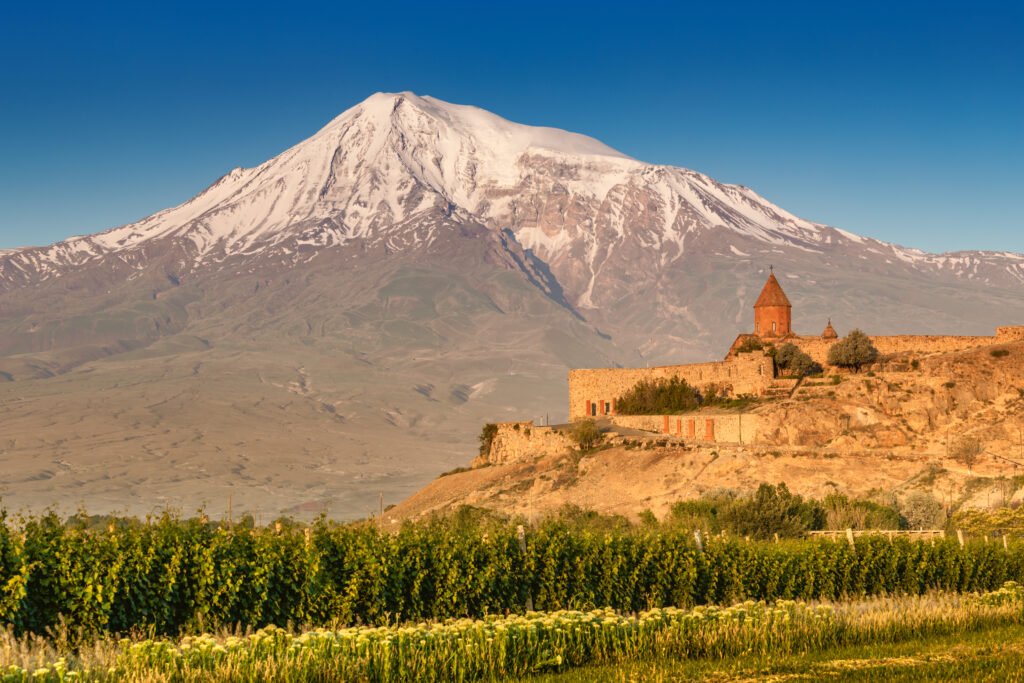
Greater Ararat, Masis in Armenian, rises 5,137 metres from a plain that sits at only 850, which is why it looks so implausibly large. Beside it stands Little Ararat, Sis, a clean 3,896 metre cone. In the Book of Genesis the ark comes to rest on the mountains of Ararat, and the association has never loosened.
The mountain lies inside Turkey. It was ceded under the 1921 treaties, and the Armenian-Turkish border has been closed since 1993. Ararat nevertheless sits at the centre of the Armenian coat of arms, on beer labels, on brandy bottles and on the wall of every second restaurant in Yerevan. Expect to be asked what you think of it. The honest answer, that it is the most dominant mountain you have ever seen from a city, is also the correct one.
The border
From Khor Virap you can see the frontier clearly: a fence line, a strip of cleared ground, watchtowers. It is a few hundred metres from the car park. Stay on the hill and the access road, do not approach or photograph the installations directly, and be cautious with drones, which are not welcome in a border zone and can create a genuine problem for you. Nobody will bother you for photographing the mountain itself, which everyone does.
The best times to see Ararat
This is the part worth planning around, because the mountain is invisible more often than visitors expect.
- Time of day. Sunrise to about two hours after. Cold air holds less dust, the snowfields go pink then gold, and the monastery is side lit. This is why our drivers leave Yerevan in the dark.
- Late afternoon. Good in October to March, when the haze burns off. The mountain is then backlit and reads as a blue silhouette, which is a different and quieter photograph.
- Best months. Late March to May and October to early December. Snow cover is deep and the air is washed clean.
- Worst conditions. Midday in July and August. The plain heats, dust rises, and Ararat can disappear completely for days.
- After rain or wind. The single most reliable trick. If a front has just passed through Yerevan, go the next morning.
Winter visits are underrated. Fewer people, a white plain, and the clearest air of the year. See our notes on the best time to visit Armenia.
The doves
Vendors near the entrance sell white doves to release towards Ararat, usually for a couple of thousand dram. It is a local custom tied to Noah sending out the dove from the ark, and it makes a lovely photograph. Worth knowing: the birds are trained and fly back to their lofts, so the same doves are sold repeatedly. Some travellers find that charming, others do not. No one will mind if you skip it.
How to get to Khor Virap
Tour or private car
The realistic option if you want the sunrise, because no public transport runs at that hour. Our Khor Virap, Areni and Noravank day tour is built around leaving early and finishing at Noravank in evening light.
Taxi
A return trip from Yerevan with an hour of waiting typically runs somewhere around 12,000 to 18,000 dram, roughly 28 to 42 euros, depending on timing and negotiation. Agree the wait before you set off. Ride apps work fine for the outbound leg but getting a car back from the hill is unreliable.
Marshrutka
Minibuses towards Pokr Vedi leave from the Sasuntsi David station area a few times a day for a few hundred dram. They stop on the main road, leaving a walk of two to three kilometres to the monastery, and return times are thin in the afternoon. Doable, but not for a sunrise and not if you are tight on time. More in our Armenia transport guide.
We are a small Yerevan operator and we run this one before dawn on purpose. Small groups, coffee in the car, and a stop at Noravank on the way back when the cliffs turn red. See our tours.
Combining Khor Virap with Areni and Noravank
Khor Virap needs an hour. Turning it into a full day means driving on into Vayots Dzor, and that is the best single day this country offers.
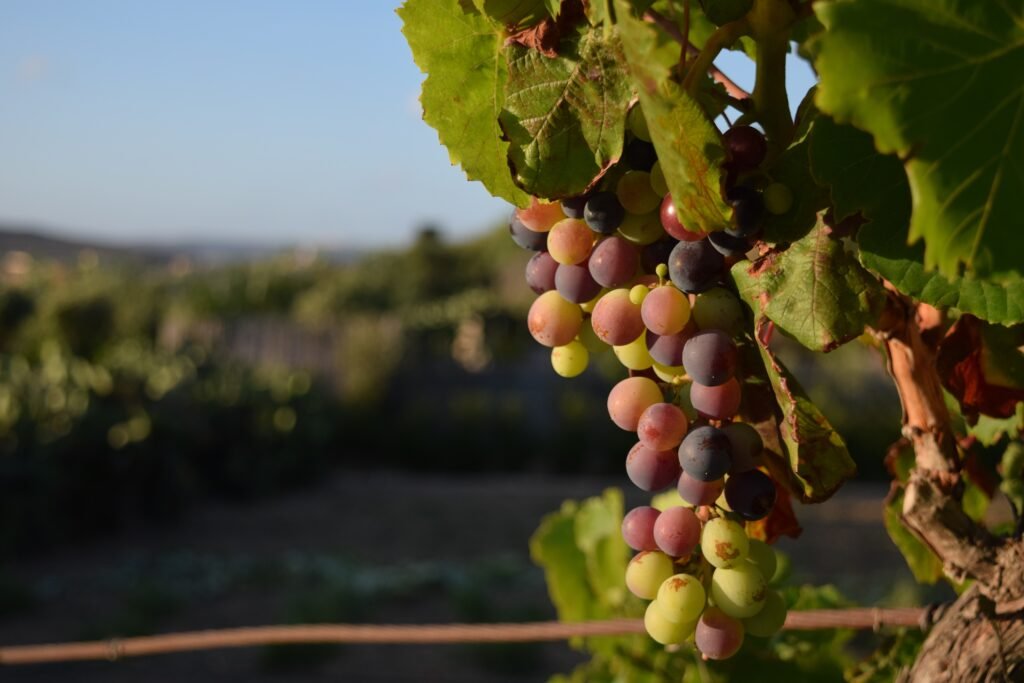
Areni is about 75 kilometres further south, a little over an hour. The village gives its name to Armenia’s flagship red grape, and several small wineries pour without an appointment. Just outside it, the Areni-1 cave has produced the oldest known winemaking facility in the world, dated to around 4100 BC, along with a leather shoe roughly 5,500 years old. Standing in a cave where people pressed grapes six thousand years ago and then drinking the descendant of that wine an hour later is a good afternoon. Our Armenian wine guide covers the producers.
From Areni it is fifteen minutes to Noravank, up a red canyon to the fourteenth-century church of Momik. Arrive late in the day. The whole loop is eight to nine hours from Yerevan.
Practical notes
- Entry is free. Bring small cash for candles, doves and the fruit sellers at the bottom of the hill.
- Shoulders and knees covered. No head covering needed.
- There is very little shade on the hill and it is hot from June to September. Water and a hat.
- Toilets and a small cafe at the car park. Nothing else for several kilometres, so do not plan lunch here.
- Apricots in July from the roadside stands on the way back are among the best in the world. This is not a figure of speech.
Where it fits in a trip
Give Khor Virap a morning, ideally your first clear one, because if the mountain is out you want to have taken the chance. Pair it with Vayots Dzor as above, or keep it short and spend the afternoon on the Garni and Geghard side of the city. For the wider picture of what is reachable in a day, see day trips from Yerevan, and for the stone itself, our ranking of the best monasteries in Armenia.
Frequently asked questions
What is the best time of day to photograph Mount Ararat from Khor Virap?
The first two hours after sunrise are the most reliable. The air is coldest and clearest then, the snowfields catch warm light, and the monastery walls are lit from the side. Late afternoon can work in autumn and winter, but from roughly May to September the haze over the Ararat plain usually hides the mountain by late morning.
Can you go down into the pit at Khor Virap?
Yes. A narrow vertical shaft in the floor of the chapel of St Gevorg leads down a metal ladder to a chamber roughly six metres below, traditionally the cell where Gregory the Illuminator was held. It is dim, warm and tight, and the rungs are smooth. If you are claustrophobic or unsteady on ladders, skip it without regret.
Is Mount Ararat in Armenia or Turkey?
Mount Ararat lies inside Turkey today, roughly 32 kilometres from Khor Virap, and the border runs a few hundred metres from the monastery car park. The mountain remains the central symbol of Armenian identity and appears on the national coat of arms, which is why visitors are sometimes confused to learn it cannot be climbed from the Armenian side.
How far is Khor Virap from Yerevan and how do I get there?
It is about 35 to 40 kilometres south of Yerevan, roughly 45 minutes by road. Most visitors come by tour or taxi. A marshrutka towards Pokr Vedi leaves from the Sasuntsi David area, but it drops you on the main road and leaves a walk of two to three kilometres to the hill, so plan the return carefully.
Can Khor Virap be combined with Areni and Noravank in one day?
Yes, and it is the best full day in Armenia. Khor Virap in the early morning, a tasting at an Areni winery around midday with the Areni-1 cave nearby, and Noravank in the late afternoon when the red cliffs glow. Expect eight to nine hours in total including driving.