Getting around Armenia is easier and far cheaper than most first time visitors expect. A country the size of Belgium, with almost everything within a three hour drive of the capital, is served by a dense web of marshrutka minibuses, a small metro, an army of cheap app taxis and a handful of trains. Here is how each piece actually works in 2026.
| Question | Short answer |
|---|---|
| Currency | Armenian dram (AMD). Roughly 400 to 440 AMD to 1 EUR in 2026, so check the rate before you budget. |
| Yerevan metro / city bus | Around 100 AMD per ride, about 0.25 EUR. Contactless bank cards now work on most city transport. |
| Intercity marshrutka | Roughly 1,000 to 5,000 AMD depending on distance. Yerevan to Gyumri or Dilijan sits at the low end, Goris and Kapan at the high end. |
| City taxi (app) | Usually 600 to 1,500 AMD across central Yerevan. |
| Airport to city centre | Around 3,000 to 5,000 AMD by app, roughly 20 minutes. Bus 201 runs the same route for a fraction of that. |
| Car hire | Roughly 30 to 60 EUR a day for a small car in 2026, more for a 4×4 and more again in high summer. |
| Driving side | Right, as in Germany and Italy. Roads are signed in Armenian and Latin script on main routes. |
Marshrutkas: the backbone of Armenian travel
The marshrutka is a shared minibus, usually a Mercedes Sprinter or a Ford Transit with twelve to twenty seats, and it is how most Armenians move between towns. Routes run from Yerevan to essentially every regional centre, and from those centres out to the villages. There is no national booking website, no seat map and, for most routes, no fixed timetable. Vehicles leave when they are full, or on rough hourly patterns on the busiest lines.
That sounds chaotic and it slightly is, but it works. The practical rules are simple. Arrive at the bus station rather than researching departure times online, because the information at the station is always more current than anything on the internet. Ask any driver where the vehicle to your destination is parked, say the town name clearly and you will be pointed at it. Pay the driver in cash, usually when you get off, occasionally when you board. Keep small notes, because nobody enjoys breaking a 20,000 AMD note for a 1,500 AMD fare.
Yerevan has several departure points rather than one central station, which catches people out. Kilikia Central Bus Station on the western edge of the city handles most long distance routes including the south. Sasuntsi Davit, next to the railway station, serves several northern and eastern directions. Small informal stands near Gai Avenue and the northern bus station cover other routes. Before you set off, confirm which one you need with your guesthouse, because getting to the wrong station costs an hour.
What a marshrutka journey is actually like
Expect a full vehicle, limited legroom and luggage stowed in the back or on your lap. Expect the driver to stop for passengers who flag him down at the roadside, and to pause at a roadside cafe on longer routes. Expect music. Do not expect a toilet on board, air conditioning that copes with a July afternoon, or seatbelts in every seat. Journeys are short enough that none of this matters much: Yerevan to Dilijan is under two hours, Yerevan to Gyumri around two, Yerevan to Goris four to five.
A useful habit is to travel in the morning. Most intercity marshrutkas thin out badly after mid afternoon, and the last departure from a small town back to Yerevan is often earlier than you would guess, sometimes as early as three or four in the afternoon. If you are going out and back in a day, ask about the return time before you leave the vehicle.
Intercity buses and shared transfers
On the busiest corridors, notably Yerevan to Gyumri, Yerevan to Vanadzor and the routes towards Tbilisi and Georgia, larger coaches also run. They are more comfortable than a marshrutka, cost a little more and keep to published departure times more reliably. A few private companies sell tickets online or by phone, which is worth doing for cross border trips in summer.
Shared transfers sit between a marshrutka and a private taxi. These are minibuses or cars that pick you up from your accommodation, run a fixed route with a handful of passengers, and drop you at a hotel at the other end. They are increasingly common for Yerevan to Tbilisi, Yerevan to Dilijan and Yerevan to Goris, and for travellers with luggage they are genuinely worth the extra money. Budget roughly 15 to 35 EUR for a long shared transfer in 2026 depending on the route.
Inside Yerevan: metro, buses and trolleybuses
The Yerevan metro is one line, ten stations, running roughly north south under the city centre. It will not take you everywhere, but it is fast, clean, deeply Soviet in atmosphere and costs around 100 AMD a ride. Republic Square, Yeritasardakan and Marshal Baghramyan cover a lot of what a visitor wants. Trains run from early morning until around eleven at night with intervals of five to ten minutes.
City buses cover the gaps and now use a modern ticketing system: you tap a contactless bank card or a local transport card on the validator when you board. Fares are the same flat 100 AMD range. The buses themselves are new and air conditioned on most routes, a big change from a few years ago. Use a mapping app with live transit data to work out which number you need, because route information at stops is sparse and in Armenian.
Honestly, though, central Yerevan is a walking city. From the Opera to Republic Square to the Cascade is a pleasant twenty minutes on foot. Our Yerevan city walking tour covers most of the centre without anyone touching a vehicle, and our guide to things to do in Yerevan is organised so you can walk between clusters of sights.
Taxis and ride apps
Taxis in Armenia are cheap enough that they change how you plan a day. Two apps dominate: GG, which is Armenian and the most widely used, and Yandex Go. Both work the same way as any ride app you already use, both show the price before you confirm, and both accept card payment in the app or cash to the driver. A crosstown ride in Yerevan rarely passes 1,500 AMD.
Street taxis are also fine, but agree the price before you get in, and be aware that drivers waiting directly outside tourist sites, hotels and the airport terminal quote tourist prices. Walk fifty metres and order an app car instead. From Zvartnots airport, an app ride into town costs roughly 3,000 to 5,000 AMD, while the drivers at the arrivals door will ask several times that.
For a day out of the city, hiring a taxi by the hour or for a fixed route is a reasonable middle option. Agree the full price, the waiting time and the route in advance, ideally written down. A full day to Khor Virap, Areni and Noravank with waiting time typically costs 30,000 to 45,000 AMD for the car, which split between three or four people competes with an organised tour, though without a guide or entry logistics.
Trains: Gyumri, Lake Sevan and Tbilisi
Armenia’s railway network is small but genuinely useful for two journeys. The Yerevan to Gyumri electric train runs daily, takes a little over two hours and costs only a few euros. It is comfortable, scenic across the Shirak plain and a far nicer ride than the marshrutka on the same route. If you are heading north to explore Gyumri and the Lori region, take the train out and a minibus back.
In summer, a seasonal train also runs from Yerevan towards Lake Sevan, which is a lovely slow way to reach the shore, though the station is not always where you want to be. Check whether it is operating in the year you travel.
The Yerevan to Tbilisi sleeper is the other one worth knowing. It runs on alternate days rather than daily, takes roughly ten to eleven hours overnight and involves a border stop in the small hours where officials come through the carriages. Compartments are old Soviet stock, clean enough, and sharing one with Armenian and Georgian families is part of the experience. Timetables shift seasonally, so confirm at Yerevan station or with the railway before you plan around it.
Renting a car and what the roads are really like
Hiring a car transforms Armenia, because so much of what makes the country special sits at the end of a side road that no minibus serves. Amberd fortress, the Arates and Tsakhats Kar monasteries, the villages around Lake Sevan, the high passes of Vayots Dzor: all of these are far easier with your own wheels.
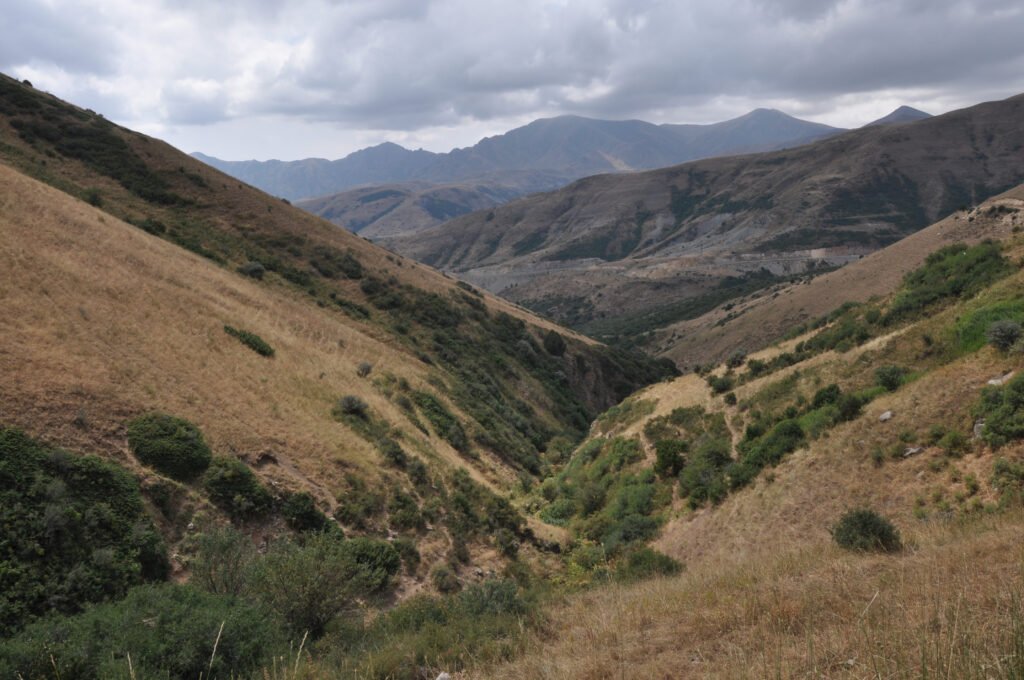
The main highways are in decent shape. The M1 north to Gyumri, the M4 to Sevan and Dilijan, and the M2 south through Ararat province are all normal, well surfaced two lane roads. The M2 further south towards Goris and Kapan is spectacular and slow, with long climbs, hairpins and heavy lorry traffic. Village roads range from acceptable to properly bad, and a few monastery approaches need genuine ground clearance. If your itinerary includes remote sites, pay for the 4×4.
Practical points. An EU driving licence is accepted; carry your passport too. Rental cars come with third party insurance, and the excess is often high, so read what the collision damage waiver actually covers. Petrol stations are frequent on main roads and sparse in the south, so fill up before long empty stretches. Local driving is assertive rather than aggressive: expect overtaking on blind bends, minimal indicator use and livestock on rural roads. Drive defensively, avoid driving at night outside cities, and remember that the alcohol limit is effectively zero.
Our southern Armenia road trip guide has the detail on the long drive to Tatev and beyond, including where the road gets serious.
How to combine it all on a real itinerary
Most independent travellers end up mixing methods rather than committing to one. A pattern that works well for a week to ten days: base yourself in Yerevan for three or four nights and use taxis, walking and day trips; take a marshrutka or train north to Dilijan or Gyumri for two nights; then either rent a car or join a tour for the south, where public transport is thin and the distances are long.
The sites that are hardest to reach independently are precisely the famous ones scattered across the countryside: Geghard, Khor Virap, Noravank, Tatev. There is no good public transport to any of them, and a taxi for the day works out similar in price to a seat on an organised trip. Our day trips from Yerevan guide sets out which are worth doing yourself and which are not.
Small things that make a difference
- Download an offline map before you arrive. Mobile data is cheap and good, but mountain valleys lose signal.
- Carry cash in small notes for minibuses, village shops and monastery car parks, even though cards work almost everywhere in Yerevan.
- Learn the Armenian for your destination, or have it written down. Showing a driver the name in Armenian script saves a lot of pointing.
- Motion sickness is real on the southern roads. If you are prone to it, sit at the front and bring tablets.
- Sundays and public holidays thin out marshrutka schedules considerably.
- Winter changes everything. Mountain passes close, the Tatev cable car can shut in high wind, and journey times stretch. Our Armenia in winter guide covers what still runs.
If you would rather not spend your holiday decoding bus stations, we run small group and private tours that handle every transfer, from a half day at Garni and Geghard to a full week across the country. See our Armenia tours or start with the Classic Armenia 7 day tour.
Planning your route
Armenia rewards travellers who do not over schedule. Distances look short on a map and take longer in reality, especially in the south where an 80 kilometre stretch can eat two hours. Build in slack, treat afternoon departures as optional rather than guaranteed, and accept that a driver stopping for twenty minutes to buy apricots from a roadside stand is part of the journey rather than an interruption to it.
Once you have the transport sorted, the rest falls into place. Our Armenia travel guide pulls together the practical basics, and the 10 day Armenia itinerary shows how the pieces fit together into a full trip.
Frequently asked questions
What is the cheapest way to get around Armenia?
Marshrutka minibuses are by far the cheapest way to travel between Armenian towns, typically costing the equivalent of one to five euros for most intercity routes in 2026. Inside Yerevan, the metro and city buses cost around 100 AMD per ride, roughly a quarter of a euro. The trade off is fixed departure points, no luggage guarantees and departures that often wait until the vehicle fills.
Do I need to rent a car to travel around Armenia?
No. Almost every town of any size is reachable by marshrutka from Yerevan, and the popular sites are covered by day tours and shared transfers. A car becomes genuinely useful if you want to reach remote monasteries, stop at viewpoints, or travel the south at your own pace. Many independent travellers mix both, using public transport for long hops and hiring a driver or joining a tour for the scattered sites.
Is there a train between Yerevan and Tbilisi?
Yes, an overnight sleeper train runs between Yerevan and Tbilisi, though it does not operate every day and the schedule changes between summer and winter. The journey takes roughly ten to eleven hours with a night border stop. Check the South Caucasus Railway site or ask at Yerevan station shortly before you travel, because seasonal timetable changes are common.
Are taxis safe and affordable in Yerevan?
Yes. Yerevan taxis are cheap by European standards and generally safe, and using an app such as GG or Yandex Go removes any haggling because the fare is fixed before you accept the ride. Short city trips usually cost a few hundred to around 1,500 AMD. Avoid unmarked cars waiting outside tourist sites and the airport arrivals door, where prices are several times higher.