Learning a handful of Armenian phrases before you arrive changes the trip more than in almost any other country, because so few visitors try. This guide covers the Mashtots alphabet, what Armenian actually sounds like, whether English and Russian will carry you, and a phrasebook of nearly forty phrases written so you can read them aloud.
| Quick facts | Detail |
|---|---|
| Language family | Indo-European, but its own independent branch with no close relatives |
| Alphabet | 38 letters, created around 405 AD by Mesrop Mashtots |
| Main varieties | Eastern Armenian (spoken here) and Western Armenian (diaspora) |
| Second languages | Russian, near universal over 40; English, common under 30 in Yerevan |
| Script direction | Left to right, fully phonetic, upper and lower case |
| Word you will hear most | Jan, an affectionate tag added to almost every name |
An alphabet with a birthday and an author
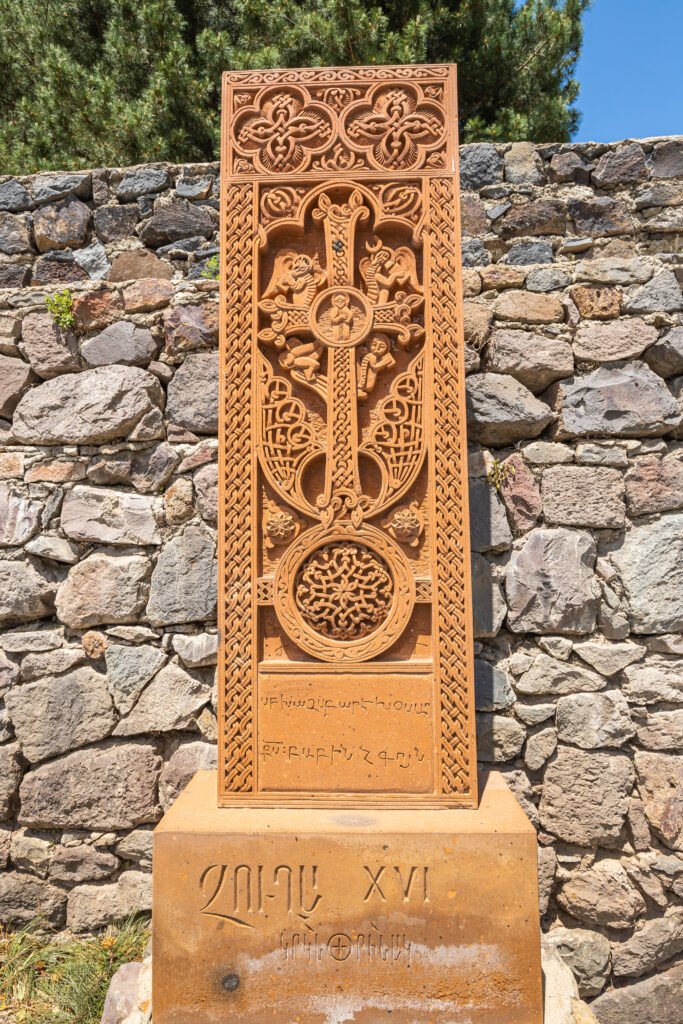
Most alphabets evolved. Armenian was invented. Around 405 AD the monk and scholar Mesrop Mashtots designed a script specifically for the Armenian language, at a moment when the country had just become the first state to adopt Christianity and needed to translate scripture into something people could read. He produced thirty-six letters, one for each sound, with no leftovers and no gaps. Two more, օ and ֆ, were added in the twelfth century to handle sounds that arrived with loanwords, which is how we get to thirty-eight.
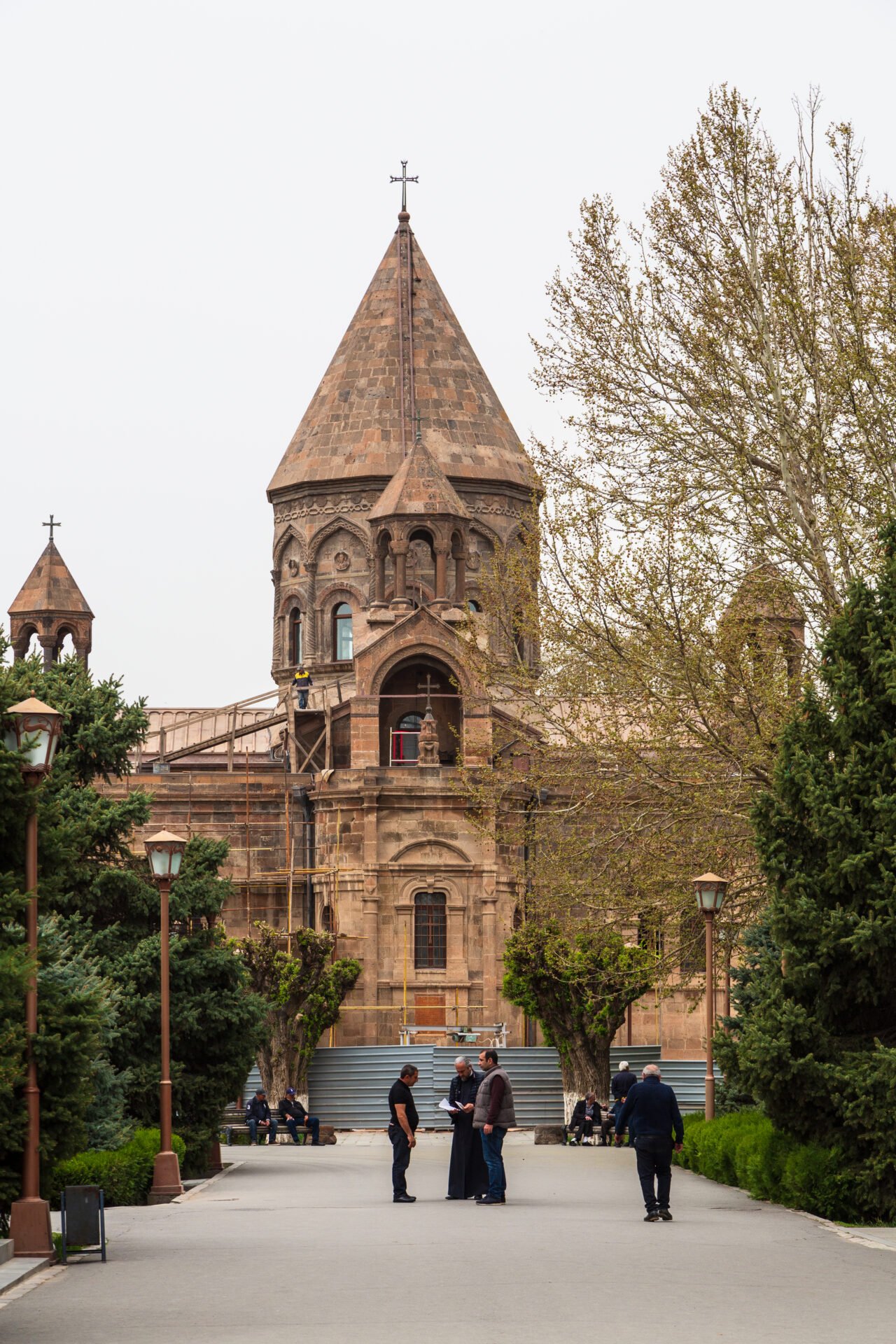
This matters for you as a traveller in one practical way: Armenian spelling is essentially phonetic. Once you know the letters, you can read any word aloud correctly, including ones you have never seen. There are no silent letters waiting to trip you up. You will see the alphabet carved into stone everywhere, and at Echmiadzin and on the roadside monument at Oshakan the letters themselves are treated as objects of reverence.
The script is also unmistakably its own thing. It looks nothing like Greek, Latin, Cyrillic or Georgian, which is disorienting for about a day and then becomes one of the pleasures of the place.
What Armenian sounds like
Dense, consonant-rich and lower in pitch than most European languages. Armenian has sounds English does not: a throaty kh like the ch in Scottish loch, a soft gh made at the back of the throat rather like a French r, and three-way distinctions among consonants that English collapses into two. It also has the dz and ts pairs that Italian and German speakers find easier than the English do.
Stress almost always falls on the last syllable of a word. If you remember nothing else, remember that: say ba-REV, not BA-rev, and shnor-ha-ka-lu-TYUN, and you will already sound three times better than most visitors.
Eastern and Western Armenian
There are two standard forms. Eastern Armenian is the official language of the Republic of Armenia and is also spoken by the large Armenian community in Iran. That is what you will hear on this trip. Western Armenian developed among the Armenians of the Ottoman Empire and now lives in the diaspora, in Lebanon, Syria, France, the United States and Argentina. UNESCO classes it as endangered.
The two share the alphabet and are mutually intelligible with some effort, but several consonants are systematically swapped: what an Eastern speaker pronounces with a hard b, d or g, a Western speaker pronounces as p, t or k. So the Eastern barev becomes the Western parev. If you have diaspora Armenian friends who taught you phrases, expect locals to smile and gently correct you.
Will English and Russian get you by?
Honestly, yes, most of the time. Here is the real picture.
Russian is the safest bet outside the capital. It was the compulsory second language of Soviet schooling, and essentially everyone over forty speaks it comfortably: taxi drivers, market traders, guesthouse hosts, museum attendants. Many restaurant menus in smaller towns exist in Armenian and Russian only.
English has grown enormously since about 2010 and is now the foreign language of choice for younger Armenians. In central Yerevan you can go a full week without needing anything else. Hotel staff, guides, waiters in the cafe districts and virtually anyone under thirty in the city will manage. Outside Yerevan it thins fast, and in a village in Vayots Dzor or Lori you may find nobody who speaks it.
The practical advice: download the Armenian offline pack in your translation app, learn the phrases below, and accept that between gestures, a phone and someone’s grandson being fetched from the next room, communication always ends up happening. On which, our guide to Armenian culture and hospitality explains why the grandson always gets fetched.
How to read the phrasebook below
Transliterations here are written for an English speaker to read aloud as if the words were English. A few conventions:
- kh is the throaty sound in Scottish loch, not a k.
- gh is a soft gargled sound, close to a Parisian r.
- zh is the s in measure.
- e is short, as in bed. ye at the start of a word is deliberate.
- Put the stress on the last syllable unless the transliteration shows otherwise.
Greetings and courtesy
| Armenian | Say it | Meaning |
|---|---|---|
| Բարև ձեզ | ba-REV dzez | Hello (polite, to anyone) |
| Բարև | ba-REV | Hi (friends, younger people) |
| Բարի լույս | ba-RI LOOYS | Good morning |
| Բարի երեկո | ba-RI ye-re-KO | Good evening |
| Ցտեսություն | tse-te-su-TYUN | Goodbye |
| Շնորհակալություն | shnor-ha-ka-lu-TYUN | Thank you |
| Մերսի | mer-SI | Thanks (borrowed, used constantly) |
| Խնդրեմ | khn-DREM | Please, and also you are welcome |
| Այո | a-YO | Yes |
| Ոչ | voch | No |
| Ներեցեք | ne-re-TSEK | Excuse me |
| Կներեք | kne-REK | Sorry |
| Ինչպե՞ս եք | inch-PES ek | How are you? |
| Լավ եմ | LAV em | I am well |
Getting by when you are stuck
| Armenian | Say it | Meaning |
|---|---|---|
| Դուք անգլերեն խոսու՞մ եք | dook ang-le-REN kho-SOOM ek | Do you speak English? |
| Ես հայերեն չեմ խոսում | yes ha-ye-REN chem kho-SOOM | I do not speak Armenian |
| Չեմ հասկանում | chem has-ka-NOOM | I do not understand |
| Օգնեցեք | og-ne-TSEK | Help |
| Որտե՞ղ է | vor-TEGH e | Where is…? |
| Զուգարանը որտե՞ղ է | zu-ga-RA-ne vor-TEGH e | Where is the toilet? |
| Ձախ / Աջ / Ուղիղ | dzakh / aj / u-GHIGH | Left / right / straight on |
| Ի՞նչ արժե | inch ar-ZHE | How much does it cost? |
| Շատ թանկ է | shat tank e | That is very expensive |
| Կանգնեք, խնդրեմ | kang-NEK, khn-DREM | Stop here, please |
Numbers, which you will need at markets and in taxis: mek (1), yer-KU (2), ye-REK (3), chors (4), hing (5), vets (6), yot (7), oot (8), i-NE (9), TA-se (10), ksan (20), har-YUR (100), ha-ZAR (1000).
Eating and drinking
| Armenian | Say it | Meaning |
|---|---|---|
| Ջուր | joor | Water |
| Հաց | hats | Bread |
| Սուրճ / Թեյ | soorch / tey | Coffee / tea |
| Գինի / Գարեջուր | gi-NI / ga-re-JOOR | Wine / beer |
| Համեղ է | ha-MEGH e | It is delicious |
| Ես բուսակեր եմ | yes bu-sa-KER em | I am vegetarian |
| Միս չեմ ուտում | mis chem u-TOOM | I do not eat meat |
| Հաշիվը, խնդրեմ | ha-SHI-ve, khn-DREM | The bill, please |
| Բարի ախորժակ | ba-RI a-khor-ZHAK | Enjoy your meal |
| Կենաց | ke-NATS | Cheers, to your health |
That last one earns its place. Armenian meals run on toasts, and a foreigner who raises a glass and says kenats has effectively joined the family. If you want to know what you are toasting with, see our Armenian wine guide, and the dishes themselves are in the Armenian food guide.
Reading signs and menus
Street signs in Yerevan are usually Armenian and Latin, and often Russian too. Off the main tourist routes they are Armenian only. These are the words worth recognising by shape, even if you cannot read the letters yet:
- ՄՈՒՏՔ (mootk) entrance, ԵԼՔ (yelk) exit
- ԲԱՑ (bats) open, ՓԱԿ (pak) closed
- ԶՈՒԳԱՐԱՆ (zu-ga-RAN) toilet
- ԴԵՂԱՏՈՒՆ (de-gha-TOON) pharmacy, ՀԻՎԱՆԴԱՆՈՑ (hi-van-da-NOTS) hospital
- ՈՍՏԻԿԱՆՈՒԹՅՈՒՆ (vos-ti-ka-nu-TYUN) police
- ԿԱՆԳԱՌ (kan-GAR) bus stop, ՇՈՒԿԱ (shu-KA) market
- ԴՐԱՄ (dram) the currency, written as ֏ on price tags
On menus, look for hav (chicken), khoz (pork), gar (lamb), dzuk (fish), panir (cheese), aghtsan (salad), apur (soup), kartofil (potato) and brindz (rice). That vocabulary alone will get you through any village restaurant in the country. If you are heading out to the regions, our southern Armenia road trip and the 10-day Armenia itinerary are where you will need it most.
Three words that will make people light up
Ջան (jan) is added after a name or even a noun to mean something between dear and love. Anna jan, mama jan. It is used constantly, by everyone, to everyone, and using it correctly is the single fastest way to sound like you belong.
Ապրես (ap-RES) literally means may you live and is used for well done, good on you, thanks for that. Say it to the man who hands you a perfect apricot.
Ցավդ տանեմ (tsavd ta-NEM) means let me take your pain. It is what a grandmother says to a child, and there is no equivalent in English at all. You will hear it, and once you understand it you will understand something about the country.
Our guides teach guests a few phrases on day one and then quietly enjoy watching shopkeepers react. If you want to travel with someone who can translate the toast as well as the menu, have a look at our tours.
Frequently asked questions
Can I travel in Armenia speaking only English?
In Yerevan, yes. Hotel staff, guides, waiters in the centre and almost anyone under thirty will speak workable English. Outside the capital it thins out quickly, and in villages you may find nobody at all. Learning ten phrases and keeping a translation app with the Armenian pack downloaded covers the gap comfortably.
Is Russian still useful in Armenia?
Very. Russian was the second language of the Soviet school system and almost everyone over forty speaks it well, including drivers, market traders and village hosts. Younger Armenians increasingly favour English, so the two languages together cover nearly every situation you will meet.
How many letters does the Armenian alphabet have?
Thirty-eight today. Mesrop Mashtots created the original thirty-six around 405 AD, and two more, o and f, were added in the twelfth century to handle sounds arriving through loanwords. It is a genuinely independent script, related to no other alphabet in current use.
What is the difference between Eastern and Western Armenian?
Eastern Armenian is the language of the Republic of Armenia and of Armenians in Iran, and it is what you will hear on this trip. Western Armenian belongs to the diaspora descended from the Ottoman Armenian provinces and is now listed by UNESCO as endangered. They share the alphabet and are mutually intelligible with effort, but pronunciation of several consonants is systematically swapped.
Is Armenian hard to learn for an English speaker?
The grammar is demanding, with seven noun cases and a verb system that takes patience. The good news is that the script is fully phonetic, so once you learn the letters you can read any word aloud correctly, and the sound system holds few surprises beyond two throaty consonants. For travel purposes, thirty phrases are entirely achievable in a week.