Armenia or Georgia is the question we get more than any other, usually from someone with two weeks and one flight to book. The short answer: Georgia has the bigger mountains, the coast and the better known wine, Armenia has the older architecture, the emptier roads and the sharper sense of place. Here is the honest version, and how to do both.
| Armenia | Georgia | |
|---|---|---|
| Best for | Medieval monasteries, quiet roads, a compact first trip | High mountains, coast, wine country, city atmosphere |
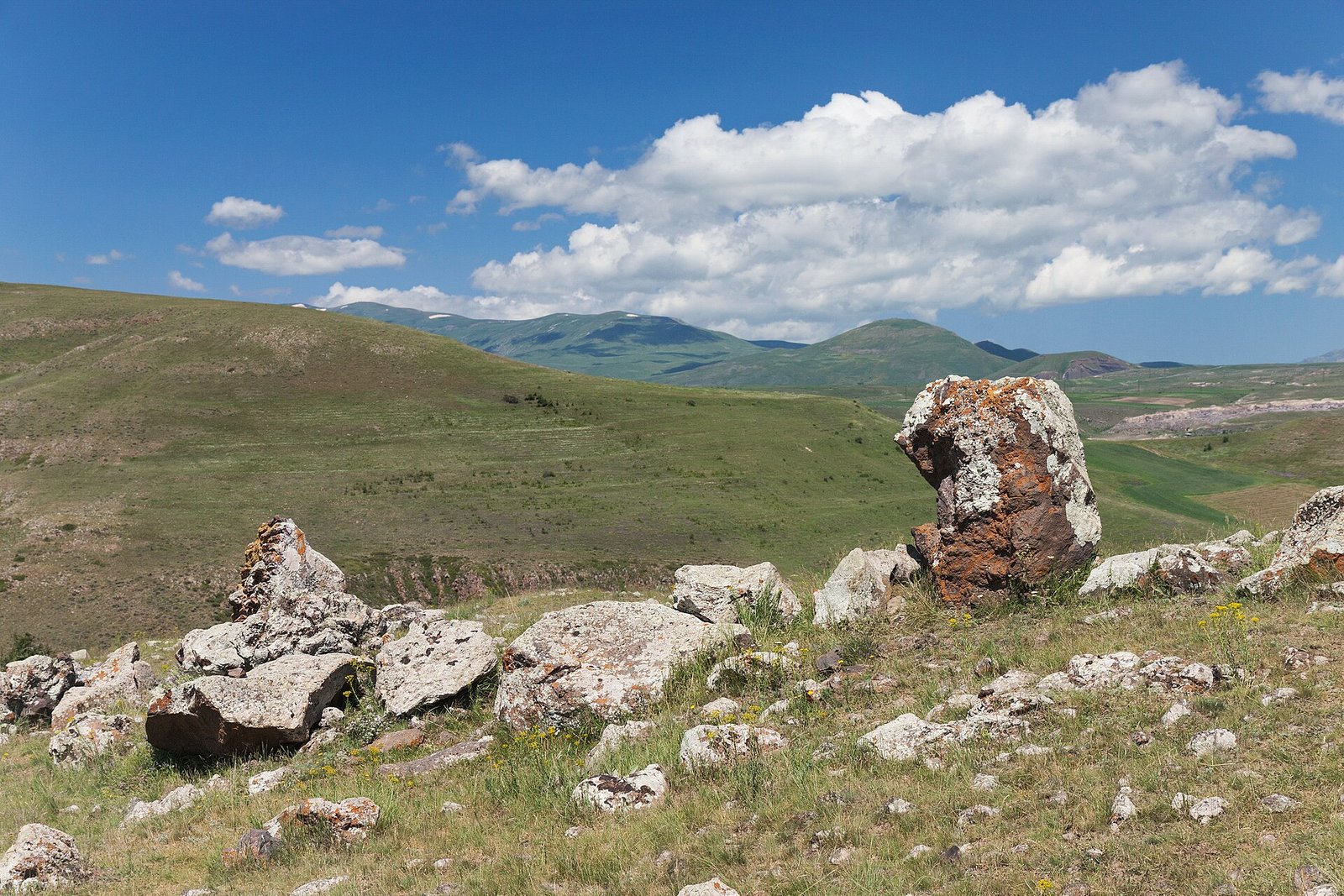
| Landscape | Volcanic plateau, canyons, Ararat views, alpine lake | Greater Caucasus peaks over 5,000 m, Black Sea, subtropical west |
| Capital | Yerevan, modern, pink tuff, superb cafe culture | Tbilisi, older, more atmospheric, sulphur baths |
| Wine | Areni and Vayots Dzor, 6,100-year-old winery, small scene | Kakheti, qvevri tradition, far more developed wine tourism |
| Food | Khorovats, dolma, lavash, apricots, herbs, brandy | Khachapuri, khinkali, walnut sauces, wider variety |
| Crowds | Noticeably quieter, even at the top sites | Busy in Tbilisi, Kazbegi and Batumi in summer |
| Cost | Cheaper drivers and tours, similar food | Slightly cheaper beds, hostels and beer |
| Ideal length | 5 to 8 days | 7 to 12 days |
Where Georgia genuinely wins
We are an Armenian tour operator and we will still say this plainly: on several counts Georgia is the stronger destination, and you should know which ones before you choose.
Mountains. This is not close. The Greater Caucasus in Georgia has peaks above five thousand metres, glaciers, and villages like Ushguli and Mestia in Svaneti that look like nothing else in Europe. Armenia’s highest point, Aragats, is just over four thousand metres and our landscape is a high plateau cut by canyons. Beautiful, but not alpine in the way Kazbegi is alpine. If big mountain scenery is the reason you are travelling, go to Georgia.
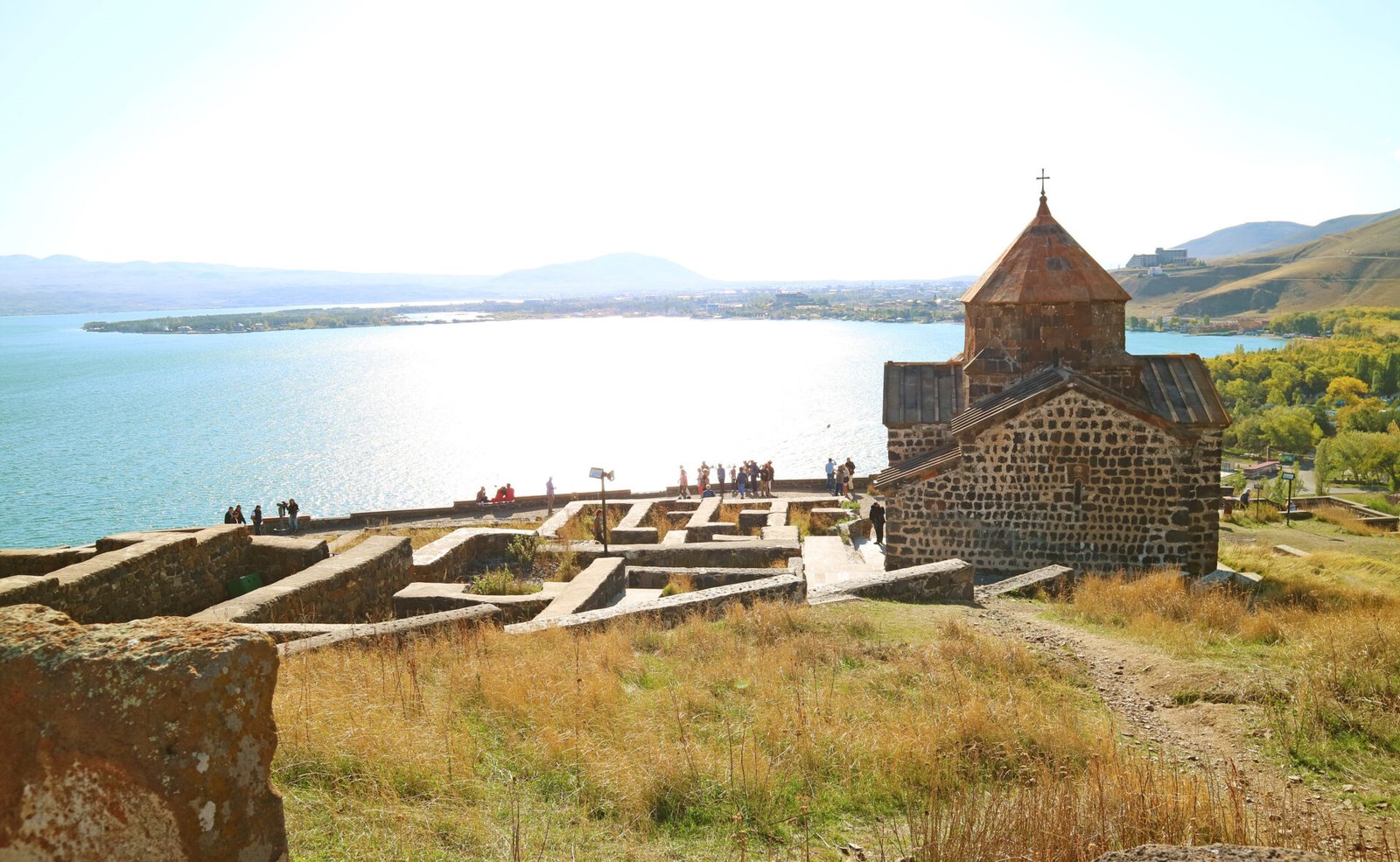
The sea. Georgia has a Black Sea coast, subtropical vegetation, Batumi with its odd skyline, and beaches. Armenia is landlocked. Lake Sevan is lovely and swimmable for about ten weeks a year, and it is not a substitute for a coastline.
Wine tourism. Both countries make wine in clay vessels and both have ancient claims. Georgia has built the far better visitor experience: Kakheti has dozens of estates set up for tastings, marked routes, cellar doors, and a wine culture that Georgians will explain to you for three hours. Armenia’s Areni region is growing fast and produces excellent Areni Noir, but it is a handful of wineries rather than a region you can tour for a week.
Tbilisi versus Yerevan. As a city to wander, Tbilisi wins. Crooked wooden balconies, the sulphur bath district, the old town tumbling down to the river, layers of Persian, Russian and Georgian building. Yerevan is handsome and pleasant but it was largely rebuilt in the twentieth century to a plan, and it does not have that accumulated texture.
Access and budget beds. Georgia gets more flights, more low-cost routes and more visitors, which means more hostels, more guesthouses and slightly cheaper rooms. A year of visa-free stay for most nationalities also makes it the obvious base for long-stay travellers.
Where Armenia wins
Now the other side, and we will be equally specific.
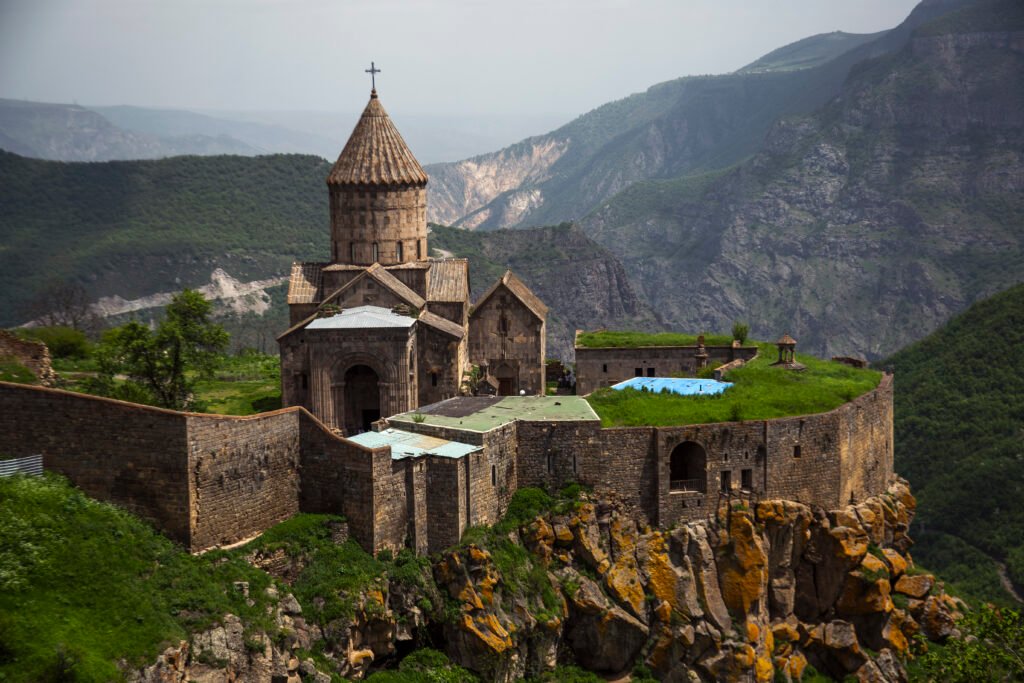
Monasteries and their settings. Armenia has the greater density of medieval religious architecture and, more importantly, the more dramatic siting. Tatev on a cliff above the Vorotan gorge, reached by the longest reversible cable car in the world. Geghard cut directly into rock. Noravank at the end of a red canyon. Khor Virap with Ararat filling the entire sky behind it. Georgia has magnificent churches too, but Armenia has more of them, in more extraordinary places, and almost all are free to enter.
Depth of a single story. Armenia adopted Christianity as a state religion in 301, uses an alphabet invented in 405 that is still in daily use, and has kept one continuous thread through seventeen centuries. A week here follows one narrative. That coherence is something travellers often remark on afterwards.
Crowds, or the absence of them. Georgia has gone mainstream. In August, Kazbegi has queues and Batumi is a resort. In Armenia you can stand alone in a thirteenth-century monastery at eleven in the morning in high season. For many people this single factor decides it.
Compactness. Armenia is small and the sights cluster. You can base yourself in Yerevan and reach Garni, Geghard, Echmiadzin, Khor Virap, Sevan, Dilijan and Noravank on day trips, sleeping in the same bed. Georgia’s highlights are spread across a much larger country and require moving hotels repeatedly.
Yerevan’s café and food culture. This surprises people. Yerevan has an outdoor café scene that runs from morning coffee to two in the morning, excellent wine bars, and a brandy tradition taken seriously. Our guide to things to do in Yerevan covers it properly.
Cost of getting around. Private drivers, guided day trips and taxis are cheaper in Armenia than in Georgia. If your style is to hire a car with a driver rather than take marshrutkas, Armenia works out noticeably less expensive.
Food: a genuine draw
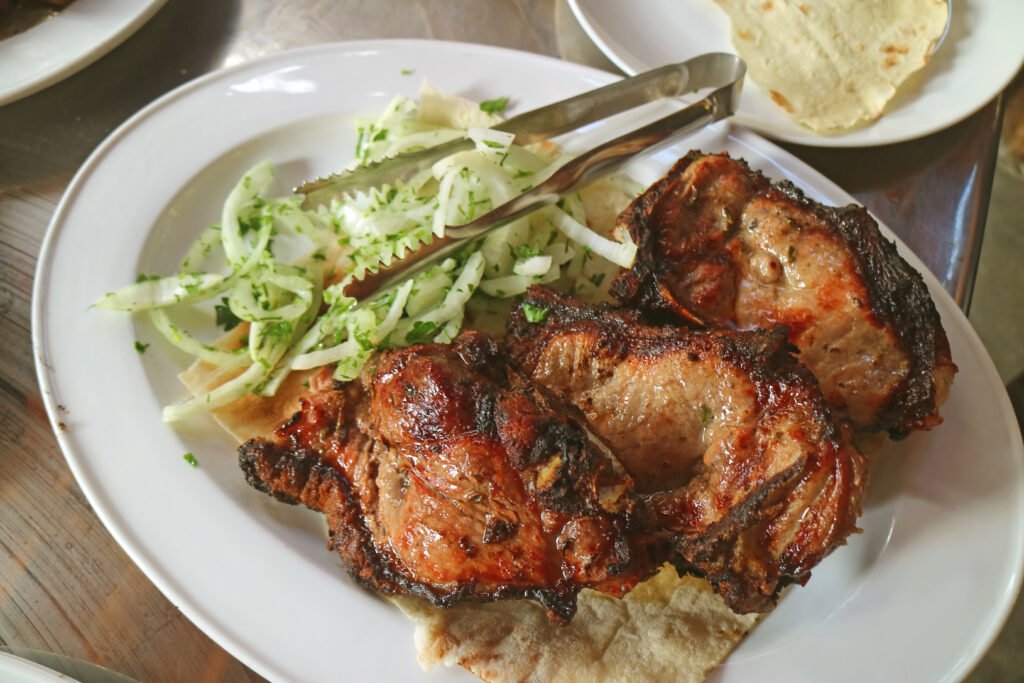
Georgian food is more varied and more famous, and khachapuri and khinkali deserve their reputation. Armenian food is more restrained, herb-led and grill-based: khorovats cooked over vine cuttings, lavash baked in a clay tonir, dolma, fresh cheese and greens, apricots that taste like a different fruit from the ones sold in Europe. Neither is better. If you like walnut sauces and cheese bread, you will be happier in Georgia. If you like grilled meat, herbs and simplicity, you will be happier here. Our Armenian food guide explains what to order, and the Armenian wine guide covers Areni Noir and Voskehat if you want to compare the two wine cultures fairly.
Cost, honestly
Both countries are inexpensive by Western European standards and the gap between them is small. Budget travellers manage on roughly 35 to 50 euros a day in either, and 70 to 110 euros a day buys a comfortable mid-range trip with private transport in both. Georgia tends to be a little cheaper for a hostel bed, a guesthouse room and a beer. Armenia tends to be cheaper for a driver for the day, an organised excursion and a taxi across town. Restaurant meals, museum tickets and supermarket shopping are close enough not to matter.
The Yerevan to Tbilisi route
The land border at Bagratashen and Sadakhlo is open daily and straightforward. You have four options.
- Shared minivan. Departs Yerevan’s Kilikia bus station through the day, around six hours including the crossing, roughly 9,000 dram. Cheap, functional, leaves when full rather than to a timetable.
- Overnight train. Seasonal, from Sasuntsi David station, about ten hours in four-berth couchettes, with border formalities in the middle of the night. Runs daily in high summer and on alternate days for much of the rest of the year. Romantic, slow, and you should book a couple of days ahead in July and August.
- Private transfer. Around six hours door to door, and the only version that lets you stop at Haghpat and Sanahin, two UNESCO-listed monasteries that sit almost exactly on the route. This is what we recommend, because it turns a transit day into one of the better days of the trip.
- Flying. About 45 minutes in the air and usually 100 to 150 euros. Rarely worth it once you add airports at both ends.
One structural point: Armenia’s borders with Turkey and Azerbaijan are closed. Any three-country South Caucasus trip has to pass through Georgia, which is one more argument for putting Georgia in the middle of your route.
A combined two-week plan that works
This is the shape we suggest most often, flying into Tbilisi and out of Yerevan or the reverse. Open jaw tickets are usually no more expensive than a return and save you a whole day of backtracking. Check the flight options in our guide to getting to Armenia before you book.
- Days 1 to 3, Tbilisi. Old town, sulphur baths, Mtskheta as a half day, one good long dinner.
- Days 4 and 5, Kakheti. Sighnaghi and Telavi, qvevri wineries, the Alaverdi and Gremi monasteries.
- Days 6 and 7, Kazbegi. The Georgian Military Highway, Gergeti Trinity church, a day walking in the high Caucasus.
- Day 8, crossing into Armenia. Drive south via Sadakhlo, stop at Haghpat and Sanahin, sleep in Dilijan.
- Day 9, Dilijan and Lake Sevan. Forest, the Parz Lake walk, Sevanavank, arrive in Yerevan in the evening.
- Days 10 and 11, Yerevan. The city itself, the Matenadaran, Cascade, plus Garni, Geghard and Echmiadzin as a day out.
- Day 12, the south. Khor Virap for Ararat, Areni for wine, Noravank in its canyon.
- Day 13, Tatev. Wings of Tatev cable car and the Vorotan gorge, overnight in Goris or Halidzor.
- Day 14, return and fly. Back to Yerevan with a stop at the Selim caravanserai in season.
If you only have ten days, cut Kazbegi or cut Tatev, not both countries. If you have three weeks, add Svaneti in Georgia and Gyumri and the Lori canyons in Armenia. Our 10-day Armenia itinerary works as the Armenian half of any of these plans.
We build combined Caucasus trips all the time, including the overland crossing with monastery stops, and we work with trusted partners on the Georgian side. Tell us your dates and we will lay out both halves. See our tours, or look at the Classic Armenia 7-day tour and the Tatev 2-day tour as the Armenian building blocks.
So, which one?
Choose Georgia if you want serious mountains, a beach at the end, the most developed wine tourism in the region, a city with real old-town atmosphere, and the widest choice of budget beds. Choose Armenia if you want medieval architecture in extraordinary places, considerably fewer people, one compact base, cheaper private transport, and a country that still feels like a discovery rather than a destination.
Choose both if you have two weeks, because they are genuinely different from each other and the six hour drive between them is one of the easiest international borders you will ever cross. For a fuller picture of the Armenian side, start with our Armenia travel guide.
And if you are still undecided after all that, here is the tiebreaker we give people on the phone. Look at a photograph of Ushguli and a photograph of Tatev. Whichever one makes you want to book a flight is your answer, and neither is wrong.
Frequently asked questions
Should I visit Armenia or Georgia first?
If you have seven to ten days and want maximum variety, Georgia usually wins because it has high mountains, a coast and a famous wine region in one country. If you have five to seven days, want medieval architecture and dislike crowds, Armenia is the better fit because everything is within a few hours of Yerevan. With two weeks, do both and travel overland between them.
Is Armenia or Georgia cheaper?
They are close, and the difference depends on what you spend money on. Georgia is usually slightly cheaper for accommodation, hostels and beer, and it has more budget options because it receives more visitors. Armenia tends to be cheaper for private drivers, taxis and guided day trips. Food and museum entry cost about the same in both.
How do you get from Yerevan to Tbilisi?
Shared minivans leave Yerevan's Kilikia bus station through the day and take about six hours including the border, for roughly 9,000 dram. A seasonal overnight train runs from Sasuntsi David station, taking about ten hours in four berth couchettes. Private transfers cost more but let you stop at the UNESCO monasteries of Haghpat and Sanahin. There are also short flights of about 45 minutes.
Is the border between Armenia and Georgia open?
Yes. The Bagratashen and Sadakhlo crossing on the main road is open daily and the formalities are simple for most Western passport holders. Note that Armenia's borders with Turkey and Azerbaijan are closed, so any trip covering three South Caucasus countries has to route through Georgia.
Can I see both Armenia and Georgia in two weeks?
Comfortably, yes, if you accept that you are seeing highlights rather than everything. A good split is six or seven nights in Georgia including Tbilisi, Kakheti and Kazbegi, one travel day overland with monastery stops, and six or seven nights in Armenia based around Yerevan with trips south. Ten days for both is possible but starts to feel rushed.