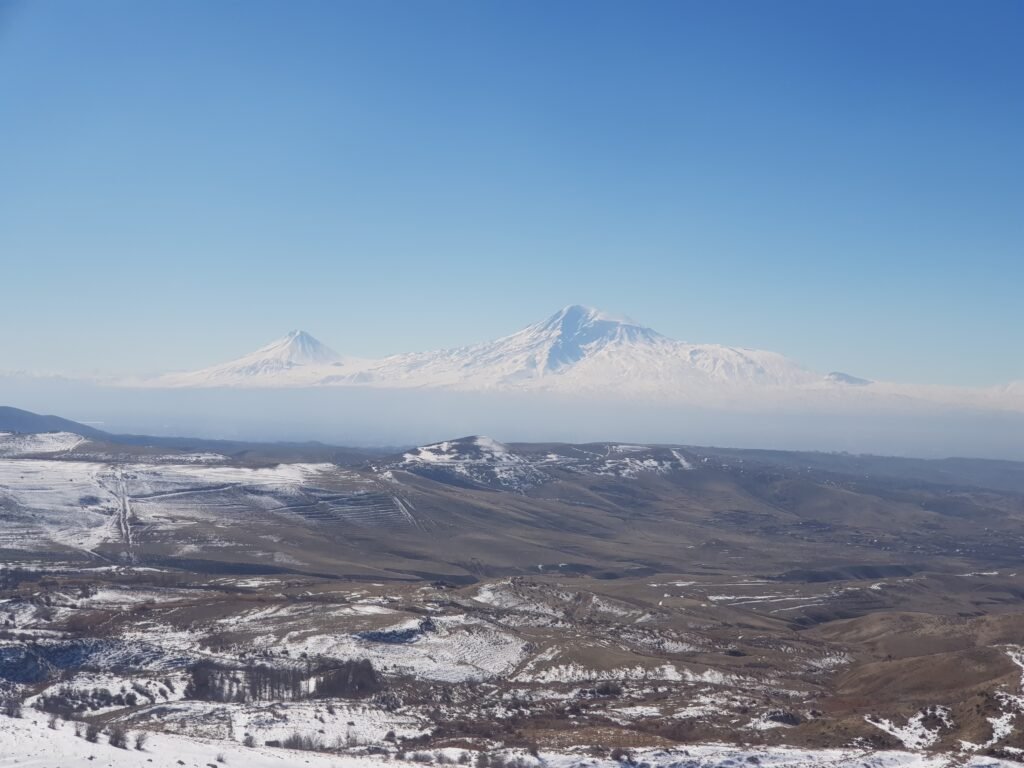
Armenia in winter is a different country from the one in the brochures. The crowds vanish, the monasteries sit in snow, Ararat is at its clearest on cold bright mornings, and hotel prices drop by a fifth. It is not the season for long hikes, but for anyone who likes quiet stone churches and good food indoors, it is arguably the best time to come.
| Winter in brief | What to expect |
|---|---|
| Season | December to March, with real snow in the highlands from late December |
| Yerevan daytime | Usually minus 2 to plus 7 degrees, occasional dips to minus 10 |
| Mountains | Considerably colder, reliable snow above roughly 1,500 metres |
| Daylight | About 9 hours in late December, sunset around 17:30 |
| Skiing | Tsaghkadzor, 1,966 to 2,819 m, about 30 km of pistes, day pass roughly 25 to 31 euros |
| Key dates | New Year 31 December to 2 January, Armenian Christmas 6 January |
| Prices | Hotels typically 15 to 25 percent below summer rates |
What winter actually feels like here
Yerevan sits at about a thousand metres on a dry plateau, and its winter is cold in a clean, sunny, low-humidity way rather than the grey drizzle of northern Europe. Most January days hover between minus two and plus seven. Snow falls several times each winter and usually melts within a day or two in the city centre. Cold snaps to minus ten happen and pass.
Go up in altitude and the picture changes completely. Tsaghkadzor, Dilijan, the Lori canyons and the Sevan basin hold serious snow from late December to March. The south, around Goris and Tatev, is milder but can be cut off briefly by a storm. Armenia is a small country with enormous vertical range, so there is no single winter weather report that covers it.
The monasteries in snow
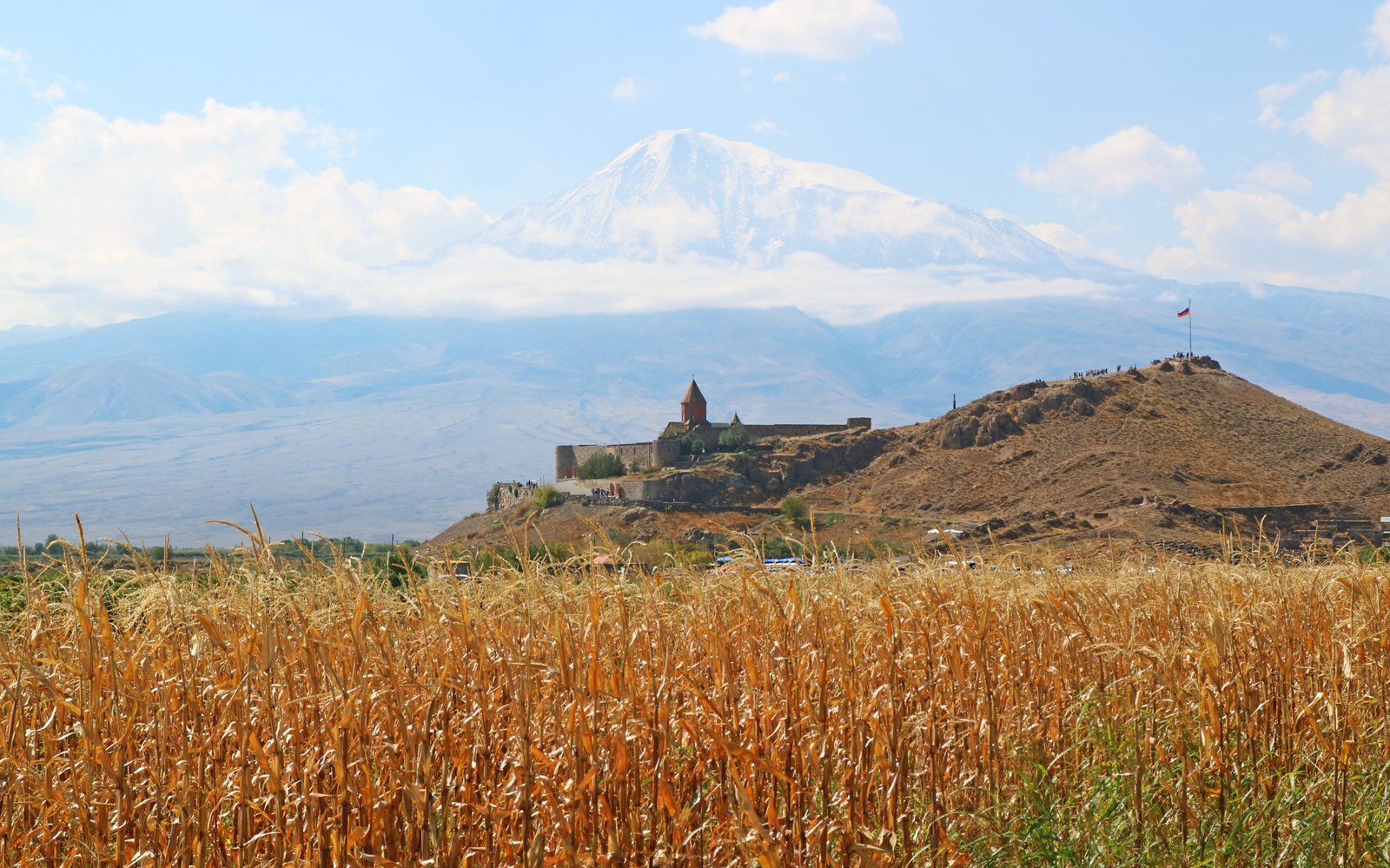
This is the reason to come. Most Armenian monasteries have no ticket office, no opening hours and no queue, which means winter changes nothing about access and everything about atmosphere. Sevanavank on its peninsula above a half-frozen lake is the image everybody remembers. Khor Virap with snow on the roofs and Ararat filling the sky behind it is the one that ends up framed on a wall.
Geghard, carved into its gorge, is at its best in cold weather because the interior is dim, candlelit and full of the smell of beeswax, and because the choirs that sing in the rock-cut chamber sound better when there are eight people present instead of eighty. Noravank, in its red cliffs in Vayots Dzor, gets a dusting rather than a blanket and looks superb.
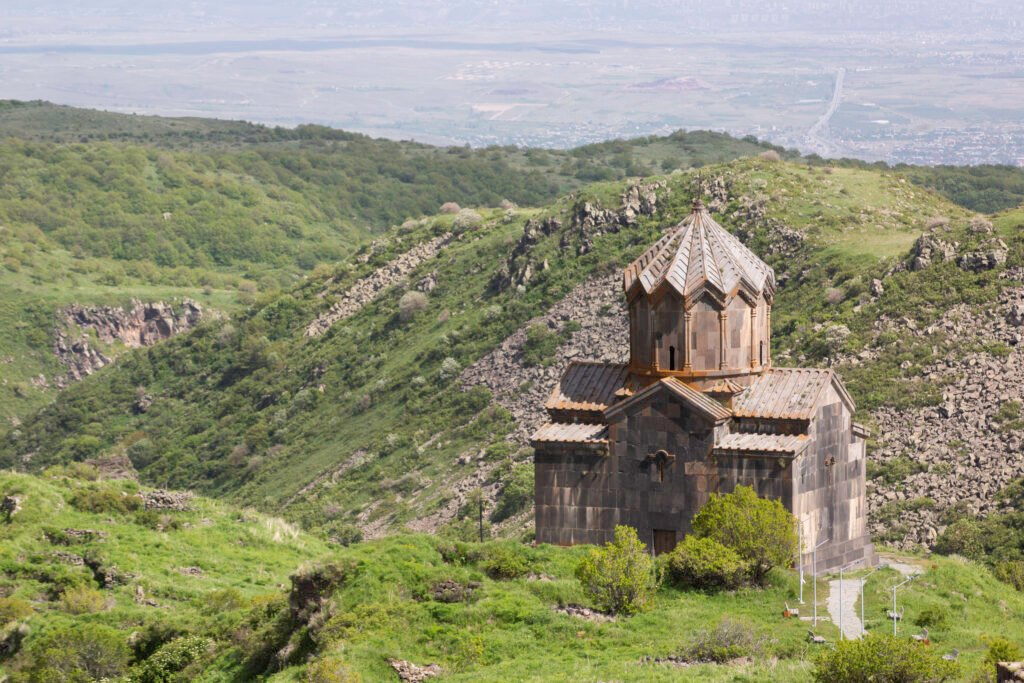
The honest caveats: Amberd, high on the slopes of Aragats, is usually unreachable from December until late spring because the approach road is not cleared. Some of the small village churches in Lori and Syunik sit at the end of tracks that turn to ice. Plan around the roads rather than the sites. Our guide to the best monasteries in Armenia flags which ones are easy year round.
Skiing at Tsaghkadzor
Tsaghkadzor is a genuine mountain resort rather than a nursery slope, about an hour by road from Yerevan on the flank of Mount Teghenis. The gondola climbs in stages from roughly 1,966 metres to 2,819 metres, giving around 850 metres of vertical, and there are about 30 kilometres of pistes served by seven lifts. The terrain is mostly easy and intermediate, with a small amount of genuinely steep skiing.
Expect day passes in the region of 25 to 31 euros, which is a fraction of Alpine pricing, and rental of skis and boots for a modest additional sum. The season runs roughly from December to April, but the reliable window is mid-January to mid-March. Snowmaking is limited, so an early December trip is a gamble.
Be realistic about what it is. Lift queues appear at weekends when Yerevan drives up, the piste grooming is decent rather than immaculate, and the après-ski is a hotel bar rather than a scene. What you get in exchange is an uncrowded mountain, wide views over the Kotayk plateau, and the ability to ski in the morning and be at a monastery by mid-afternoon.
Jermuk, and being honest about it
Jermuk in Vayots Dzor is sold as Armenia’s second ski resort, and we would rather you heard the truth before booking. The ski area is small, with a short lift and a handful of runs, pleasant for a beginner or for a family afternoon but not a destination in itself. What Jermuk genuinely is, is a spa town: mineral springs, a drinking gallery where you taste waters at different temperatures, sanatoria with proper thermal treatments, a waterfall and forested gorges. Come for two nights of steam, hot water and mountain air, and treat the skiing as a bonus.
New Year, the biggest week of the Armenian year
Amanor, New Year, matters far more here than Christmas does in the Western sense. From around 28 December Yerevan fills with lights, the tree on Republic Square goes up, and every family spends days preparing a table that will stay laid for a week. If you are invited into an Armenian home in this period, accept, eat everything, and do not attempt to leave early.
Practically, 31 December to 2 January is the one period we advise caution. Many restaurants close because staff are with their families, prices rise, domestic tourists fill the mountain hotels, and Yerevan itself can feel oddly shut on 1 January while everyone sleeps it off. Book weeks ahead if you want to be here for it, and build in low expectations for that specific day.
Armenian Christmas on 6 January
The Armenian Apostolic Church kept the older date and celebrates the Nativity and the Baptism together on 6 January, in a feast called Surb Tsnund. The main liturgy is on the morning of the sixth, preceded on the evening of the fifth by a candlelit service and the blessing of water, in which a cross is lowered into water to commemorate the baptism in the Jordan.
Echmiadzin, the mother cathedral of the Armenian Church twenty minutes west of Yerevan, is the place to see it, and it is genuinely moving: a packed nave, sung liturgy in classical Armenian, incense, and families carrying blessed water home in bottles. Go early, dress warmly, and stand at the back rather than pushing forward. The traditional Christmas Eve meal is fish, rice pilaf with dried fruit and greens, deliberately lighter than the New Year excess. Our Armenian food guide covers what appears on those tables.
Winter driving and getting around
The main highways, Yerevan to Sevan, Yerevan to Gyumri, the M2 south towards Goris, are cleared and salted and stay open through all but the worst storms. Armenian drivers use winter tyres as a matter of course and you should insist on them in any rental. If you are driving yourself, carry chains, keep the tank above half, and start your day early because darkness falls around half past five.
Some routes close. The Vardenyats or Selim pass, the beautiful old caravan road between Sevan and Vayots Dzor with its fourteenth-century caravanserai, shuts with the first serious snow and stays shut for months. The high approach to Amberd goes the same way. Passes on the southern M2 can close for a few hours during a storm and reopen once the ploughs pass.
Our genuine advice for a first winter trip is to use a driver rather than rent. It costs less than you think, removes all the decisions about ice and closed passes, and means somebody local is watching the forecast for you. If you do drive, read our notes on getting around Armenia first.
What stays open, and what does not
- Open and excellent: Yerevan museums, the Matenadaran, Cascade, the Vernissage market at weekends, Echmiadzin, Khor Virap, Geghard, Garni, Sevanavank, Noravank.
- Open with reduced hours: the Tatev cable car, which typically runs Tuesday to Sunday with shorter winter hours and a cheaper winter fare, subject to weather closures. Check the day before.
- Effectively closed: Amberd fortress, the Selim pass, most high hiking, lakeside swimming, and many small guesthouses in Dilijan and Syunik that shut from November to April.
Lake Sevan deserves a specific mention. It rarely freezes completely, but the shallow bays ice over and the whole basin takes on a pale, empty, very beautiful quality. The fish restaurants along the shore that heave in August are half shut, so check before driving out for lunch. Our Lake Sevan guide and our Dilijan guide both note the seasonal closures.
What to pack
- A proper insulated coat, warmer than you think you need for a city at a thousand metres.
- Boots with real grip. Armenian pavements ice over and monastery courtyards are worse.
- Thermal base layers, a hat and gloves, since monastery interiors are unheated stone.
- Sunglasses and lip balm. The winter sun on snow at altitude is fierce and the air is very dry.
- Something smarter for a Yerevan restaurant, because people here dress well in winter.
- A power bank, because cold flattens phone batteries and you will take more photographs than you expect.
Our full Armenia packing list goes into more detail, including the adaptor and SIM card questions.
Winter is when we can show you Khor Virap with nobody else in the courtyard. We run private and small-group trips right through the cold months, with winter tyres, a driver who watches the passes and an itinerary that adapts to the snow. See our tours, or ask us about the Lake Sevan and Dilijan day trip in its snowy version.
Is it the right season for you?
Come in winter if you want empty sites, sharp light, low prices, skiing an hour from a capital city, and a real cultural event on 6 January. Choose another season if hiking is the point of your trip, if you want to swim in Sevan, or if you need every mountain road open. Our guide to the best time to visit Armenia sets the seasons side by side.
One last thing. Armenian hospitality intensifies in winter. When there are few visitors, a guesthouse owner in Dilijan will sit down with you and open the homemade wine, and a woman at a monastery will press a piece of gata into your hand. That is not a marketing line. It is simply what happens when you are the only foreigner in the village in February.
Frequently asked questions
Is Armenia worth visiting in winter?
Yes, if you come for landscape, culture and quiet rather than for hiking. The monasteries look extraordinary against snow, Mount Ararat is clearest on cold bright days, hotels cost noticeably less and the major sites are almost empty. The trade off is shorter daylight, some closed mountain roads and colder weather in the highlands.
How cold does it get in Armenia in winter?
Yerevan usually sits between minus two and plus seven degrees during the day in January, with occasional cold snaps to minus ten. Snow falls in the city but rarely lies for long. The mountain areas such as Tsaghkadzor, Dilijan, Sevan and the Lori canyons are considerably colder and hold proper snow from December to March.
Are the monasteries open in winter?
Almost all of them are, and most have no opening hours or tickets at all. Khor Virap, Geghard, Echmiadzin, Sevanavank and Noravank remain accessible throughout winter. The access roads matter more than the sites themselves: a few steep approaches, notably Amberd, become impassable after heavy snow and stay closed until spring.
Can you ski in Armenia?
Yes. Tsaghkadzor is the main resort, an hour from Yerevan, with a gondola rising from about 1,966 to 2,819 metres and roughly 30 kilometres of mostly easy and intermediate pistes. Day passes are around 25 to 31 euros. Jermuk has a much smaller ski area and is better thought of as a spa town with a bit of skiing attached.
When is Armenian Christmas?
The Armenian Apostolic Church celebrates Christmas on 6 January, combining the Nativity and the Baptism of Christ in a single feast called Surb Tsnund. The main liturgy takes place on the morning of 6 January, with a water blessing ceremony the evening before. Echmiadzin Cathedral is the focal point and draws large congregations.