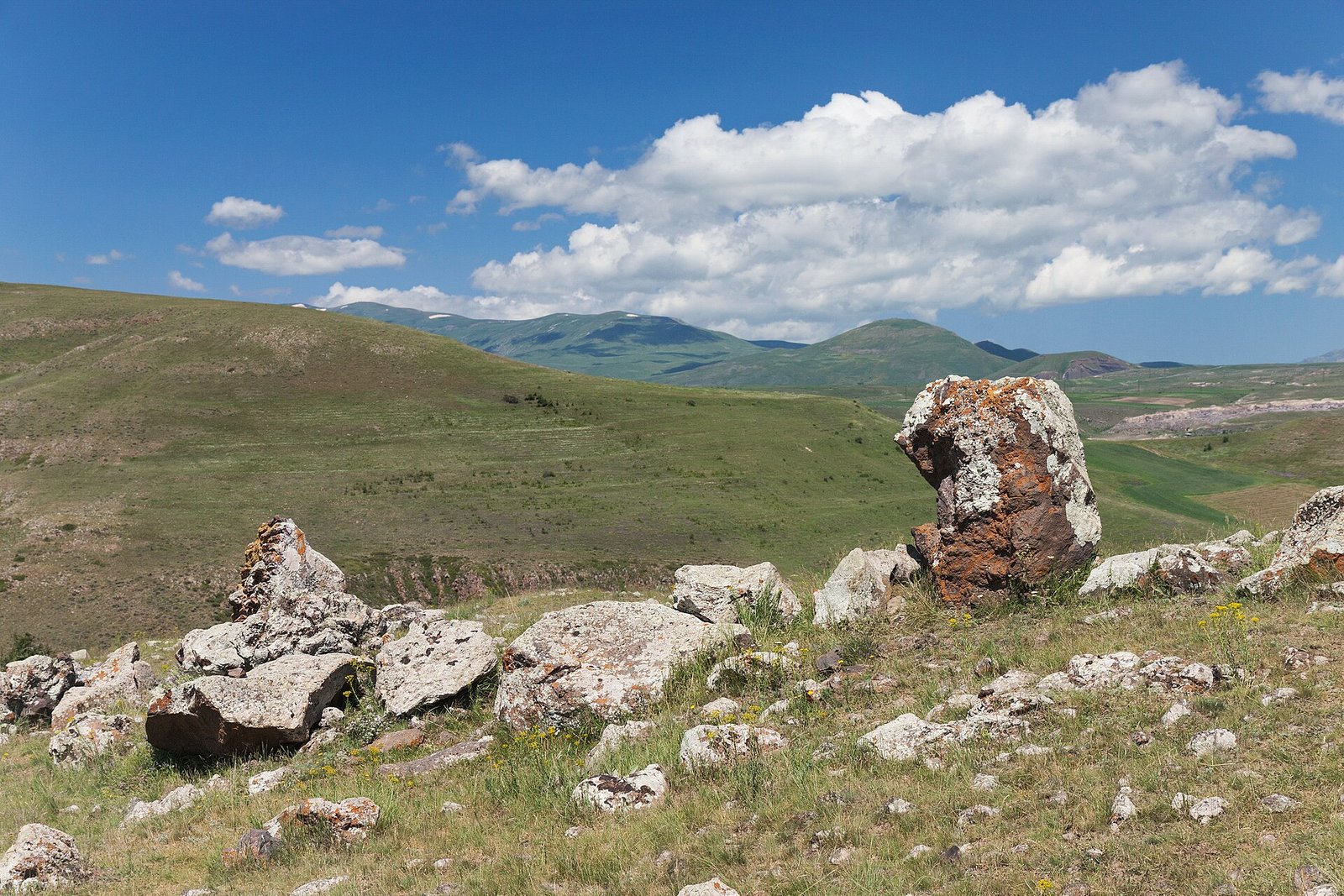
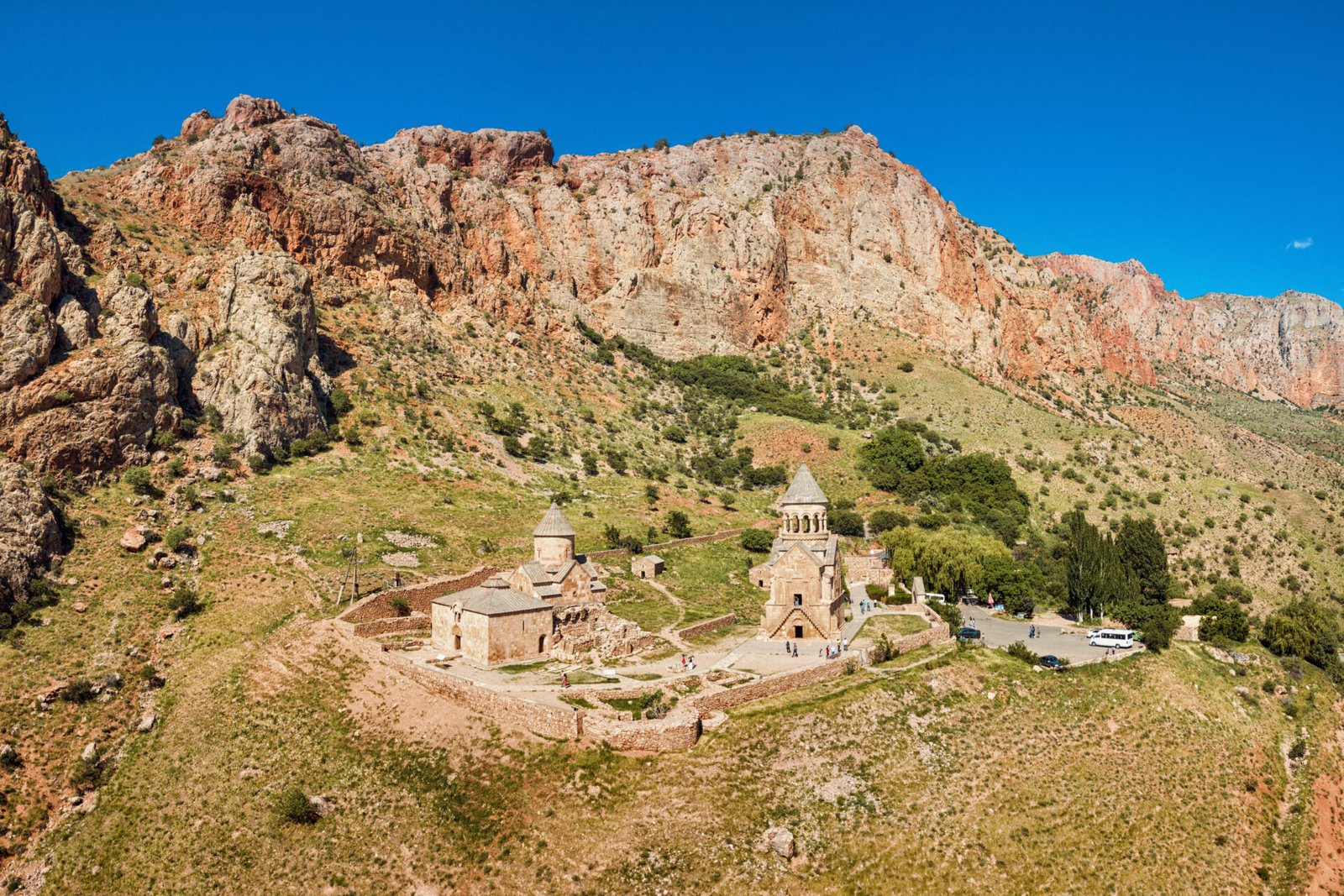
Noravank and the Areni wine region sit in the same fold of southern Armenia, about two hours south of Yerevan, and together they make the best single day out in the country. A 14th century monastery wedged into a canyon of burnt red cliffs, the cave where the world’s oldest winery was found, and a valley of small vineyards making wine from a grape nobody else grows. All of it fits comfortably between breakfast and dinner.
| Quick facts | |
|---|---|
| Distance from Yerevan | About 120 km, roughly 2 to 2.5 hours by car |
| Region | Vayots Dzor, southern Armenia |
| Noravank built | 13th to 14th century; the main church completed in 1339 |
| Areni-1 cave | Oldest known winery in the world, around 6,100 years old |
| Altitude | Vineyards at roughly 1,000 to 1,600 m |
| Best months | May, June, then late September and October for harvest |
| Typical day trip cost | Roughly EUR 45 to EUR 90 per person in 2026, depending on group size |
Why Noravank stops people mid-sentence
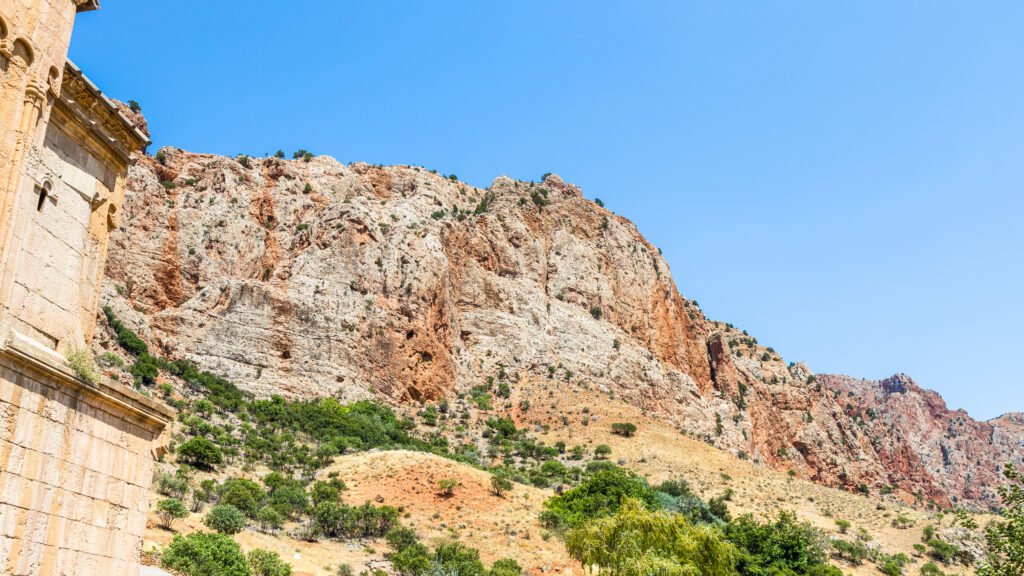
The approach does half the work. You leave the main highway near Areni village and follow a narrow road up the Amaghu gorge for eight kilometres. The walls close in, the rock turns an improbable rust orange, and for most of the drive you cannot see the monastery at all. Then the canyon opens into a shallow bowl and there it is, two churches the same colour as the cliffs behind them, sitting on a ledge as if they had grown there.
Armenians built monasteries in defensible, hidden places for good reason, and Noravank is one of the most complete expressions of that instinct. The name simply means new monastery, which it was in the 1200s. It became the burial church and spiritual seat of the Orbelian princes who ruled this corner of Armenia, and their money paid for the carving that makes it famous.
Momik, the man who built it
Almost everything worth looking at here was made or overseen by one person: Momik, an architect, sculptor and manuscript illuminator who worked in Vayots Dzor in the early 1300s. He designed the Surb Astvatsatsin church, finished in 1339, the same year he died. He is buried a few steps from it under a small carved stone.
What makes his work unusual is how personal it feels. The tympanum above the western door shows God the Father with almond eyes and a long beard, a hand raised in blessing, with the crucified Christ and a dove. Human figures on this scale are rare in Armenian church carving, and the faces have a directness that feels closer to a portrait than a symbol. Look for the seated Virgin above the lower door, and for the ram and lion carved into the drum.
Then there is the staircase. To reach the upper chapel of Surb Astvatsatsin you climb a set of narrow stone slabs cantilevered straight out of the façade, with no rail and nothing under them. They are about 25 cm deep. Plenty of visitors go up and rather fewer enjoy coming down. If you have any doubt about your balance or the weather has left the stone damp, admire them from below and lose nothing.
The other church
Surb Karapet, the older church on the site, has its own set of Momik carvings and a gavit, the wide vestibule Armenian monasteries use as a gathering hall. The floor is paved with the gravestones of Orbelian princes. It is cool and dim inside, and if a service is happening the acoustics are extraordinary. More on this style of building in our guide to the best monasteries in Armenia.
Areni-1: the oldest winery in the world
Back down the gorge, a few minutes from the highway, is a cave in the cliff face that changed how archaeologists think about wine. Excavations between 2007 and 2010 uncovered a clay treading floor, a vat for collecting juice, fermentation jars, grape seeds, pressed skins and vine remains. It dates to roughly 4100 BC, around 6,100 years old, which makes it the oldest known winemaking facility anywhere.
The same cave complex produced a 5,500 year old leather shoe, still soft, still laced, now in the History Museum of Armenia in Yerevan. The cave you visit is not a polished museum. Expect bare rock, a handful of information boards, a local guide who may or may not be there, and twenty minutes of your day. What you take away is context: the vines growing on the slope outside are descended from a tradition that never stopped.
Areni village and the wineries of Vayots Dzor
Areni is a working village of about 1,500 people, and the grape that carries its name is Armenia’s most important red: Areni Noir. It is thin skinned, pale in the glass, high in acid, with sour cherry and dried herb and a dusty, mineral finish. If you drink Pinot Noir or Nerello Mascalese, you will recognise the shape of it. There is no oak needed and the best examples use very little.
The white to look for is Voskehat, meaning golden seed, an old variety with texture and quince and enough acidity to age. Several producers also work with Khndoghni and with field blends nobody has bothered to name.
Wineries in and around the village that receive visitors include Hin Areni, Trinity Canyon Vineyards, Old Bridge Winery and Momik Wines. Zorah, which ferments and ages in buried clay karas vessels, is further up the valley near Rind. Some are proper tasting rooms with a terrace, others are a family cellar with a table in it. Book ahead by email or phone, at least a day, because several open only when they know you are coming.
Tastings in 2026 typically run from about EUR 7 to EUR 20 per person, often waived or discounted if you buy a bottle. A very good bottle to take home costs roughly EUR 10 to EUR 30 at the cellar door. Our full Armenian wine guide goes deeper into grapes, regions and what to bring back.
How to build the day
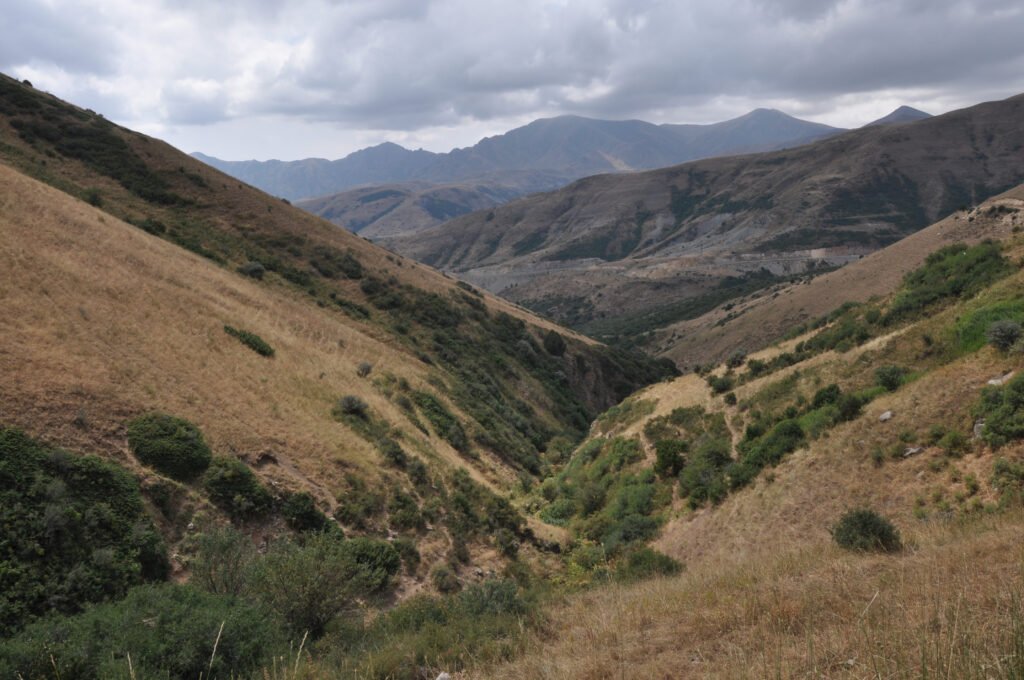
The classic route runs south along the M2. Here is a shape that works without hurrying:
- 09:00 Leave Yerevan.
- 09:45 Khor Virap, thirty kilometres south, with Mount Ararat filling the sky behind it. Forty minutes is enough.
- 11:30 Noravank. Allow an hour and a quarter, more if you climb the stairs and walk up the ridge behind the monastery for the view down the gorge.
- 13:00 Lunch in Areni or at a winery. Several serve food with notice.
- 14:30 Areni-1 cave.
- 15:15 One or two wineries.
- 18:00 Back in Yerevan, or continue south if you are heading to Tatev.
If you are driving yourself, the roads are good and the police are polite but strict about speed. If you are tasting, you need a driver. This is the honest argument for a guided day: someone else handles the wheel and the phone calls to the cellars. Our Khor Virap, Areni and Noravank tour runs exactly this route. Public transport is possible as far as Areni by marshrutka, but there is no bus up the gorge to Noravank, so you would need a taxi from the village for roughly EUR 12 to EUR 20 return with waiting time. See getting around Armenia for the detail.
When to go
Late May and June give you green hills, wildflowers and comfortable temperatures. July and August in the valley can reach the mid thirties, and the light at Noravank is flat at midday, so go early. Late September and October are the best of all: the harvest is in, the cellars are busy and welcoming, and the poplars turn. The Areni Wine Festival usually falls in early October in the village itself, drawing thousands of people and dozens of home producers. Check the exact date before you build a trip around it.
Winter is quiet and often beautiful, with snow on the red rock, but some small cellars close and the gorge road needs care. Our notes on the best time to visit Armenia cover the seasons in full.
Practical notes
- There is no entrance fee at Noravank. Donations at the candle stand are normal.
- Shoulders and knees covered inside the churches. Women do not need a headscarf in the Armenian Apostolic Church.
- Cash in dram is useful at the cave and in the village. Wineries generally take cards but not always.
- Mobile signal is decent in the valley and patchy in the gorge.
- There are cafes and a shop at the Noravank car park, and simple restaurants along the highway near Areni.
- Take water. The valley is dry and there is very little shade at the monastery.
Making it more than a day
Vayots Dzor rewards a second day. Yeghegnadzor has a small museum and good bakeries, the Arates and Spitakavor monasteries sit up side valleys almost nobody drives, and Jermuk with its mineral springs and waterfall is an hour further. If you keep going south you reach Goris, Tatev and the cable car, which is the natural continuation described in our southern Armenia road trip and our day trips from Yerevan guide.
We are a small Yerevan operator and we drive this valley most weeks. If you want the monastery early, lunch under a vine and two cellars that actually open their doors, take a look at our tours or write to us and we will build the day around what you want to drink.
Frequently asked questions
How far is Noravank from Yerevan?
Noravank is about 120 km south of Yerevan and takes roughly two to two and a half hours by car. You follow the M2 highway past Khor Virap and Areni, then turn up a narrow eight kilometre road into the Amaghu gorge. The last stretch is slow but paved and perfectly fine in a normal car.
Can you visit Noravank and the Areni wineries in one day?
Yes, and it is the standard way to do it. A comfortable day leaves Yerevan around 09:00, stops at Khor Virap, reaches Noravank late morning, has lunch in or near Areni, visits the Areni-1 cave and one or two wineries in the afternoon, and is back in Yerevan by early evening. Two wineries in an afternoon is relaxed; three is rushing.
Is the Areni-1 cave worth visiting?
If you care about archaeology or wine history, yes. It is where archaeologists found the oldest known winemaking facility in the world, roughly 6,100 years old, along with the oldest known leather shoe. The cave itself is modest and the visit takes twenty to thirty minutes, so treat it as a short, meaningful stop rather than a headline attraction.
Do I need to book a winery tasting in advance?
For the small producers in Vayots Dzor, yes. Several of them are working farms rather than visitor centres and they open the tasting room when they know someone is coming. Email or message a day or two ahead, especially outside the September and October harvest season.