
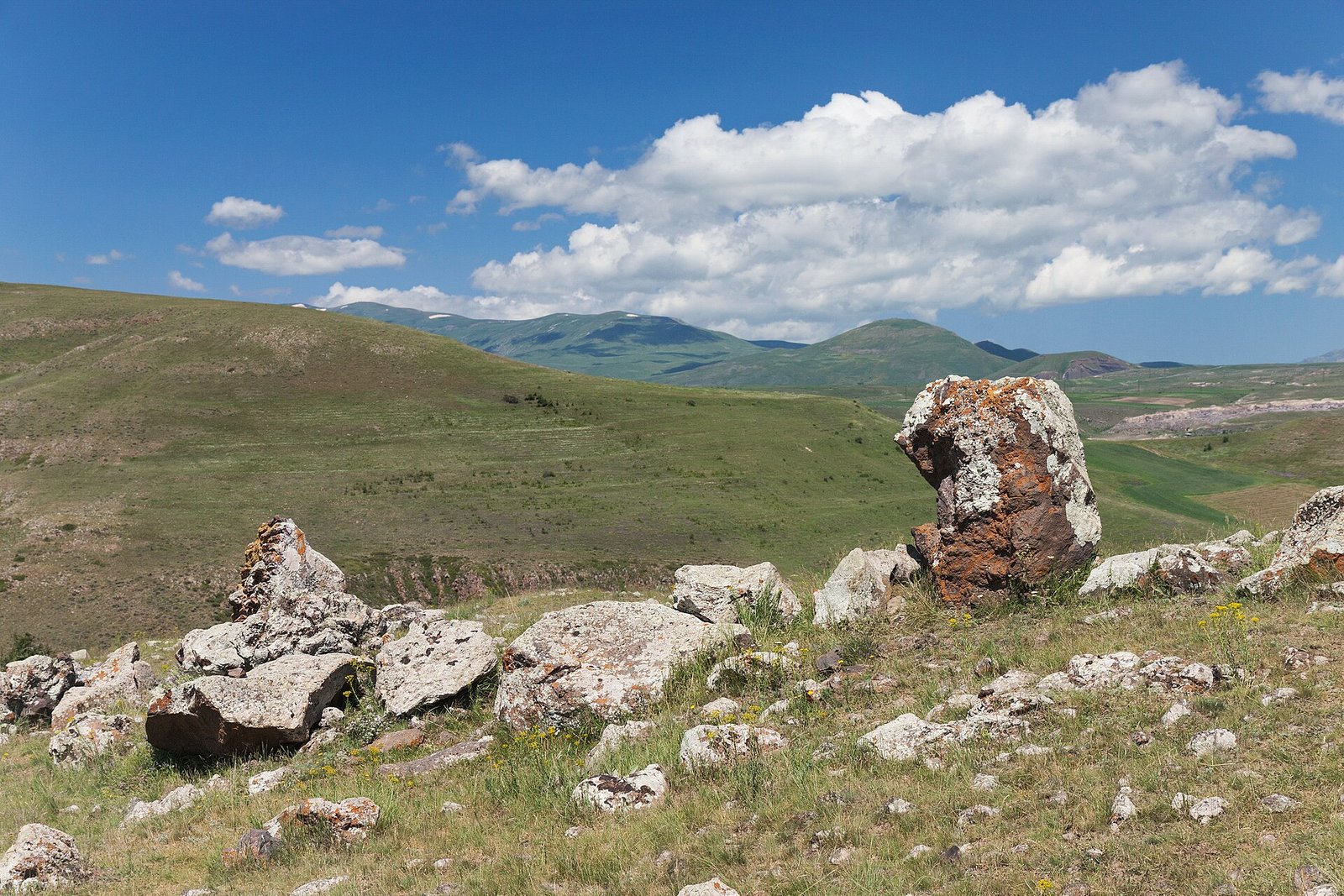
Karahunj, also known as Zorats Karer or Carahunge, is a field of upright basalt stones on a plateau near Sisian in Syunik province. It is worth a stop if you are driving the south, mainly for the setting and the open question of what it was. Archaeologists mostly read it as a burial site from the Bronze and Iron Ages; the “ancient observatory” story is popular but disputed. Allow about an hour on site, and plan it as part of a longer southern loop rather than a day trip from Yerevan.
| Question | Short answer |
|---|---|
| What is it? | A prehistoric field of standing stones, roughly 220 stones counted, some with drilled holes. |
| Where? | Near Sisian, Syunik province, at roughly 1,800 m elevation. |
| Observatory or cemetery? | Both ideas exist; archaeological work points mainly to a necropolis, and the observatory claim is debated. |
| Time needed? | About 45 to 90 minutes on site. |
| Entry? | A modest ticket (around 1,400 AMD for foreigners in 2022); check before you go. |
| From Yerevan? | Roughly three to four hours by road, so best combined with an overnight in Sisian or Goris. |
| Best season? | May to October; summer is warmest, autumn is quiet and clear. |
| Nearby? | Shaki waterfall, Sisian town, Vorotan gorge, Tatev, Ughtasar petroglyphs (high altitude). |
What is Karahunj, and why is it called the Armenian Stonehenge?
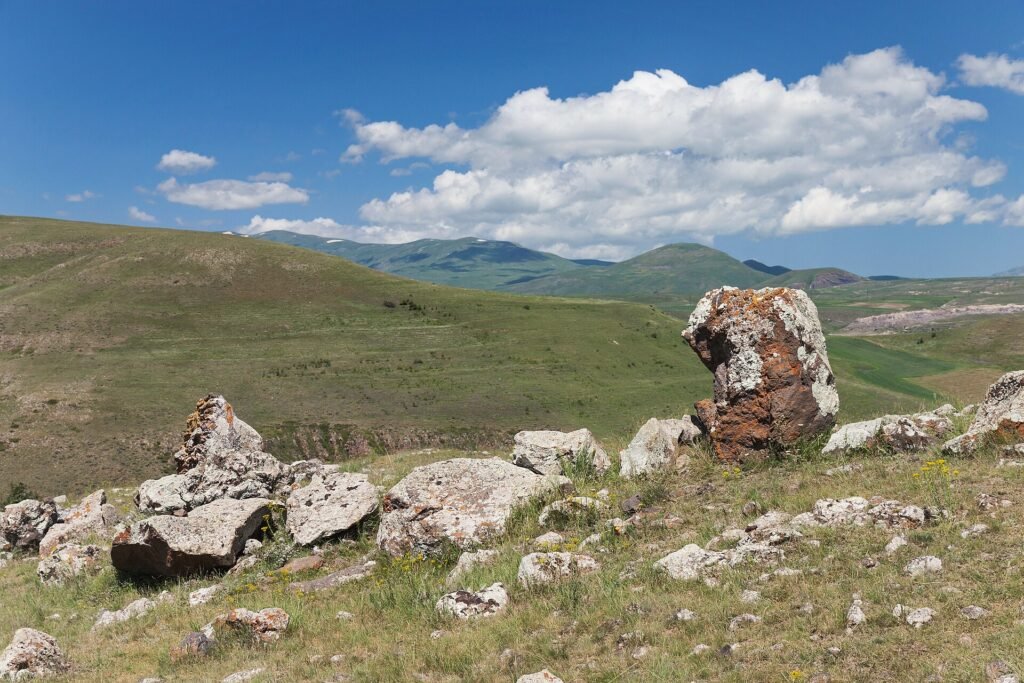
Karahunj sits in open country on a plateau a few kilometres from Sisian, on a site of roughly seven hectares. Surveys have counted around 220 stones of basalt and andesite, from roughly half a metre to about three metres tall, some weighing several tonnes. A good number of them have neat, circular holes. The best-known parts are a central ring of stones and lines of aligned stones, while the rest lies scattered across the field.
The “Armenian Stonehenge” label is mostly a marketing shortcut. Karahunj has nothing like the dressed lintels of Stonehenge, and the two sites are far apart in age, layout and context. We prefer to describe Karahunj on its own terms: a mysterious but real archaeological landscape with a long history of use.
What is established, and what is disputed?
This is the part forum threads get most heated about, so here is a careful summary.
What most researchers agree on
- The site includes burials: excavations and surveys in the area found stone tombs and graves from the Middle Bronze to the Iron Age.
- The stones were erected in prehistoric times, and the area was used over a long period, with some later changes and additions.
- Syunik is rich in ancient material: shaft graves, petroglyphs and settlements, many of which are displayed in the Sisian museum.
What is disputed
- The observatory claim: from the 1980s, Armenian researchers, notably astrophysicist Elma Parsamyan and radiophysicist Paris Herouni, proposed that the holes and alignments served astronomical observation, and suggested a very early date. Some visitors and writers repeat this.
- The criticism: specialists in archaeoastronomy, including Clive Ruggles, have said the astronomical claims lack strong evidence, and that many holes look recent or do not form usable sighting tubes. Archaeologists point to the burials and treat the stones as a funerary or ritual monument.
- The age: headline figures such as “7,500 years old” come from the observatory theory, not from firm dating of the stones themselves.
Our view is simple: enjoy it as a prehistoric stone field with a real, unresolved debate. If a guide tells you it is “the world’s oldest observatory” as fact, you are hearing one side only.
How do you visit Karahunj, and how long does it take?
The site is a short drive from Sisian, on a signposted road, and there is parking close to the stones. You walk freely among the stones on paths over grass, so wear proper shoes. Expect wind: the plateau is open, and even in summer the weather can turn cool. Information boards give the basics, and a local guide can help if you want the history and the astronomy debate explained.
- Time: 45 to 90 minutes is plenty for most visitors; photographers and history fans may stay longer.
- Entry: there is usually a modest fee; in 2022 it was around 1,400 AMD for foreign adults, less for locals, students and children. Check locally.
- Facilities: expect simple facilities. Bring water and a hat, and do not count on a cafe being open.
- Respect: do not climb or move the stones, and keep to the paths.
Is Karahunj worth it, and who should skip it?
Travellers sometimes say the site is underwhelming if you arrive expecting a spectacle. It is a quiet field of stones, not a monument with a visitor centre, and a rushed visit from Yerevan can feel like a lot of driving for an hour on site. If you are short of time, or you are not interested in archaeology and landscapes, you may prefer to spend the hours at Tatev or the Vorotan gorge instead.
It is worth it if you like prehistory, open landscapes and the fact that nobody has fully explained the site. It works best as one stop in a longer loop, ideally with a night in Sisian or Goris.
What else is near Karahunj?
Sisian is a small town with a history museum holding finds from the surrounding area, and an early medieval church, Sisavan. Beyond that, the region is spread out, so a car or driver helps.
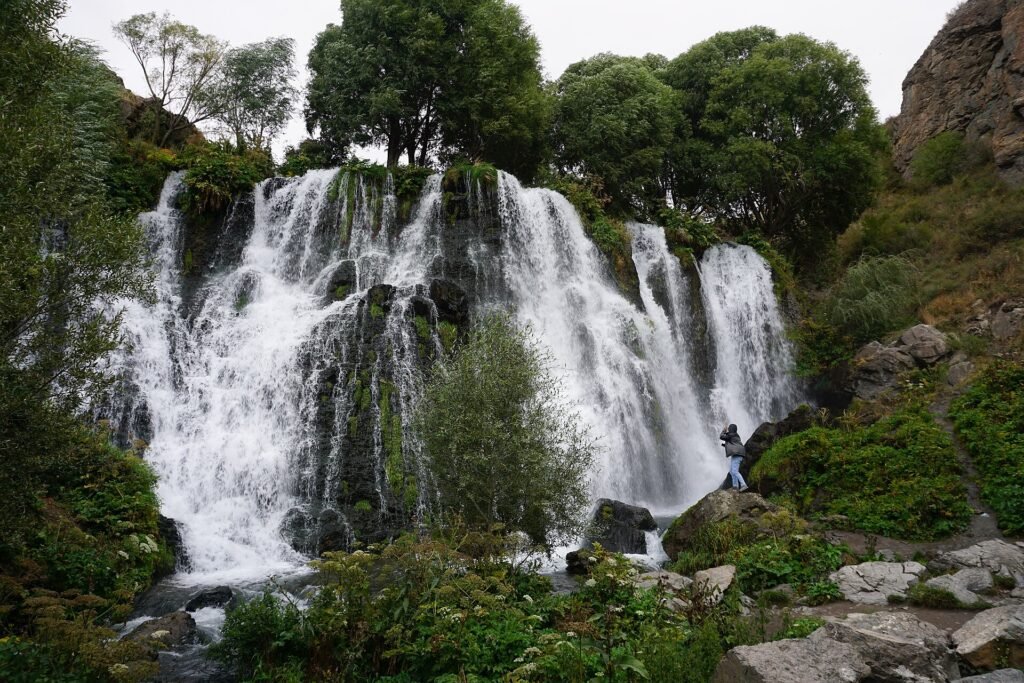
- Shaki waterfall: a waterfall dropping over a rock ledge near Shaki village, a short drive from Sisian, pleasant as a quick stop.
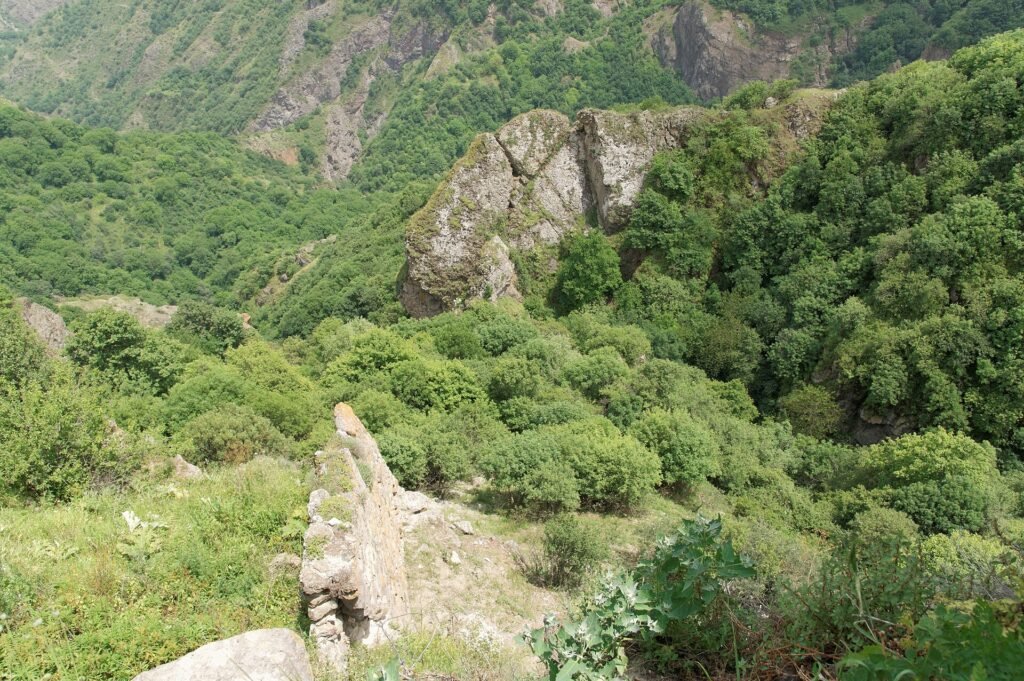
- Vorotan gorge and Tatev: the road to Goris and Tatev follows dramatic river country. See our guide to Tatev Monastery and the Wings of Tatev.
- Goris: a good base with old stone houses and cafes, about an hour from Sisian. It is a stage on the southern Armenia road trip.
- Ughtasar petroglyphs: rock carvings at around 3,300 m above Sisian; see the next section.
What about the Ughtasar petroglyphs?
Ughtasar is a high mountain area above Sisian with more than a thousand decorated rock fragments of animals, hunters and symbols scattered over the slopes near a small crater lake. The carvings are generally dated from prehistoric to early Iron Age periods, with some added later. It is a serious day out: the track is rough and usually needs a 4×4 with an experienced local driver, the altitude is around 3,300 m, and the season is short, normally the snow-free summer months. Weather can turn quickly, so bring warm layers even in July.
We recommend booking a local driver or guide rather than trying it in a normal rental car, and checking track and weather conditions the day before. If you have a heart or lung condition, think about altitude first; our notes on health, insurance and altitude are a good starting point.
How do you get to Karahunj, and where should you stay?
From Yerevan, count roughly three to four hours by road to Sisian, depending on traffic and stops. The classic southern route passes Areni and Selim Pass, so build a lunch break and a few stops into the day. Public buses and marshrutkas serve Sisian, but a taxi or your own car is needed for the site and the surrounding sights. If you drive yourself, read our driving and car rental guide, and check mountain road conditions outside summer.
- Base towns: Sisian is closest; Goris offers more guesthouses and restaurants and is an hour away. Our guide to where to stay outside Yerevan helps with choices.
- Best season: May to October is easiest. Spring and autumn are quieter, summer is warm but windy, and winter brings snow and cold to this high plateau, so check roads and weather.
- Itinerary: Karahunj fits well into a longer route; our 7 days in Armenia itinerary shows how it can connect with Tatev and Goris.
If you would rather not plan the long drive and the high tracks yourself, our small-group and private tours cover Syunik with a local driver and guide who can explain both sides of the Karahunj story. See our tours or ask us to add Ughtasar in season.
Frequently asked questions
Is Karahunj really the Armenian Stonehenge?
Only in the loosest sense. Both are prehistoric stone sites linked to the sky in popular writing, but they differ in layout, age and evidence. Karahunj is a larger scatter of upright basalt stones near Sisian, and archaeologists mainly read it as a burial site, not a proven observatory.
How long do you need at Karahunj?
Most visitors spend 45 to 90 minutes walking the stones and reading the information boards. Add travel time: it is a few kilometres from Sisian, and about three to four hours by road from Yerevan. Combine it with Shaki waterfall or the road on towards Tatev to make the trip worthwhile.
Is there an entry fee at Karahunj?
There has been a modest ticket for the site, listed at around 1,400 AMD for foreign visitors in 2022, with lower rates for locals, students and children. Prices and opening arrangements change, so check locally or with your driver before you go.
Can I reach Karahunj without a car?
It is possible but slow. Marshrutkas and buses run from Yerevan towards Sisian, and from Sisian you can take a short taxi to the site and back. Check current schedules locally, since they change. Most travellers go by private car or tour for flexibility.
Can you visit the Ughtasar petroglyphs?
Ughtasar lies at around 3,300 m on a mountain above Sisian, and the track normally needs a 4x4 and good weather, usually in the snow-free summer months. Go with a local driver or guide, check conditions the day before, and bring warm layers even in July.