Armenia travel costs are one of the pleasant surprises of the South Caucasus. A good dinner with wine runs to the price of a sandwich in Zurich, a cross city taxi costs less than a coffee at home, and a full day tour with a guide sits comfortably under fifty euros. Here is what a trip actually costs in 2026, broken down honestly.
| Daily budget | What it buys | Per person, per day |
|---|---|---|
| Backpacker | Hostel dorm, local eateries and bakeries, marshrutkas, a few paid entries | Roughly 30 to 40 EUR |
| Mid-range | Private guesthouse or three star room, restaurant meals, taxis, one day tour every couple of days | Roughly 60 to 90 EUR |
| Comfortable | Good four star hotel, wine with dinner, private driver or guided tours, tastings | Roughly 120 to 180 EUR |
| Currency | Armenian dram (AMD), around 400 to 440 to 1 EUR in 2026 | Check the live rate |
| Cards | Accepted almost everywhere in Yerevan, patchy in villages | Carry cash outside the capital |
Those figures exclude flights. They assume you are travelling as a couple or a pair sharing a room; solo travellers should add roughly ten to twenty euros a day, because accommodation is the one cost that does not halve.
Accommodation: where your money goes
Beds are the largest single line in most Armenian budgets, and the only category where prices have genuinely climbed in recent years. Yerevan in particular has filled with new hotels and apartment rentals, and summer weekends push rates up.
- Hostel dorm bed, Yerevan: roughly 4,000 to 8,000 AMD, about 10 to 19 EUR.
- Guesthouse or B and B double room: roughly 10,000 to 20,000 AMD, about 25 to 48 EUR, often with a generous breakfast.
- Three star hotel or good apartment in central Yerevan: roughly 20,000 to 35,000 AMD, about 48 to 85 EUR.
- Four star and boutique: from around 35,000 AMD upward, so 85 EUR and up, with the well known international brands considerably higher.
- Village homestay in Dilijan, Goris or the Vayots Dzor villages: often 8,000 to 15,000 AMD including a home cooked dinner, which is both the cheapest and the best food you will eat in the country.
Outside Yerevan almost everything is cheaper, and family run guesthouses give far better value than hotels. In Dilijan, Goris, Gyumri and the wine villages, a homestay with dinner and breakfast frequently costs less than a bare room in the capital. Our guides to Dilijan and where to stay in Yerevan go into which neighbourhoods and villages suit which kind of traveller.
Food and drink: the best value in the country
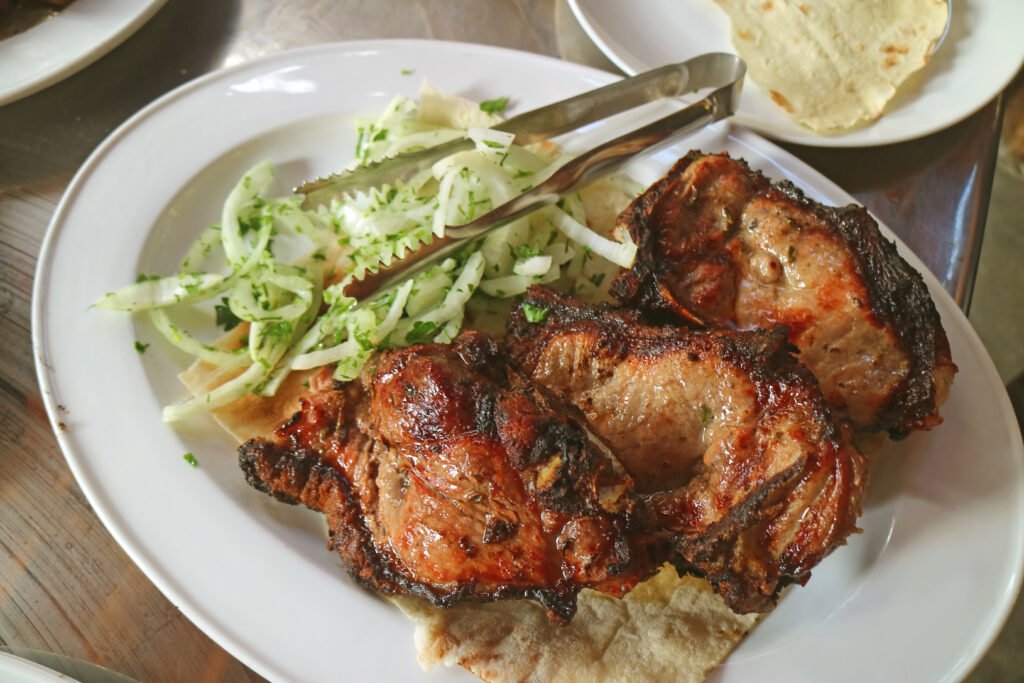
Eating in Armenia is very good and very cheap, and this is where the budget stretches furthest. A lahmajo and a beer at a workers’ cafe costs a couple of euros. A full khorovats plate, the barbecue that anchors every Armenian table, runs to a few euros more.
- Bakery or street snack (lahmajo, zhingyalov hats, pastry): 300 to 900 AMD.
- Lunch at a local canteen or family restaurant: 1,500 to 3,000 AMD.
- Dinner at a decent Yerevan restaurant: 5,000 to 9,000 AMD per person before drinks.
- Coffee: 600 to 1,200 AMD, and Yerevan takes its coffee seriously.
- Local beer: 600 to 1,500 AMD in a bar.
- Glass of Armenian wine in a wine bar: 1,500 to 3,000 AMD.
- Bottle of good Areni red in a shop: from around 3,500 AMD.
- Market fruit in season: almost free by European standards. Summer apricots and autumn pomegranates are worth budgeting for purely on principle.
A realistic food budget is around 6,000 to 10,000 AMD a day if you eat well and locally, meaning 15 to 24 EUR. Push it to 20,000 AMD a day and you are eating in Yerevan’s best restaurants nightly with wine. Our Armenian food guide and wine guide cover what to order and what a fair price looks like.
Getting around: almost negligible
Transport barely registers in an Armenian budget unless you rent a car. City buses and the metro cost around 100 AMD a ride. An app taxi across Yerevan is 600 to 1,500 AMD. Intercity marshrutkas run from about 1,000 AMD for a short hop to around 5,000 AMD for the long haul south to Kapan.
Car hire is the exception, at roughly 30 to 60 EUR a day for a small car in 2026 and more for a 4×4, plus fuel at broadly European pump prices. Split between three or four people it is reasonable. Alone, a mix of minibuses and occasional day tours usually works out cheaper. The full breakdown is in our guide to getting around Armenia.
Sightseeing, entries and tours
Here is something that genuinely surprises visitors: most of Armenia’s monasteries are free. Geghard, Haghpat, Sanahin, Noravank, Khor Virap and dozens of others charge nothing at all. You pay for a candle if you want one, and perhaps for parking.
- Monastery entry: usually free. Garni Temple is one of the few that charges, around 1,500 AMD.
- Yerevan museums (History Museum, Matenadaran, Cafesjian Center): roughly 1,500 to 3,000 AMD each.
- Wings of Tatev cable car: around 7,000 to 9,000 AMD return, the single priciest ticket most visitors buy.
- Winery tour and tasting in Areni or the Ararat valley: roughly 5,000 to 12,000 AMD.
- Group day tour from Yerevan: typically 30 to 60 EUR including transport and guide.
- Private car with driver for a full day: 30,000 to 50,000 AMD for the vehicle, so 70 to 120 EUR split between passengers.
Tours are where a modest budget buys disproportionate value in Armenia, because the sites that matter most are scattered and hard to reach by bus. Our day trips from Yerevan guide sets out which routes are worth paying for.
Money: dram, cards and where to change
The Armenian dram is the only currency you can spend. Nothing is priced in euros or dollars in normal life, though tour operators and some hotels quote in euros.
Exchange is easy and the spreads are small. Independent exchange booths, which cluster around Republic Square, the Northern Avenue area and inside shopping centres, give better rates than banks and much better rates than the airport. Bring clean, undamaged euro or dollar notes if you plan to change cash. ATMs are everywhere in cities, dispense dram, and most accept foreign cards; withdrawal fees vary by bank, so take out larger amounts less often.
Card acceptance in Yerevan is now excellent. Cafes, supermarkets, restaurants, taxis and even small shops take contactless, and Apple Pay and Google Pay work widely. The moment you leave the capital this thins out. Village shops, minibus drivers, market sellers, small guesthouses and roadside stalls are cash only. A sensible habit is to withdraw 40,000 to 60,000 AMD before heading into the regions and keep a mix of small notes.
Tipping and service charges
Tipping is welcome rather than obligatory, and the rules are simple. Many Yerevan restaurants add a service charge of around ten percent, printed on the menu and on the bill. Where it appears, there is no need to add anything further. Where it does not, rounding up or leaving five to ten percent is normal and appreciated.
Taxi drivers do not expect a tip, though rounding up is polite. Guides and drivers on multi-day trips are customarily tipped at the end, and for a private guide something in the range of 5,000 to 10,000 AMD a day is generous without being awkward. In a village homestay, the kindest gesture is usually not money but buying something the family makes, whether that is honey, wine or preserves.
What costs more than you expect
- Central Yerevan hotels in high summer. July and August, plus the September wine festival period, push prices up noticeably. Book earlier than you would elsewhere.
- Imported goods. European cosmetics, branded outdoor gear and imported wine carry a heavy markup. Bring what you need.
- The Tatev cable car. Worth every dram, but it is the one ticket that stings.
- Taxis from the airport arrivals door. Several times the app price for the identical journey.
- Solo supplements. Single occupancy on tours and in hotels is the biggest hidden cost for solo travellers.
What costs less than you expect
- Almost all sightseeing. The monasteries that draw people to Armenia are free.
- Wine. Serious bottles from Areni, Vayots Dzor and Armavir cost a fraction of comparable European wine.
- Taxis and internal transport. You will stop thinking about it after two days.
- Mobile data. A tourist SIM with generous data costs a few euros. See our packing list and practical tips for the details.
- Fruit, bread, cheese and everything from a market. A picnic for two costs less than a coffee in Milan.
Want to know exactly what your trip will cost before you commit? Our small group and private tours are priced up front with transport, guiding and entries included, so there are no surprises on the road. Browse our Armenia tours, or see the Classic Armenia 7 day tour for a full week at a fixed price.
Sample budgets for a week
Putting it together, a seven day trip excluding international flights looks roughly like this. A backpacker staying in hostels, eating at local places, using marshrutkas and taking one paid tour spends around 220 to 300 EUR. A mid-range traveller in guesthouses and three star rooms, eating in restaurants and taking two or three day tours spends around 450 to 650 EUR. A comfortable trip with four star hotels, a private driver for several days and good wine every evening runs 850 to 1,300 EUR.
Two things shift those numbers more than anything else: the season you travel in and whether you share a room. Shoulder season in May, early June, September and October gives you the best weather in the country and lower rates than peak summer. Our guide to the best time to visit Armenia explains the trade offs, and the Armenia travel guide covers everything else you need before booking.
Five ways to cut costs without cutting the trip
- Stay in family guesthouses outside Yerevan and eat what the household cooks. Better food, lower price, and the evening is the memory you keep.
- Use the metro and city buses for 100 AMD instead of defaulting to taxis in Yerevan, then use taxis freely for the journeys that genuinely save time.
- Share day tours rather than booking private cars, unless there are three or four of you.
- Shop at the Gum Market and bakeries for lunch. Bread, cheese, herbs, fruit and a bottle of wine make a better picnic at a monastery than any restaurant meal.
- Travel in shoulder season, when rooms are cheaper, the light is better and the monasteries are quieter.
Frequently asked questions
How much money do I need per day in Armenia?
Budget travellers sleeping in hostels, eating at local places and using marshrutkas manage on roughly 30 to 40 euros a day in 2026. Mid-range travel with a private room, restaurant meals and the occasional day tour lands around 60 to 90 euros a day. Comfortable travel with good hotels, private drivers and wine with dinner sits around 120 to 180 euros a day. None of these figures include international flights.
Is Armenia cheap compared to Europe?
Yes, considerably. Food, transport, taxis and museum entry typically cost a third to a half of western European prices, and local wine and produce are strikingly good value. Accommodation in central Yerevan has risen in recent years and is the one category where the gap narrows, particularly in summer. Overall, most visitors find their daily spend is well under half what the same trip would cost in Italy or Germany.
Can I pay by card in Armenia or do I need cash?
Cards work almost everywhere in Yerevan, including small cafes, supermarkets and taxis, and contactless is standard. Outside the capital it is patchier: village shops, marshrutka drivers, monastery car parks and market stalls are cash only. Carry a reasonable amount of dram in small notes whenever you leave Yerevan, and withdraw from bank ATMs rather than exchanging at the airport.
Do you tip in Armenia?
Tipping is appreciated but not rigidly expected. Many Yerevan restaurants add a service charge of around ten percent to the bill, so check before adding more. Where no service charge appears, rounding up or leaving five to ten percent is normal. For guides and drivers on multi-day trips, a tip at the end is customary and genuinely valued.