Deciding where to stay in Yerevan is mostly a question of how close you want to be to the café tables. The city drinks coffee all morning, disappears indoors in the afternoon heat, then fills its pavements from six until well past midnight. Get a room inside the central ring and the whole evening happens on foot.
| Area | Best for | Typical double room, 2026 |
|---|---|---|
| Republic Square and Abovyan | First visits, sights on the doorstep | 60 to 120 EUR |
| Opera and Northern Avenue | Nightlife, restaurants, walkability | 55 to 110 EUR |
| Cascade and Saryan | Cafés, wine bars, quieter mornings | 45 to 90 EUR |
| West of Mashtots | Budget, local streets, apartments | 25 to 50 EUR |
| Arabkir and Komitas | Longer stays, residential calm | 25 to 45 EUR |
How the city’s day is shaped
Yerevan runs on a rhythm that catches visitors out for a day or two. Breakfast happens late. From about eleven the cafés along Tamanian, Tumanyan and Saryan are full of people who appear to have nowhere to be. Between one and five in summer the heat clears the streets. Then, from six, everything restarts and the city becomes genuinely lively until one or two in the morning.
The practical consequence is that a 7pm dinner reservation is early here. Locals eat from eight thirty onwards, and a wine bar at ten on a Tuesday will be busier than the same bar at eight. Plan your evenings later than you would at home.
If you are still working out your daytime plan, pair this with our guide to things to do in Yerevan.
Where to stay: the neighbourhoods that matter
Republic Square and Abovyan Street
The most central option and the easiest first choice. You wake up two minutes from the History Museum and five from the market. Abovyan Street itself has nineteenth century facades and a run of cafés. The trade off is price and, on summer nights, the noise of the singing fountains and the crowd they draw.
Opera and Northern Avenue
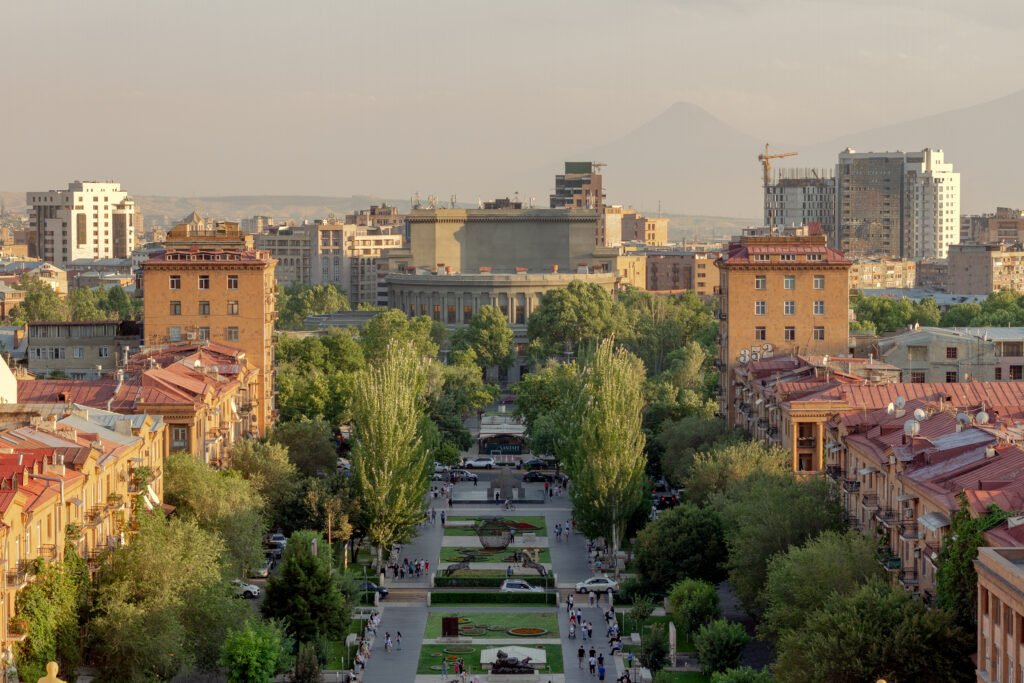
The densest concentration of restaurants and bars in the country sits in the streets around the Opera House: Tumanyan, Pushkin, Mashtots, Amiryan, and the pedestrianised Northern Avenue linking the Opera to Republic Square. Staying here means you never need a taxi after dark. It is also the loudest part of town, so ask for a courtyard facing room.
The Cascade and Saryan Street
Our favourite area for a first trip. Slightly uphill, slightly calmer, and right in the middle of the café and wine bar cluster. Mornings are quiet, the Cascade steps are two minutes away, and you can walk down into the centre in ten. Guesthouses and small apartment hotels dominate here rather than big chains.
West of Mashtots Avenue
Cross Mashtots and the price drops while the walk to the centre stays under fifteen minutes. These are ordinary residential streets, with grocery shops, bakeries and the odd neighbourhood bar. Good value, especially for apartments rented for several nights.
Arabkir, Komitas and further out
Worth considering only for stays of a week or more, or if you want to live like a resident. Arabkir is a leafy 1960s district north of the centre with good bakeries and cheaper flats. You will use taxis in the evening, which at 2 to 3 EUR a ride is hardly ruinous.
What your money gets you
- Hostels, 10 to 18 EUR a dorm bed. Yerevan has a strong small hostel scene, often in converted apartments with a shared kitchen and a courtyard. Good for solo travellers who want company for a day trip.
- Guesthouses and apartments, 30 to 55 EUR. The best value bracket. Family run guesthouses often include breakfast that turns into a history lesson. Apartments are plentiful and usually well equipped.
- Boutique and design hotels, 70 to 120 EUR. A genuine cluster of these has opened in the centre over the last few years, many in restored tuff buildings.
- International five stars, 150 EUR and up. Mostly around Republic Square and the north of the centre.
Book ahead for September and October, which is peak season, and for the last week of December. February and March are the cheapest months. Our Armenia travel costs guide sets accommodation against everything else you will spend.
Coffee: two completely different traditions
Armenians drink two kinds of coffee and both are worth your time.
Surj is the traditional version: finely ground coffee boiled in a small long handled pot called a jazve, poured grounds and all into a tiny cup, and left to settle. You drink about four fifths of it and leave the sludge. Order it unsweetened (ansushch), medium (kisach) or sweet (kaghtsr). Someone will eventually offer to read your fortune in the grounds, and you should let them.
Specialty coffee arrived properly about a decade ago and Yerevan took to it hard. The streets around the Cascade, Tumanyan Street and Pushkin Street have small roasteries doing filter and espresso to a standard that would hold up in Berlin or Melbourne. Expect to pay 1.50 to 2.50 EUR.
Almost every café has outdoor tables from April to November, and nobody will hurry you. Sitting for two hours over one cup is not just tolerated, it is the point.
Saryan Street and the wine bars
Saryan Street, running one block from the Opera area toward Mashtots, is the centre of Armenia’s wine revival. A decade ago there was one wine bar. Now the street and the lanes around it hold a dozen, and on summer evenings the tables spill across the pavement and into the road.
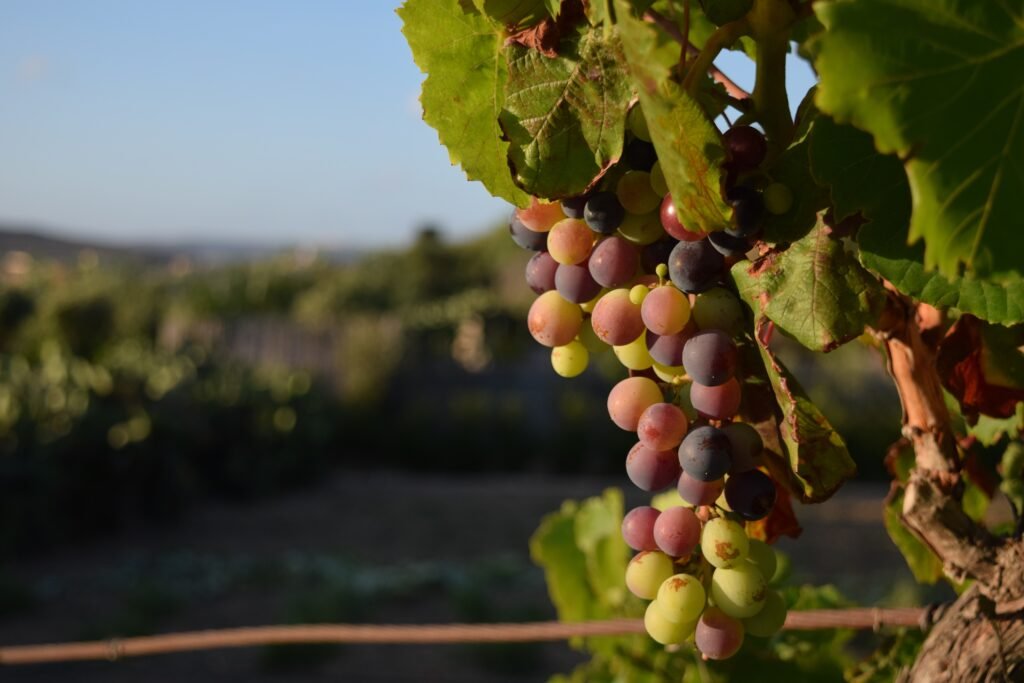
What to drink: Areni Noir, the indigenous red from Vayots Dzor, light and high in acid rather than jammy. Voskehat and Kangun for whites. Karmrahyut and Sireni if you want something more structured. Glasses run roughly 3 to 6 EUR, bottles from about 12 EUR for something decent. Most bars pour a wide by the glass selection precisely because visitors want to compare.
There is also a small but serious craft beer scene, and Armenian brandy, which the country makes extremely well. A good Ararat or a small producer’s brandy after dinner is the local equivalent of a digestivo. Our Armenian wine guide explains the grapes and regions properly.
Jazz, live music and what passes for clubbing
Yerevan has a long and slightly improbable jazz tradition, going back to the state jazz orchestra of the 1930s and carried on by a handful of clubs in the centre where a house band plays most nights from around nine or ten. Cover charges are low or nonexistent, you order food and drinks instead, and the standard is high. Ask your guesthouse which club is playing that week; the scene shifts.
Beyond jazz there are rock and blues bars in the basements around Tumanyan and Pushkin, folk and duduk evenings aimed at a mixed local and visitor crowd, and a summer programme of outdoor concerts in the parks and at the Cascade. The Opera House itself runs a full season from autumn to spring with ticket prices that will astonish anyone used to European houses, often under 15 EUR.
Proper nightclubs exist but are not the city’s strength. What Yerevan does brilliantly is the long evening: dinner at nine, wine bar at eleven, somebody’s friend joining at midnight, coffee and a walk at two.
Eating your way through the evening
Dinner here is social and slow. Khorovats, the Armenian barbecue, is the centrepiece of any celebration, usually pork or lamb grilled over vine cuttings and served with grilled vegetables and lavash. Dolma, in vine or cabbage leaves, is the other classic. A tonir bakery will sell you fresh lavash for pennies.
For a cheap and excellent meal, look for places serving khash in winter, spas soup year round, or the small lunch canteens west of Mashtots. A full dinner with wine in the centre comes to about 15 to 25 EUR per person in 2026; a simple meal in a neighbourhood place, half that. Read our Armenian food guide before you order.
We are a Yerevan based operator running trips for independent and solo travellers, and we are happy to point you at the right street rather than the tourist one. See our tours, or start your stay with the Yerevan city walking tour and ask your guide where they actually eat.
Practical notes for the evening
- Getting home. Taxi apps such as Yandex Go and GG run all night and a cross town ride is usually 2 to 3 EUR. The metro stops around 11pm.
- Booking. Popular wine bars on Saryan do not take reservations and fill up on Friday and Saturday. Arrive before nine or expect to wait.
- Paying. Cards work in almost all bars and restaurants in the centre. Carry some cash for small neighbourhood places.
- Smoking. Indoor smoking is banned in restaurants and bars, which changed the atmosphere of the city considerably. Terraces are another matter.
- Solo travellers. Sitting alone at a bar or café is completely normal and nobody will treat it as odd. Our solo female travel guide to Armenia covers this in more depth.
- Noise. If you are a light sleeper, avoid ground floor rooms on Tumanyan, Pushkin and Northern Avenue in summer.
A sample evening
Surj and a pastry at five to reset. A walk up the Cascade for the light at seven. Dinner at half past eight somewhere with a terrace. Saryan Street at half past ten for two glasses of Areni. Jazz at midnight if there is a band worth hearing. Walk home through the Opera park, where there will still be people playing chess.
That is the version of Yerevan people come back for, and it costs about the same as one round of drinks in Munich.
Frequently asked questions
Which neighbourhood should I stay in in Yerevan?
Kentron, the central district, is the answer for almost everyone on a first visit. Staying anywhere between Republic Square, the Opera and the Cascade puts you within walking distance of the cafés, the wine bars and most of the sights. If you want quiet, look at the streets just west of Mashtots Avenue or the area around Victory Park.
Is Yerevan good for nightlife?
Yes, in its own way. This is not a clubbing capital, it is a city of long tables, wine bars, live jazz and pavement cafés that stay busy until one or two in the morning. The centre is compact enough to walk between five places in an evening, and the atmosphere is relaxed rather than rowdy.
How much does accommodation cost in Yerevan?
In 2026 a hostel dorm bed typically runs around 10 to 18 EUR a night, a decent guesthouse or apartment 30 to 55 EUR, and a well run boutique hotel in the centre 70 to 120 EUR. Prices climb in September and October and around New Year, and drop noticeably in February and March.
Is it safe to walk in Yerevan at night?
Yerevan is one of the safer capitals in the region and walking home through the centre after midnight is normal for locals of all ages. Streets around the Opera, Northern Avenue and Republic Square stay lit and busy late. Standard city sense applies, but violent crime against visitors is rare and solo travellers generally report feeling comfortable.