Armenia travel for seniors works well if you plan it as a slow trip rather than a checklist. We are a Yerevan-based team, and the questions we hear from grandparents and their grown children are always the same: how many steps, how hot, how long in the car, and what if someone feels unwell? Here are honest answers, with the limits included.
| Question | Short answer |
|---|---|
| Is Armenia suitable for older travellers? | Yes, with one main outing a day, a car with a driver and a choice of sites. Not easy for wheelchair users. |
| Best months | Mid-May to mid-June, and the second half of September into October. |
| Altitude | Yerevan about 1,000 m, Lake Sevan about 1,900 m, Jermuk about 2,080 m. |
| Realistic day | 4 to 5 hours of sightseeing, a seated lunch, then a rest at the hotel. |
| Longest drives | Yerevan to Tatev about 250 km (around 4 hours), Yerevan to Jermuk about 170 km (2.5 to 3 hours). |
| Emergency numbers | 112 for all emergencies, 103 for an ambulance. |
| Language | Many older Armenians understand Russian; younger people in Yerevan often speak some English. |
| Medicines | Original packaging plus a doctor’s letter. Some sleeping tablets and codeine products are controlled. |
Is Armenia tiring for older travellers, and when should we go?
Distances are short, so the tiring parts are different: steps and uneven stone at the sights, summer heat, and winding mountain roads. Altitude rarely matters on a classic route. Most visitors notice nothing in Yerevan (about 1,000 m) or at Lake Sevan (about 1,900 m), though some people feel breathless or get headaches above roughly 2,500 m. With a heart or lung condition, speak to your doctor before booking. Our health guide for Armenia covers water, insurance and altitude in more detail.
Heat is the bigger issue. In July, Yerevan afternoons are often 34 to 38°C, while the Sevan shore can be 8 to 10 degrees cooler. For seniors we suggest mid-May to mid-June, or the second half of September, when days are warm but not punishing. Early October is still around 20 to 22°C. Winter is cold and mountain roads can be slow after snow. The month-by-month guide has the details.
How many steps and how much walking at the main sights?
This is the question that decides a trip, so here is what we know. Please treat distances as approximate and check locally.
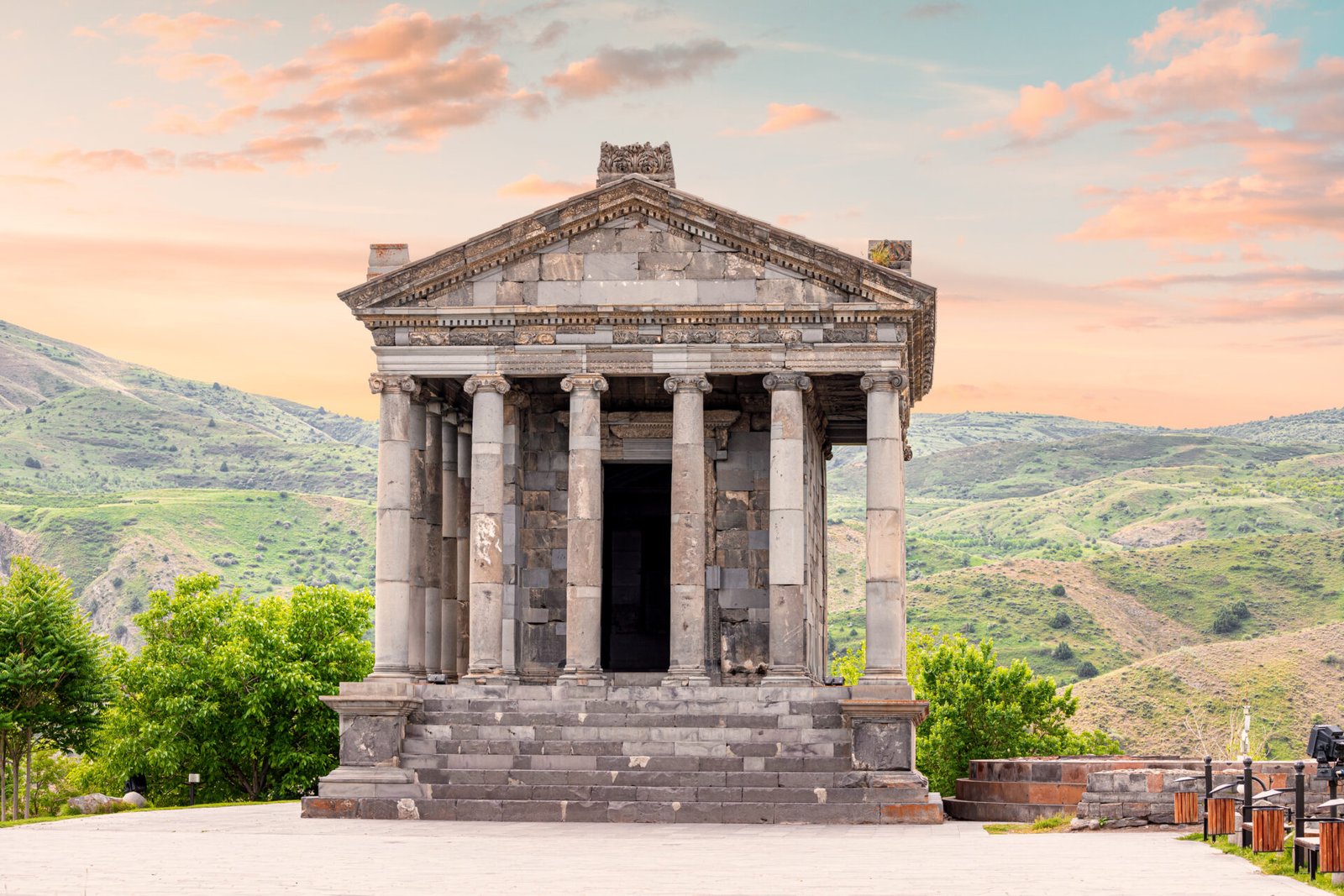
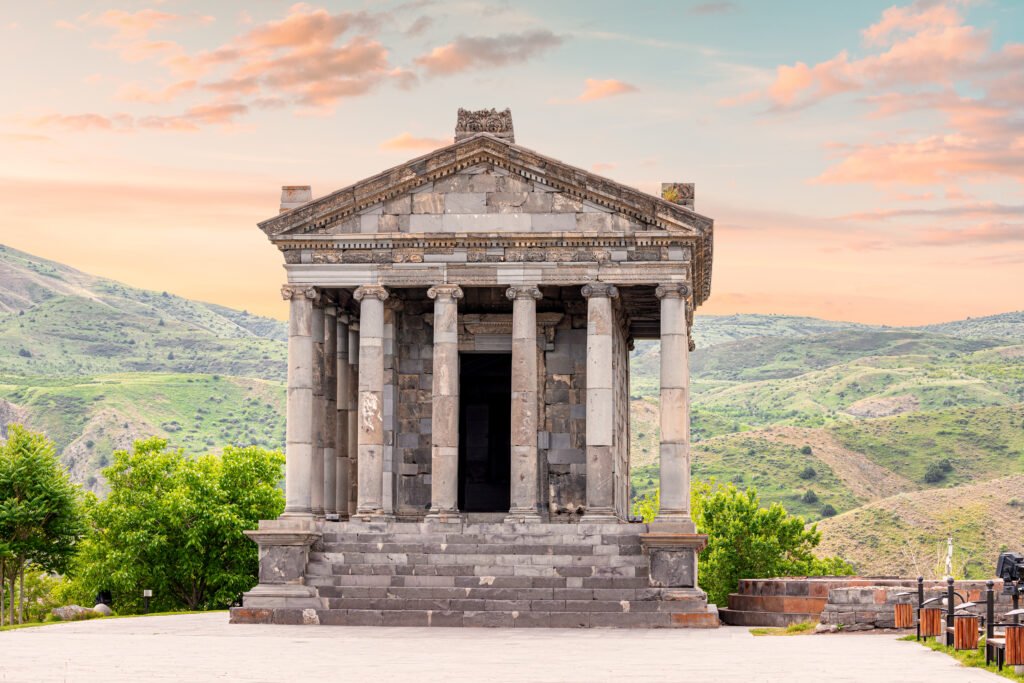
- Garni: the temple stands on a podium reached by nine steep steps. The paved road down to the basalt gorge is about 1.5 km: roughly 25 to 30 minutes down, closer to 45 minutes back up. Locals offer a 4×4 ride for the way up, for a few thousand dram.
- Geghard: worn, uneven stone floors and thresholds. Cover shoulders and knees. The courtyard gets shade by mid-afternoon.
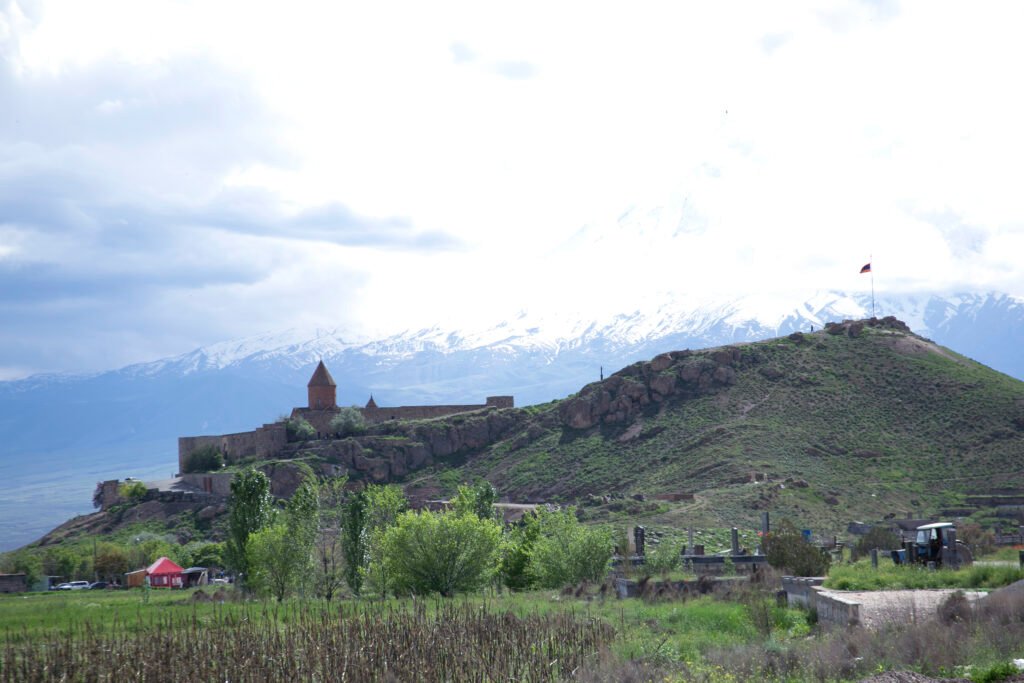
- Khor Virap: the car park has toilets and a small café, then a path and steps lead up the hill. Plan 1 to 1.5 hours. The pit under the chapel is reached by a vertical steel ladder about six metres deep, and it is optional. The view of Ararat from the hill is the main reward.
- Sevanavank: a steep stone staircase, reported at around 230 steps, climbs from the base of the peninsula to the churches.
- Yerevan Cascade: 572 steps in total, but free indoor escalators run inside in the daytime (the hall is listed as open 08:00 to 20:00; check before you go).
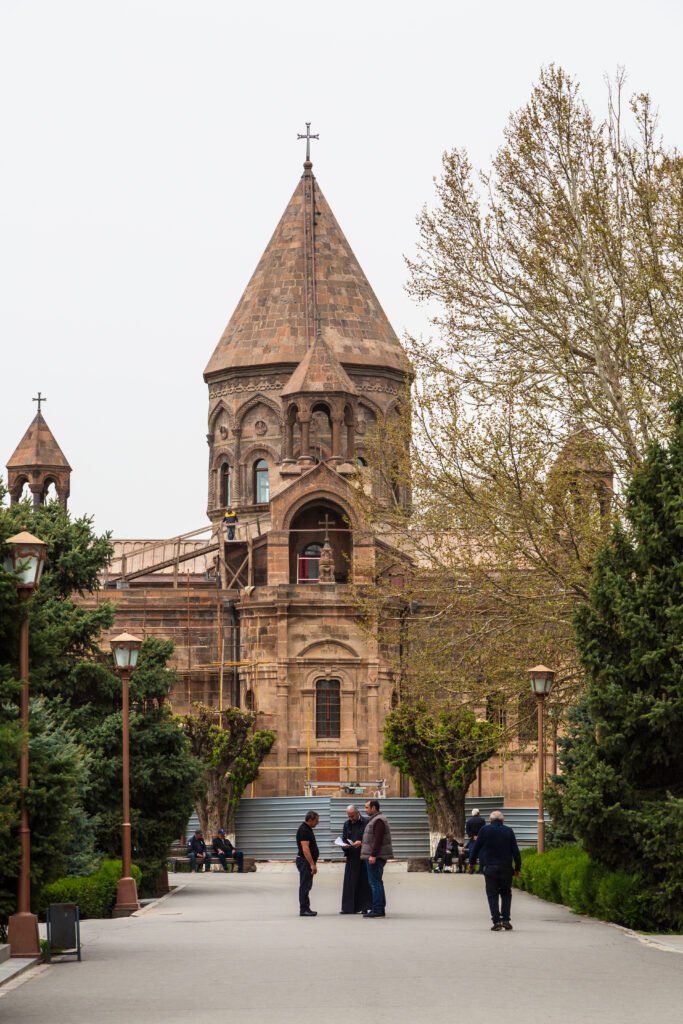
- Etchmiadzin: about 20 km west of Yerevan, a UNESCO-listed complex of courtyards with mostly flat walking.
- Tatev: the Wings of Tatev cable car is about 5.7 km long and takes roughly 10 to 12 minutes each way over the Vorotan gorge. The monastery itself has stone yards and uneven surfaces.
Which day trips are gentle, and how far are they?
Our rule for older guests: no more than about two hours of driving each way, and one main stop before lunch. In practice that means these comfortable options:
- Garni (28 km, about 40 minutes) and Geghard (38 km): a half-day. See the Garni and Geghard guide or our half-day tour.
- Khor Virap (35 to 40 km, 45 minutes to an hour): Khor Virap guide. Go in the morning in summer, as there is almost no shade.
- Etchmiadzin (about 20 km): the shortest transfer of all.
- Lake Sevan (about 60 km, an hour) and Dilijan (1.5 to 2 hours from Yerevan): cooler in summer, see the Sevan and Dilijan day trip.
The M4 to Sevan and Dilijan is well surfaced. The southern road towards Goris is slower, with long climbs, hairpins and lorries, which is why Tatev is better as an overnight trip than a day trip. More options are in day trips from Yerevan.
Private driver-guide or small group?
Both work, but they suit different people. A small group has a fixed timetable and a shared pace. A private driver-guide stops when you need a rest, adjusts the route on a hot day and picks restaurants with seats and shade. For most older travellers we recommend private, or at least a small group with a clear “slow pace” request. We run both, and tailor-made plans through our contact page. Our guided tour or DIY guide compares the options honestly.
Two practical tips. Keep hotel changes to a minimum: base yourselves in Yerevan and add one or two nights in Dilijan at most. And ask any hotel whether it has a lift and a ground-floor or lift-served room, because older small guesthouses often do not.
What about food, water and toilets?
Tap water in Yerevan is generally considered drinkable and many residents drink it. If your host does not, or outside the capital, use bottled water. Armenian food is easy to adapt: spas (a warm or chilled yoghurt soup with wheat and herbs), lentil soup and zhingyalov hats (a soup of greens), grilled meat and vegetables, and dolma. Watch out for the salty side: brined cheeses, cured meats and fried pastries. Khash, a heavy cow’s-foot broth, is a winter breakfast dish and not for delicate stomachs.
If anyone has diabetes, this is general advice, not medical advice: bread (lavash) is everywhere, desserts and coffee are often very sweet, so ask for coffee without sugar and carry your own snacks and medication. Fresh fruit in season is excellent. Toilets can be basic at monasteries, so use them when you find a decent one and carry tissues. Benches and shade are limited at exposed places like Garni and Khor Virap, and a lightweight folding stool or walking stick is genuinely useful.
Where do we find doctors, pharmacies and insurance?
Call 112 in an emergency (103 for an ambulance). For routine problems in Yerevan a private clinic is usually the quickest, and staff often speak some English or Russian. Public hospitals are basic outside the capital, and serious cases are normally transferred to Yerevan, so a trip that stays within a few hours of the capital is easier to insure and manage. Visitors usually pay and claim back, so keep receipts.
- Pharmacies are common and some in Yerevan are open around the clock. Brands differ from home.
- Bring enough prescription medicine for the whole trip, in original packaging, in hand luggage, with a doctor’s letter showing generic names. Some sleeping tablets and codeine-containing medicines are controlled, so check yours first.
- Buy insurance that declares pre-existing conditions, covers medical evacuation, and has no upper age limit that excludes you. Check altitude and activity exclusions.
- Dental work: some visitors, especially from the diaspora, combine dental treatment with a trip, but we have no reliable figures. Get a written plan and price, and ask your own dentist first.
Are spa towns like Jermuk and Arzni worth it?
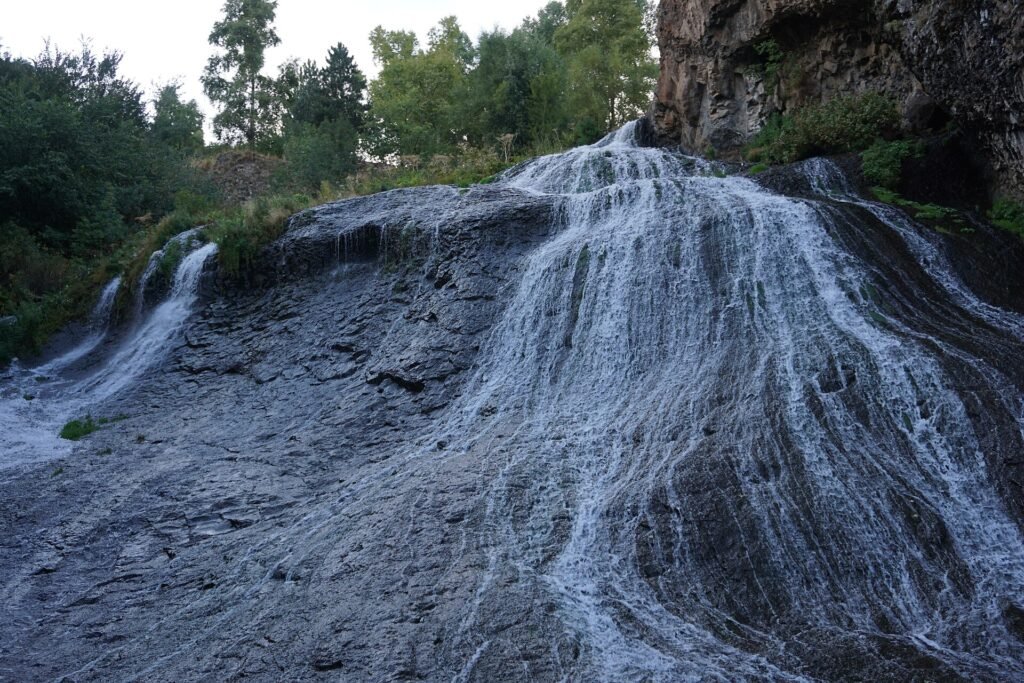
Jermuk is a Soviet-era spa town about 170 km from Yerevan (2.5 to 3 hours by car) at roughly 2,080 m. Its mineral-water gallery lets you sip springs of different temperatures, the water tastes salty and a little bitter, and summers are cool. Sanatoriums traditionally offer multi-day stays with baths and rest. We make no medical claims: if you have a health condition, ask your doctor before drinking the water regularly or booking a course, and remember the altitude. See our Jermuk and Vayots Dzor guide.
Arzni is much closer, around 23 km from Yerevan at about 1,250 m, and has a mineral-water sanatorium that appears to be operating in 2026. Treatments and prices change, so confirm directly before you plan around it.
Can this be a roots or pilgrimage trip, and will anyone speak our language?
Yes. Etchmiadzin is the seat of the Armenian Apostolic Church, and Khor Virap is tied to St Gregory the Illuminator, who according to tradition was held in the pit. The Tsitsernakaberd memorial to the victims of the 1915 Armenian Genocide is emotionally heavy, so leave quiet time around it. For diaspora grandparents, we can include a family village or a church where a relative was baptised if you share the details in advance.
For visitors who remember the Soviet period, central Yerevan will feel familiar in places: the pink tuff of Republic Square was designed by Alexander Tamanian. Russian is understood by many older Armenians, which helps if English is thin. Armenian is the language of daily life, so a driver-guide who speaks yours is worth asking for. Check your own government’s current travel advice before booking, particularly for areas near borders.
What does a slow seven-day plan look like?
One activity a day, lunch seated, afternoons free. Five nights in Yerevan and one or two in Dilijan means only one hotel change:
- Day 1: arrive (many flights land in the small hours, so keep the morning free), rest, short evening walk around Republic Square.
- Day 2: Yerevan Cascade by escalator and a gentle city stroll.
- Day 3: Etchmiadzin.
- Day 4: Garni and Geghard, leaving by nine.
- Day 5: Khor Virap at sunrise or in the late afternoon, then rest.
- Day 6: Lake Sevan, then Dilijan for the night.
- Day 7: Dilijan in the morning, back to Yerevan, airport transfer. The airport is about 20 minutes from the centre by app taxi.
The fuller version is in 7 days in Armenia. For packing, bring flat shoes with grip, a hat and sunscreen, layers for cool evenings at Sevan, a walking stick if you use one, and all medication in hand luggage. Our packing list has the rest.
Who should skip this, and what are the limits?
We would rather say it plainly. Wheelchair users face real barriers. First-hand accounts describe misaligned lowered kerbs in the centre, ramps that are steep, narrow or end at a wall, and few adapted taxis. Monasteries mean steps and worn stone, and we cannot promise cable-car or toilet accessibility. A private vehicle and a very selective plan are possible; please write to us first.
Think twice if someone needs oxygen, has unstable heart or lung disease, or cannot sit in a car for two hours at a stretch. Also be wary of July and August for anyone sensitive to heat. If this is you, tell us what you can manage, and we will say honestly whether Armenia fits this year.
Planning for parents or grandparents? See our small-group and private tours, or the Classic Armenia 7-day tour, and ask for a slower pace. Tell us what everyone can manage through the contact page, and we will tailor the plan.
Frequently asked questions
Is Armenia a good destination for older travellers?
Yes, if you plan one main outing a day, travel by car with a driver and choose sites with short walks. It is harder for wheelchair users and for anyone who cannot manage steps or long drives.
What is the best time of year for seniors in Armenia?
Mid-May to mid-June and the second half of September into October, when days are warm without the 34 to 38°C of a Yerevan July afternoon.
Will altitude be a problem?
Yerevan is about 1,000 m and Lake Sevan about 1,900 m, and most visitors notice nothing. Some people feel breathless above roughly 2,500 m, and anyone with a heart or lung condition should ask a doctor before booking.
Which sights have the fewest steps?
Etchmiadzin is mostly flat courtyards and Garni has nine steps up to the temple. Khor Virap, Sevanavank (around 230 steps) and the Yerevan Cascade (572 steps, with free indoor escalators in the daytime) need more effort.
Can I bring my regular medication?
Yes, in original packaging in hand luggage, with a doctor's letter showing generic names. Some sleeping tablets and codeine-containing medicines are controlled, so check yours before you travel.