Getting to Armenia is easier than most people expect and stranger than they expect too. All international flights land at Zvartnots airport just outside Yerevan, a handful of European cities have nonstop services, and a surprising number of them arrive at four in the morning. Here is how to get to Armenia in 2026 without paying too much or arriving exhausted.
| Question | Short answer |
|---|---|
| Main airport | Zvartnots International (EVN), 12 km west of central Yerevan |
| Second airport | Shirak (LWN) in Gyumri, a few routes only |
| Direct from Europe | Frankfurt, Paris, Vienna, Warsaw, Riga, Milan, Rome, Venice and a few more |
| Typical flight time | 4 to 5 hours nonstop from Central Europe |
| Realistic return fare | Roughly 120 to 250 euros low cost, 300 to 500 euros full service |
| Airport to city | 20 to 35 minutes, about 4,000 to 6,000 AMD by taxi |
| Overland | Georgia yes, Iran yes, Turkey and Azerbaijan closed |
Zvartnots is the only airport you need to think about
Armenia has one airport that matters. Zvartnots handled more than five and a half million passengers in 2025 and is in the middle of a large terminal expansion, so expect building works and a growing number of gates over the next few years. It is small enough that you walk from the aircraft to passport control in a few minutes and large enough to have proper ATMs, SIM card desks and a decent coffee.
Gyumri has a second international airport, Shirak, with a thin scattering of low-cost routes. If you find a cheap fare there, take it. Gyumri is worth two days in its own right and the drive to Yerevan is about two hours. Our guide to northern Armenia, Gyumri and Lori explains why you might build the trip that way round.
Direct flights from Europe: who actually flies
The nonstop map changes from season to season, so treat this as the pattern rather than a timetable. Frankfurt is the steadiest German link, served year round by Lufthansa with additional seasonal capacity from leisure carriers. Wizz Air has built a network into Yerevan from secondary airports including Dortmund, Memmingen and Hamburg, usually one or two rotations a week rather than daily. Eurowings has operated seasonal services from Cologne and Berlin, though these come and go.
Vienna is the most useful Central European gateway, with Austrian Airlines flying several times a week and offering easy onward connections from Switzerland and southern Germany. Warsaw with LOT and Riga with airBaltic are both quietly efficient options that Western travellers overlook. Paris has nonstop services to both Charles de Gaulle and the low-cost Paris airports.
Italy is unusually well connected for a country this size. Rome Fiumicino has the densest schedule, with both Wizz Air and FlyOne Armenia, and Milan is served at Malpensa and Bergamo. Venice, Naples and Bari have appeared on the map as seasonal or low-frequency routes. If you live near any of those airports you can often reach Yerevan for less than a domestic European weekend break costs.
What does not exist, at least not reliably, is a nonstop from Zurich, Geneva, Munich, Düsseldorf, Madrid, Amsterdam or most of Scandinavia. Do not assume, and do not book a hotel before you have seen the flight on the airline’s own site.
Flying with one stop: the hubs that work
If your city has no nonstop, a single connection gets you here comfortably. Istanbul is the fastest and most frequent option, with several daily rotations and a flight time of only two hours on the second leg. Vienna, Warsaw and Paris are good for anyone who prefers to stay inside the European alliance networks and keep baggage checked through.
The Gulf hubs, Doha, Dubai and Abu Dhabi, are often the cheapest and the most punishing. They work well if you are coming from Asia or if you genuinely do not mind an overnight in a terminal, but a Europe to Gulf to Yerevan routing can turn a five hour journey into fifteen. Read the layover times carefully before you celebrate the fare.
One practical warning. If you build your own itinerary out of two separate tickets, a low-cost hop to Vienna and a separate low-cost hop to Yerevan, you own the risk. A delay on the first leg is your problem, not the airline’s. Given how few daily services Yerevan has, a missed connection here can cost you two days.
What you will pay, and when to book
Fares in 2026 follow the same rhythm as everywhere else, just with less competition to soften the peaks. A low-cost return from Italy, Germany or Central Europe booked six to ten weeks ahead frequently sits in the range of 120 to 250 euros. Full-service carriers through a hub are more often 300 to 500 euros return. Add hand luggage fees honestly when comparing, because the low-cost fare that looked like 89 euros rarely stays there.
July and August are the expensive months, and so is the last week of December, when the Armenian diaspora comes home for New Year and every seat fills. The genuinely good value windows are late April into May, and late September into November. That also happens to be when the country looks its best, which we explain in more detail in our guide to the best time to visit Armenia.
Landing at four in the morning
This is the part nobody warns you about. A large share of arrivals at Zvartnots land between two and six in the morning, because aircraft are scheduled to turn around overnight and be back at their home base for the first European wave. You will step out of arrivals into a bright, busy hall in the middle of the night, surrounded by families holding flowers.
Three things make it painless. Book your hotel from the previous night so the room is actually available when you arrive rather than at two in the afternoon. Arrange your transfer before you fly, or at least download the local taxi app before you land. And do not plan anything before midday on your first day. The city wakes up late anyway.
From Zvartnots into Yerevan
The airport is twelve kilometres west of Republic Square and the drive takes twenty to thirty-five minutes outside rush hour. The local ride-hailing app GG is the cheapest and most transparent option, usually around 4,000 to 5,000 AMD. The official taxi desk in arrivals is fine too, generally 4,000 to 6,000 AMD if you agree the fare first.
Ignore the men who approach you in the hall offering a ride. They quote 8,000 to 12,000 AMD to anyone with a suitcase and a tired face. There is also a public bus into the centre for a few hundred dram, which is excellent value and completely useless if your flight lands at 3am.
Take out cash at an ATM inside arrivals rather than using the exchange window, buy a local SIM at one of the operator desks for a few thousand dram, and you are equipped. Our guide to getting around Armenia covers what happens after that.
Overland from Georgia
The land border with Georgia is open, easy and used by thousands of people a week. Shared minivans leave Tbilisi and Yerevan through the day and take about six hours including the crossing at Bagratashen and Sadakhlo, for roughly 9,000 AMD. There is also a seasonal overnight train, ten hours in four-berth couchettes, romantic in the way that overnight trains are romantic and not remotely fast.
Our honest recommendation is a private transfer or a transfer tour, which costs more but lets you stop at the UNESCO-listed monasteries of Haghpat and Sanahin, both of which sit almost on the route. If you are combining the two countries, read our comparison of Armenia or Georgia before you decide which way round to travel.
Overland from Iran
The Agarak crossing in the far south is open and functioning, reached by a long, spectacular mountain road through Syunik. It is a genuine adventure and adds a full day of driving in each direction. Most travellers who use it are on a longer overland journey rather than a two-week holiday. Check current advice before committing, and be realistic about the distances involved.
The borders with Turkey and Azerbaijan remain closed to travellers. You cannot drive from Kars to Gyumri, however close they look on a map.
Entry formalities
Most Western travellers, including all European Union citizens, British, Swiss, American, Canadian and Australian passport holders, enter visa free for up to 180 days in a year. Passport control takes minutes. There is no landing card. Full details, including the countries that do need a visa, are in our guide to Armenian visa and entry requirements.
Once you have your flight, we can take care of the rest. We meet travellers at Zvartnots at any hour, including those 4am arrivals, and run small-group and private trips across the whole country. See our Armenia tours or start with the Classic Armenia 7-day tour.
A short planning checklist
- Check the nonstop options from your nearest three airports, not just your home one. A two-hour train to Milan or Frankfurt often saves a connection and 200 euros.
- Book flights six to ten weeks out for the best fares, earlier for July, August and New Year.
- Assume a night arrival until proven otherwise, and book the hotel night before.
- Arrange the airport transfer in advance or install the GG app before you fly.
- Allow a spare day at the end of the trip if you are connecting through a single-daily hub.
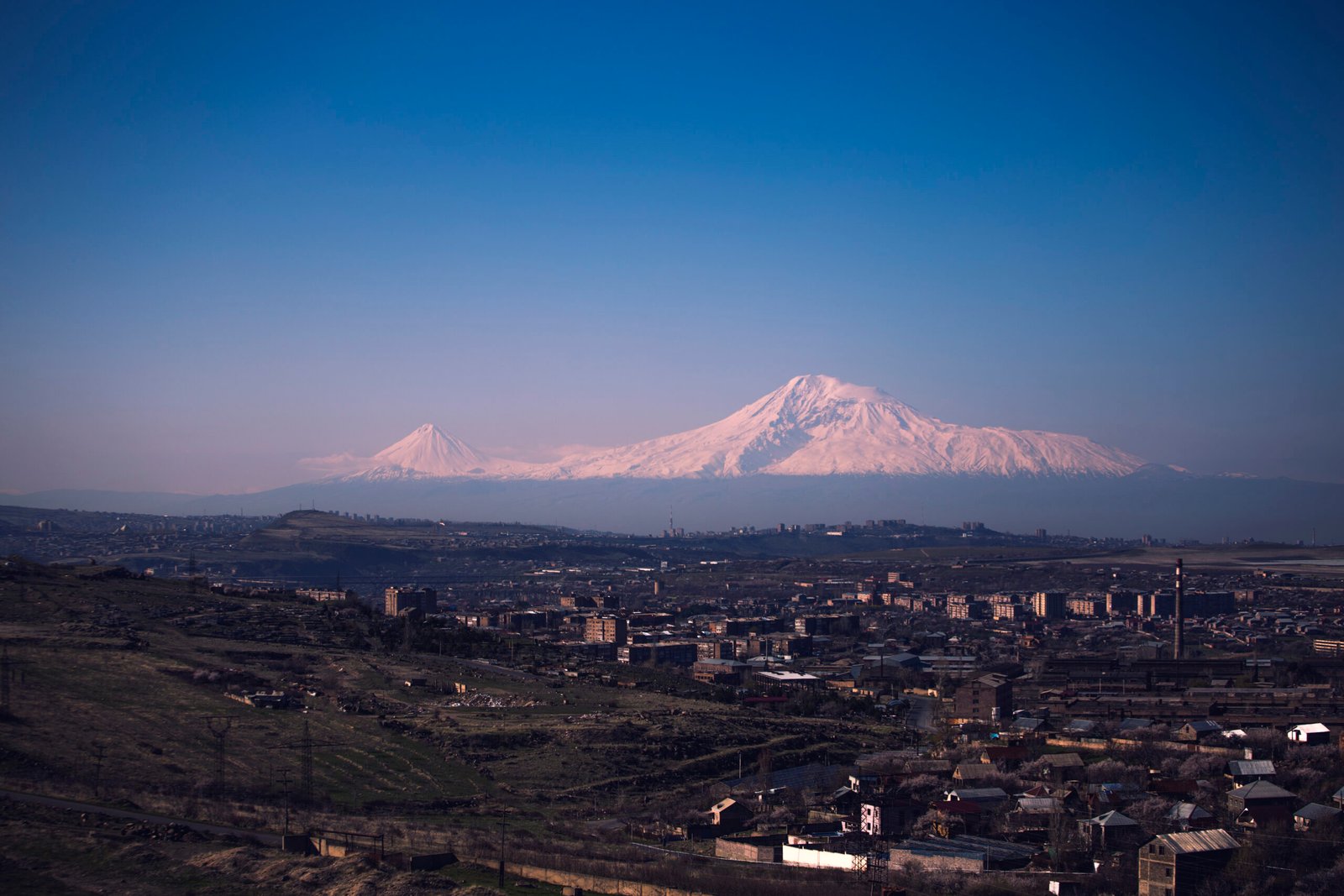
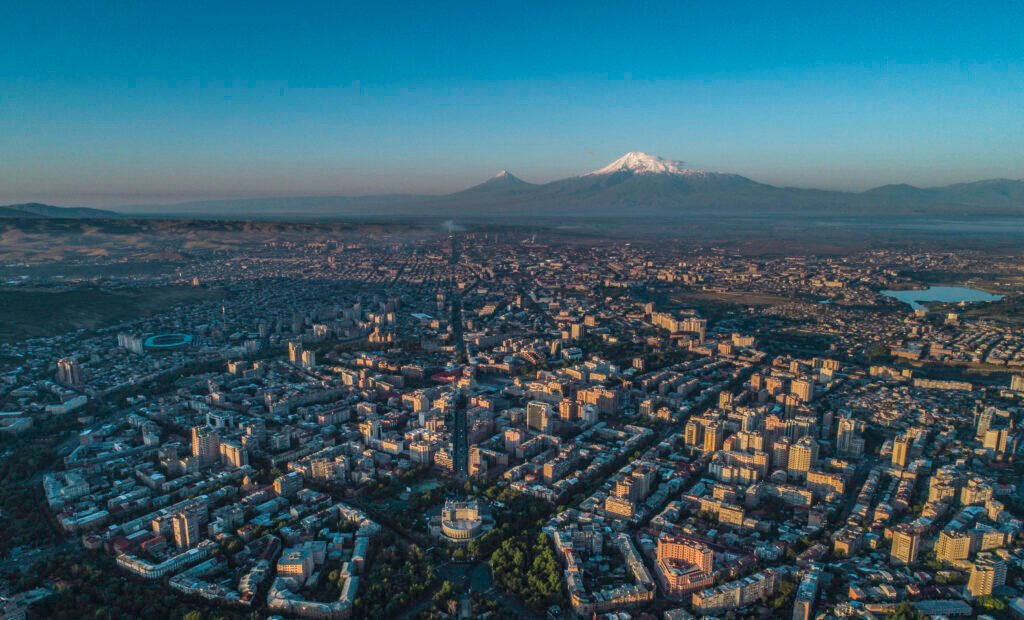
Armenia rewards the small amount of logistical care that getting here requires. Five hours after leaving Europe you are eating apricots on a terrace with Mount Ararat filling the southern sky, which is a reasonable trade for a strange arrival time.
Frequently asked questions
Are there direct flights to Armenia from Europe?
Yes, but the network is thinner than for a Western European capital. Frankfurt, Paris, Vienna, Warsaw, Riga, Milan, Rome and Venice all have nonstop services to Yerevan, operated by a mix of legacy carriers and low-cost airlines. Most other European cities need one connection, usually through Istanbul, Vienna, Warsaw, Paris or a Gulf hub. Always check current schedules, because routes here are added and dropped from season to season.
Why do so many flights land in Yerevan in the middle of the night?
Zvartnots sits at the end of long rotations from Europe, the Gulf and Asia, and aircraft are scheduled to turn around overnight so they are back at their home base for the morning wave. The result is a cluster of arrivals between about 2am and 6am. Plan for it: book your first night from the previous day so the room is genuinely waiting, and arrange a transfer in advance.
How much does a return flight to Yerevan cost?
In 2026 a low-cost return from Italy or Central Europe booked a couple of months ahead often lands somewhere around 120 to 250 euros, while full-service carriers through a hub are more commonly 300 to 500 euros. July, August and the days around New Year are the expensive weeks. Late April, May, October and November are consistently the best value.
Can I travel to Armenia overland from Georgia?
Yes, and it is a pleasant journey. Shared minivans run daily between Tbilisi and Yerevan in roughly six hours through the Bagratashen and Sadakhlo border crossing, and a seasonal overnight train also operates. Private transfers let you stop at the Haghpat and Sanahin monasteries on the way. The border is straightforward and most Western passport holders get a simple entry stamp.
Do I need a visa to fly into Armenia?
Citizens of the European Union, the United Kingdom, Switzerland, the United States, Canada, Australia and many other countries enter visa free for up to 180 days in a year. You need a passport valid for the length of your stay. Nobody normally asks for an onward ticket, though airlines occasionally do at check in.