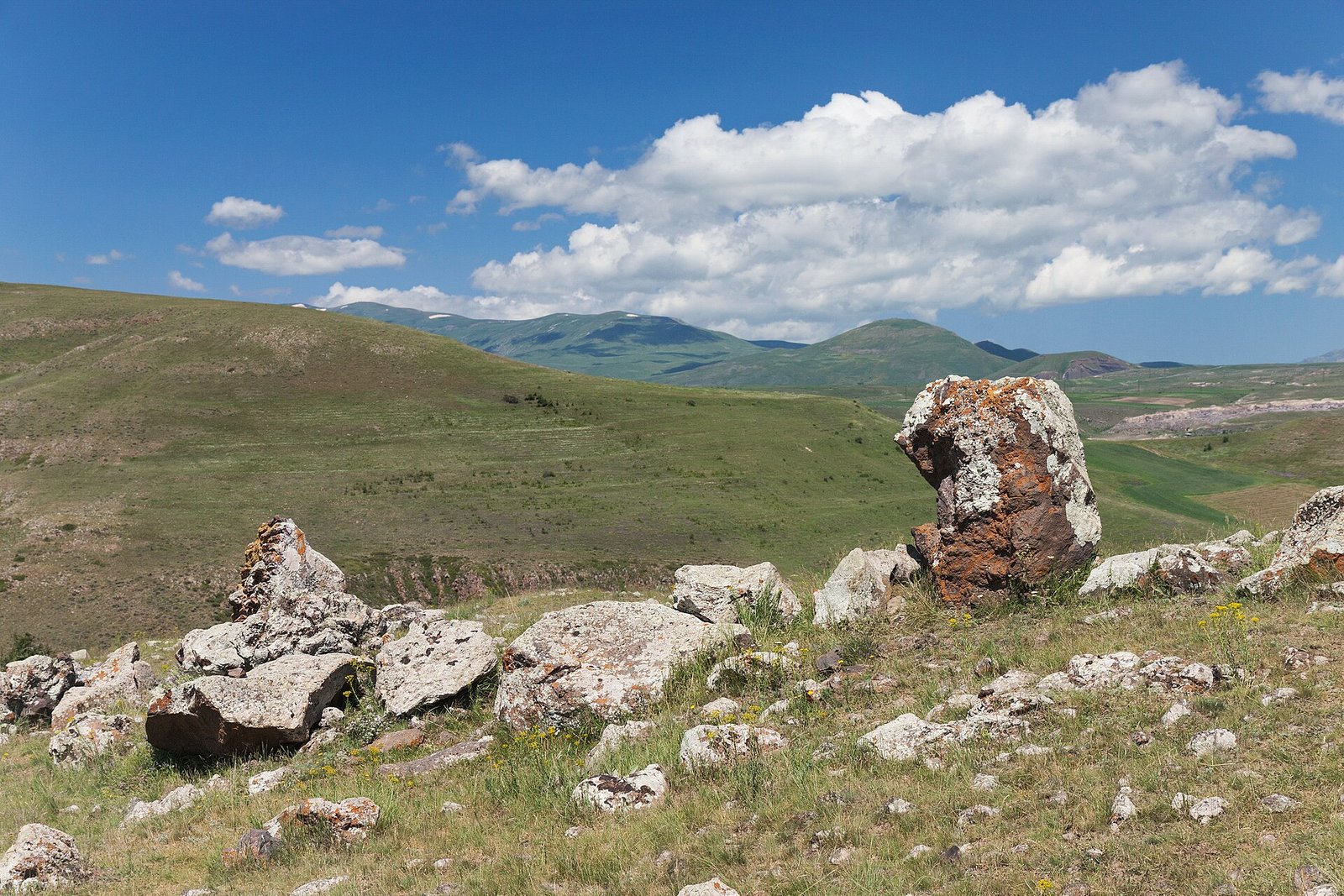
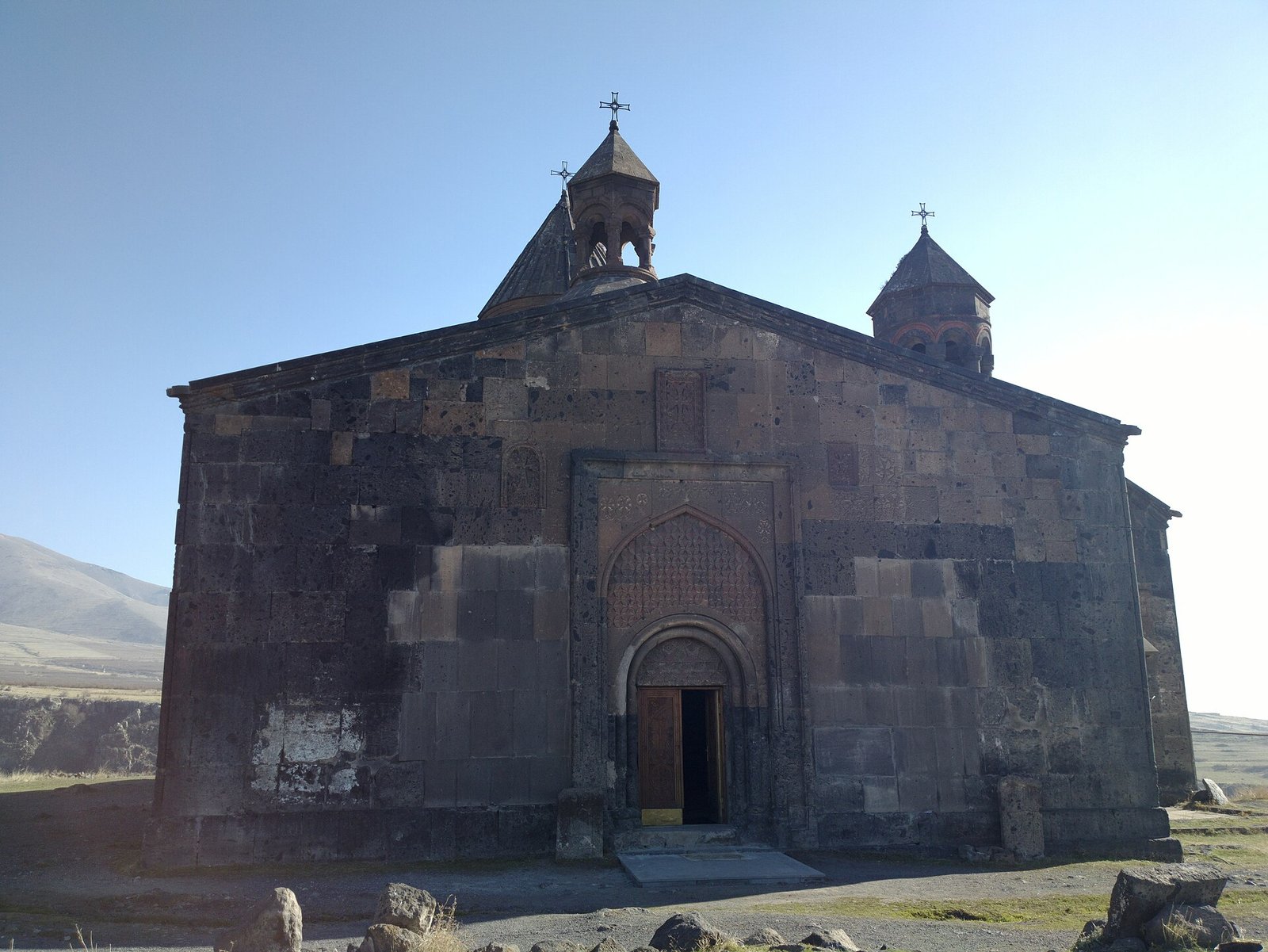
If you want monasteries in Armenia off the beaten path, two short loops from Yerevan cover the best of them: Saghmosavank and Hovhannavank on the Kasagh gorge, about an hour away, and Haghartsin and Goshavank in the forests near Dilijan, 1.5 to 2 hours away. All four are medieval, still active and usually far quieter than Geghard or Noravank. Public transport is poor, so a car, driver or small tour works best.
| Question | Short answer |
|---|---|
| Which loops? | Aragatsotn (Saghmosavank, Hovhannavank, Ohanavan) and Dilijan (Haghartsin, Goshavank, Parz Lake) |
| Time from Yerevan? | About 1 hour to Saghmosavank; 1.5 to 2 hours to Haghartsin |
| Entry fee? | Free at all four, donation boxes inside |
| Public transport? | No reliable direct service; taxi or driver advised |
| Crowds? | Usually low, busiest on weekends and in autumn |
| Best season? | April to June, September to October |
| Dress? | Shoulders and knees covered, light scarf for women |
| How long? | Half day per loop, or one long day for one loop plus Amberd or Dilijan town |
Is it worth leaving the main circuit?
For most travellers on a repeat or longer trip, yes. The main sites (Garni, Geghard, Khor Virap, Noravank) are famous for a reason, and our top 10 monasteries in Armenia covers them. But they can be busy in summer, with tour coaches arriving at the same hours. These four are smaller and quieter, and each has its own character: a clifftop setting, a gorge, a forest, a scholarly past.
If you only have a couple of days in the country, do the headline sites first. If you have a free half day, choose one of these loops.
How does the Aragatsotn loop work?
Aragatsotn province lies north-west of Yerevan, at the foot of Mount Aragats. The usual order is Yerevan, Saghmosavank (about 50 km, around 50 to 60 minutes), then Hovhannavank a few kilometres further along the same gorge, then Ohanavan, and back, with an option to climb towards Amberd and Aragats.
Saghmosavank: the monastery on the edge of the gorge
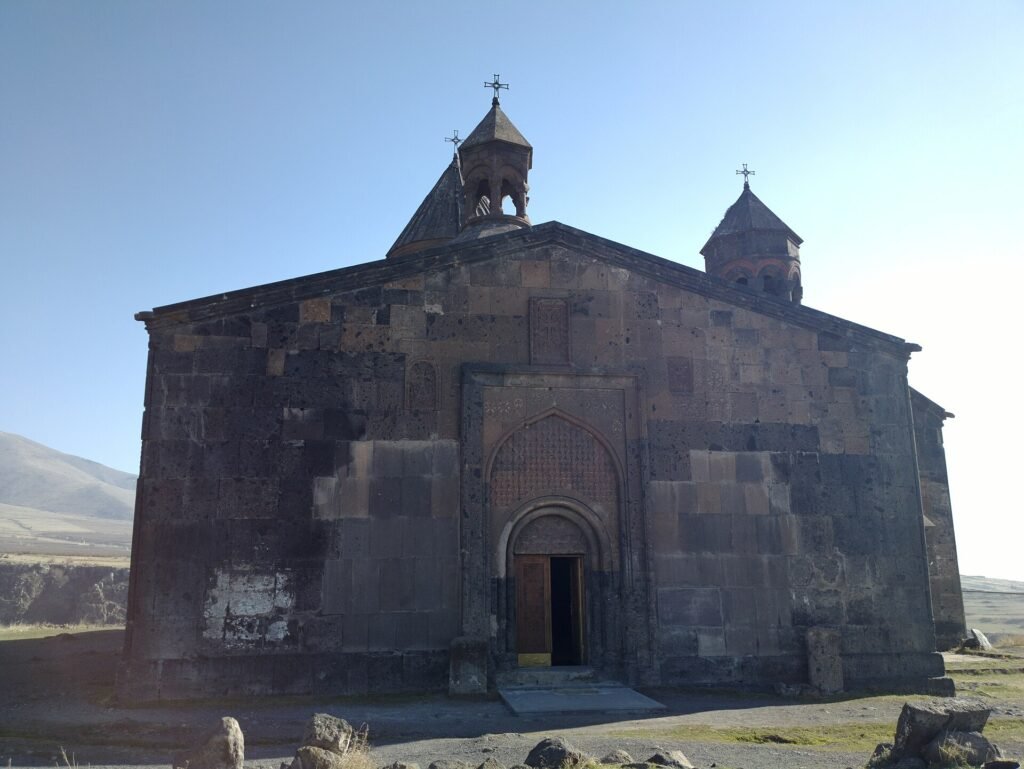
Saghmosavank, “Monastery of Psalms”, was built mainly between 1215 and 1235 under Prince Vache Vachutian in the Zakarian period. It stands right at the rim of the Kasagh canyon, with a drop of roughly 200 metres below. The main church of Sion, the gavit and a small library building are the highlights, and the position makes it one of the best sunset or early morning stops near Yerevan. Allow 30 to 45 minutes. There are no facilities on site, so bring water.
Hovhannavank and Ohanavan: the older, larger complex
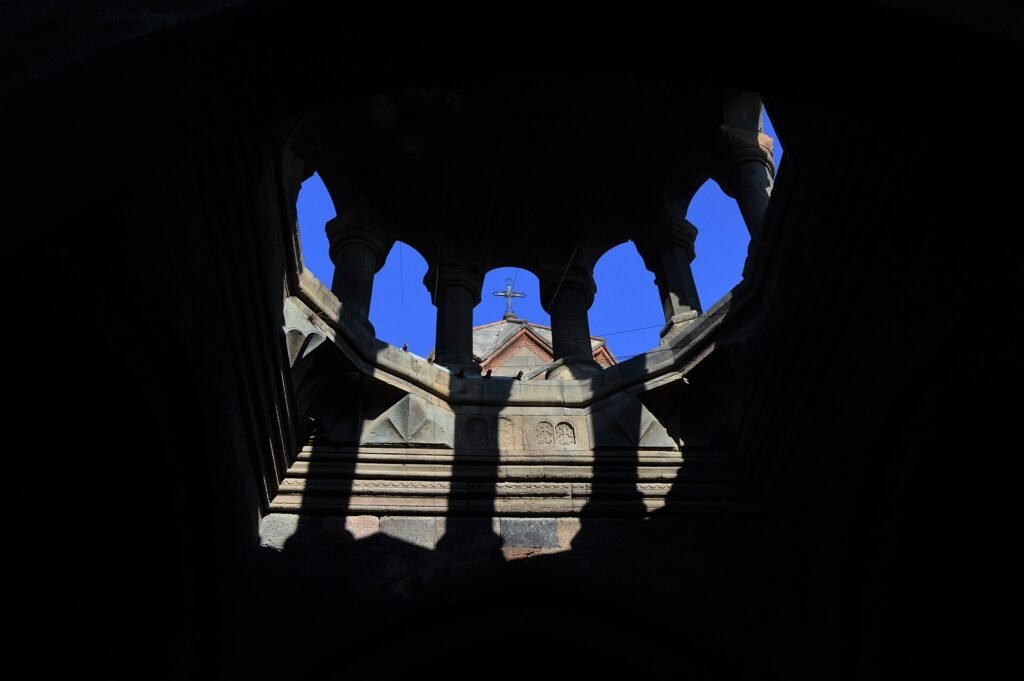
Hovhannavank sits about 5 km away in the village of Ohanavan, also on the gorge edge. The oldest part, a small church of St Karapet, is traditionally dated to the early fourth century. The large cathedral of St Hovhannes was built in the early 13th century, with a gavit added later in the same century. The roof of the gavit rests on twelve columns, and the monastery was a scriptorium and school for centuries. An earthquake in 1918 damaged the dome and wall, and both were rebuilt in the 1990s. Allow 45 to 60 minutes.
Ohanavan is also known for the Ohanavan gorge and the viewpoint over the Kasagh. You can add a short walk to the rim, or a stop at a roadside cafe in the village.
Optional extensions: Amberd and Aragats
Many day tours add Amberd, a fortress and small church high on the slopes of Aragats at about 2,300 metres, plus the Alphabet Monument near Artashavan. Amberd needs extra time and decent weather, and the road can be closed or icy outside summer. Our guide to Mount Aragats, Lake Kari and Amberd covers it in depth. With Amberd, plan 7 to 8 hours in total.
How does the Dilijan loop work?
Dilijan sits in the forested hills of Tavush province, about 90 to 100 km north-east of Yerevan, roughly 1.5 to 2 hours by car depending on traffic and the Sevan section. The loop starts in Yerevan, passes Dilijan, then continues to the monasteries and returns the same way or via Lake Sevan.
Haghartsin: churches in the forest
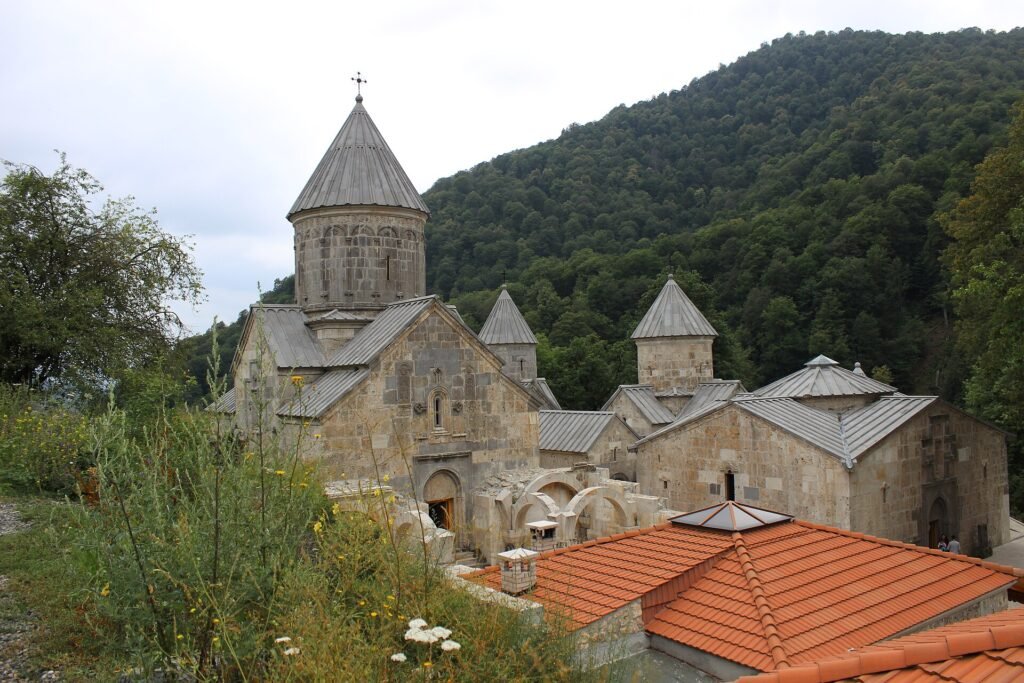
Haghartsin was founded in the 10th century and grew mainly in the 12th and 13th centuries. It has three churches, a large gavit with carved tomb slabs, and a rare, surviving refectory with stone dining benches. It lies roughly 18 km from Dilijan, a drive of about 25 minutes along a narrow, winding road. Allow 1 to 1.5 hours. The dense woods around it are as much of the attraction as the stone.
Goshavank and Parz Lake
Goshavank was founded in the 12th century by Mkhitar Gosh, a scholar and priest known for an early Armenian law code and for fables. After an earthquake destroyed the earlier monastery of Getik in 1188, he re-established it here. The compound includes a library tower, the church of St Gregory with carvings, and a famous khachkar from 1291 by the sculptor Poghos. Allow about an hour.
Parz Lake is a small forest lake near the village of Gosh, and a short walk or hike links it with the monastery. It is a pleasant place for lunch or a stroll after the churches. For more on the town itself, see our Dilijan and Tavush guide.
How do you get there without a car?
There is no reliable direct public transport to any of these four monasteries, and timetables change. Honest options:
- Taxi or driver for the day: the simplest. Agree the price for the whole loop and the waiting time before you set off. Prices vary; check in advance for 2026.
- Minibus to Dilijan, then taxi: regular minibuses and buses run from Yerevan to Dilijan. From there, a taxi to Haghartsin and Goshavank for a return fare is often a few thousand drams, though prices change.
- Small group or private tour: useful if you do not want to negotiate.
- Self-drive: fine in summer; the last stretches to Saghmosavank and Haghartsin are narrow, with some unpaved sections. Our guide to driving and car rental in Armenia has details.
If you are weighing tours against doing it yourself, Armenia: guided tour or DIY? helps you decide.
What do travellers complain about, and who should skip these?
- Transport: the commonest complaint. Without a car, these places take planning.
- Few facilities: toilets, shops and cafes are limited or absent. Bring water, snacks and cash in drams.
- Weather: fog, rain and ice are common around Dilijan, and the stone is slippery.
- Not much to do for kids: they are quiet places of worship, not attractions.
- Similar-looking churches: visitors who have seen many monasteries sometimes find them similar. Pick one loop rather than both.
When is the best time, and how do crowds compare?
Weekday mornings are quietest. Weekends and October colours bring more local visitors, especially at Haghartsin and Parz Lake. Geghard and Noravank get more tour coaches than all four of these. Spring and early summer are green, and September to October is the most colourful. Winter visits are possible but plan extra time for icy roads.
If you would rather not negotiate taxis or drive winding roads, our small-group and private tours cover both loops, with timing built around quiet hours. Browse our tours or tell us which monasteries you want to see.
Check roads and any entry details shortly before you go, as conditions and prices change.
For other day options, see our overview of day trips from Yerevan.
Frequently asked questions
Are Saghmosavank and Hovhannavank worth visiting?
Yes, if you like dramatic settings and quiet. Both stand at the edge of the Kasagh gorge, about an hour from Yerevan, and are usually far less crowded than Geghard or Noravank. They are small, so combine them with Ohanavan and, if you wish, Amberd to make a half or full day.
How do I get to Haghartsin and Goshavank without a car?
There is no reliable direct public transport to the monasteries. The usual method is a minibus or bus from Yerevan to Dilijan, then a taxi to Haghartsin and onward to Goshavank, agreed for a return price. Local minibuses to Gosh village exist but are irregular, so verify locally.
Do I need to pay to enter these monasteries?
Entry to the monasteries themselves is free, with a donation box at most of them. Parking can be informal, and some areas near Parz Lake have small fees or cafes. Bring cash in drams, because there are few card machines on this route.
What should I wear at Armenian monasteries?
Cover shoulders and knees, and women may be asked to cover their heads in active churches; carry a light scarf. Wear shoes with grip, because stone paths and steps get slippery after rain. These are working places of worship, so keep your voice down inside.
When is the best time to visit?
April to June and September to October are the most comfortable. October colours around Dilijan are strong. In winter, snow and ice make the Dilijan roads slower, and Amberd is often closed to ordinary cars from about November to April, so ask locally.