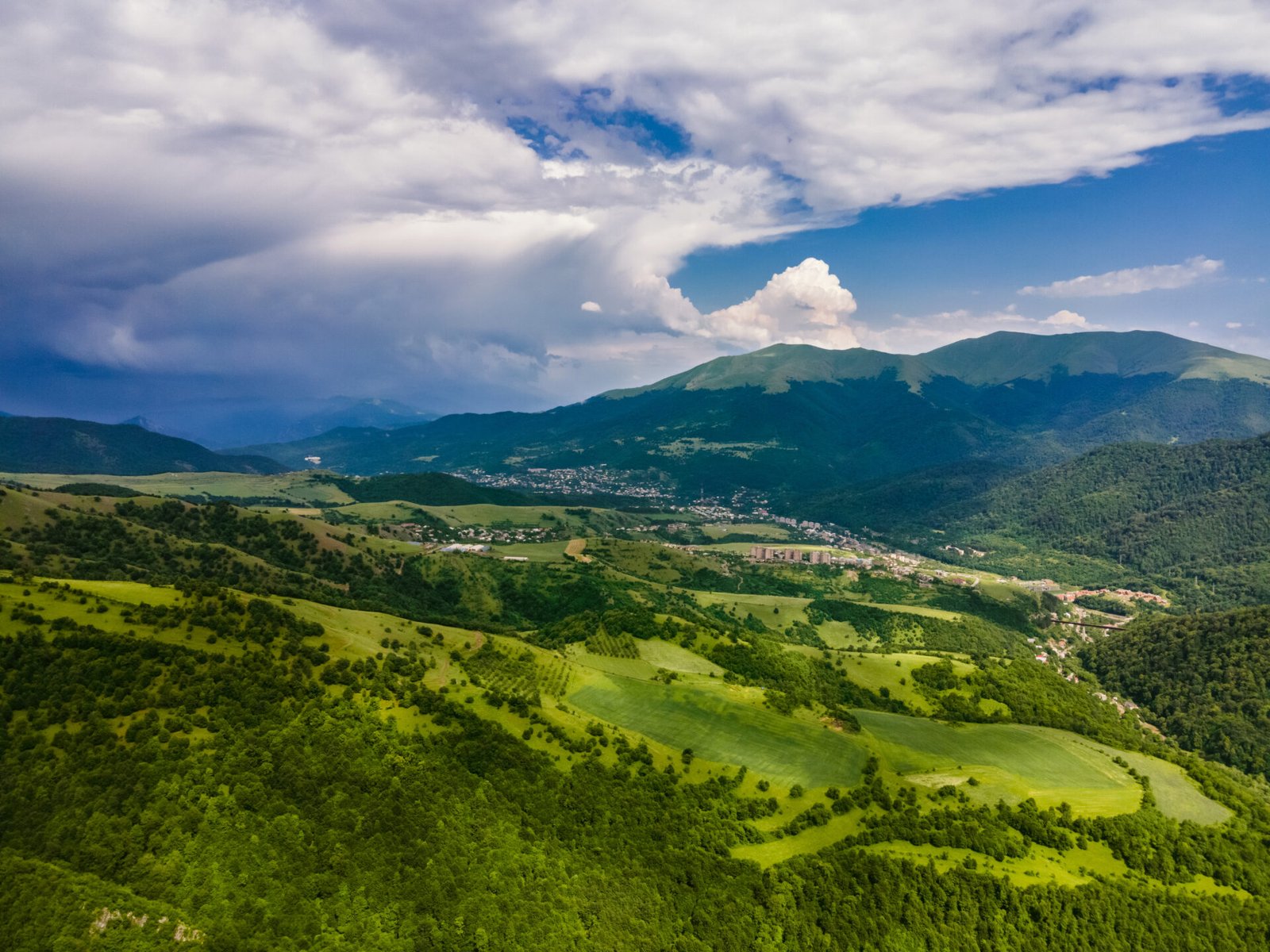
Armenia vs Georgia is the question we hear most from people planning a first trip to the South Caucasus, and the honest answer depends on what you want to look at. This article compares the sights category by category: capitals, monasteries, ancient sites, mountains, wine and food. It complements our broader Armenia or Georgia comparison, which covers the decision and a two-week plan, and our Yerevan to Tbilisi transport guide for the crossing itself. We are a Yerevan-based team, so we know Armenia better, but we say clearly where Georgia wins.
| Question | Short answer |
|---|---|
| Size | Armenia 29,743 km², about 3.1 million people. Georgia roughly 70,000 km², about 3.7 million people. |
| UNESCO World Heritage | Armenia 3 sites (all cultural). Georgia 4 (three cultural, one natural), per UNESCO’s lists. |
| Highest peak | Armenia: Aragats, 4,090 m. Georgia: Shkhara, about 5,200 m. |
| Capitals | Tbilisi has the atmospheric old quarter. Yerevan is planned, walkable and a better base for day trips. |
| Wine | Georgia has the bigger, better-organised wine tourism (Kakheti). Armenia has the roughly 6,000-year-old Areni-1 winery and a smaller, growing scene. |
| Distance between capitals | Roughly 270 to 280 km by road, 5 to 6 hours including the border. |
| Entry for EU, US and UK passports | Visa-free in both. Armenia: up to 180 days a year. Georgia: up to one year for EU and UK passports (check your own passport before booking). |
| Crowds | Georgia is busier: about 6.9 million international visits in 2025 against about 2.3 million tourist visits in Armenia (different counting methods). |
How big are the two countries, and what does that mean for a short trip?
Armenia is about 30,000 km², Georgia more than twice that. On the ground the difference is felt in logistics. From a Yerevan base you can reach Khor Virap (about 30 km), Noravank (about 122 km) or Lake Sevan in a day and be back for dinner. Tatev, about 280 km away, is better as an overnight.
Georgia spreads out. Tbilisi works as a base for Mtskheta (around 20 km), Uplistsikhe (roughly two hours by road) and Kazbegi (157 km), but Kutaisi and Gelati, Svaneti, Vardzia and the coast each need their own base. As a rule of thumb, Armenia works well in 5 to 8 days with one or two bases, while Georgia asks for 7 to 12 if you want more than Tbilisi and one mountain.
Yerevan or Tbilisi: which capital is better to visit?
Tbilisi was founded in the 5th century and its Old Town, the sulphur-bath district of Abanotubani and the Narikala fortress (reached by cable car from Rike Park since 2012) give it more layered atmosphere. It sits in a valley between roughly 380 and 770 m.
Yerevan is higher (around 990 m on average) and younger in appearance. Erebuni was founded in 782 BC, but the modern centre follows Alexander Tamanian’s plan of 1924: tuff-stone buildings, Republic Square, the Cascade, and café terraces that stay busy late into the evening. If you want crooked balconies and old streets, Tbilisi wins. If you want an easy, walkable city that is also a launch pad for day trips, Yerevan is hard to beat.
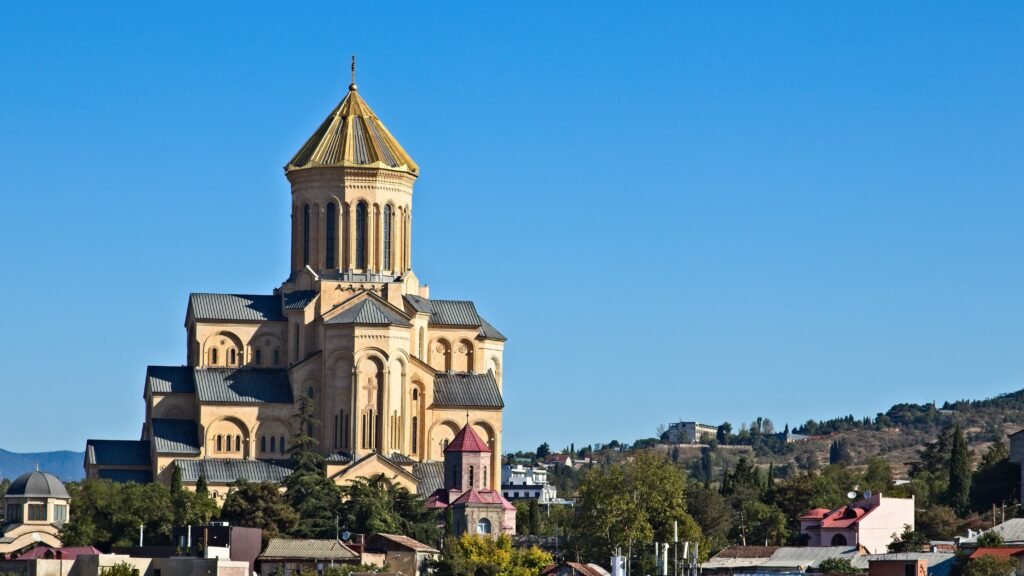
Which country has the better medieval churches and monasteries?
This is Armenia’s strongest category, and Georgia’s best sites are very good too.
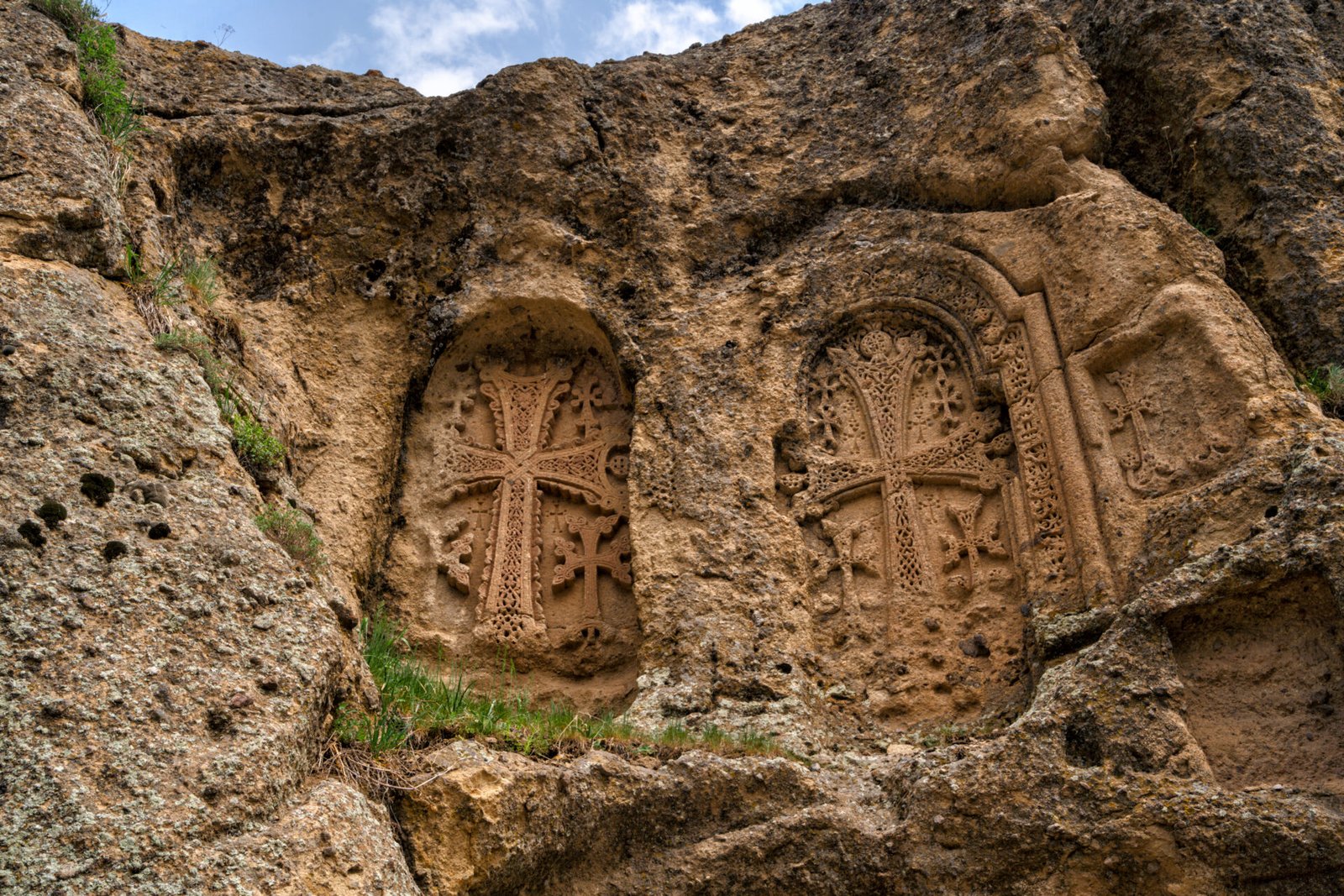
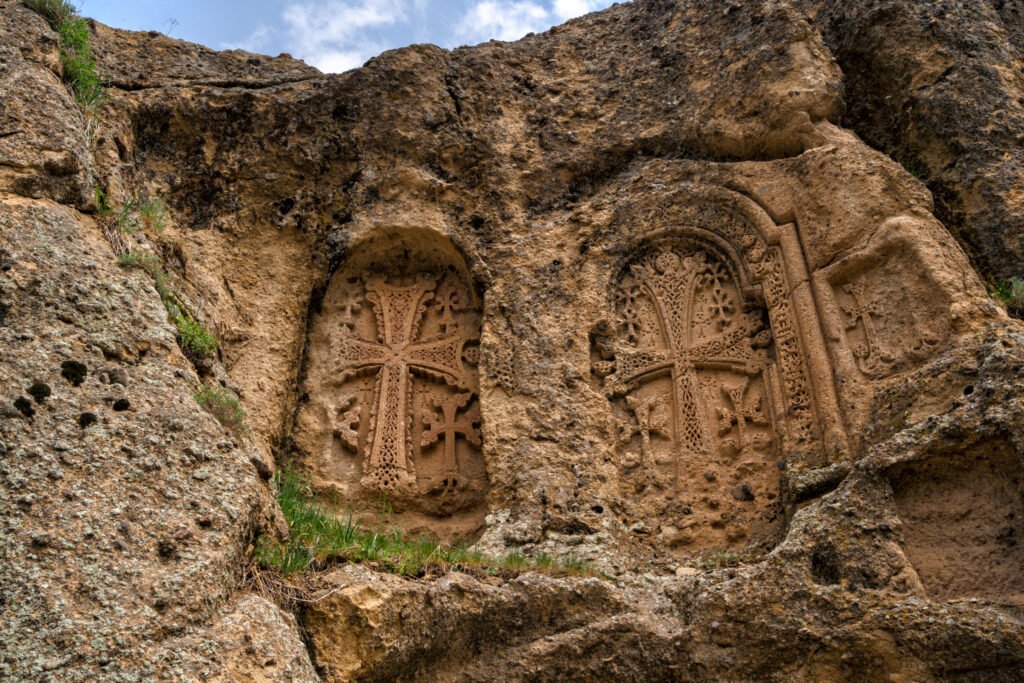
- Armenia: Geghard (UNESCO, 4th to 13th centuries, churches carved into the rock), Tatev (main church built 895 to 906, now also reached by the 5,752 m Wings of Tatev cable car opened in 2010), Noravank (13th to 14th centuries, with the Burtelashen church completed in 1339) and Khor Virap, about 100 m from the closed Turkish border, with its 1662 church and Ararat behind. Haghpat and Sanahin in the north date from the 10th century. We rank the best of them in our guide to Armenia’s most beautiful monasteries.
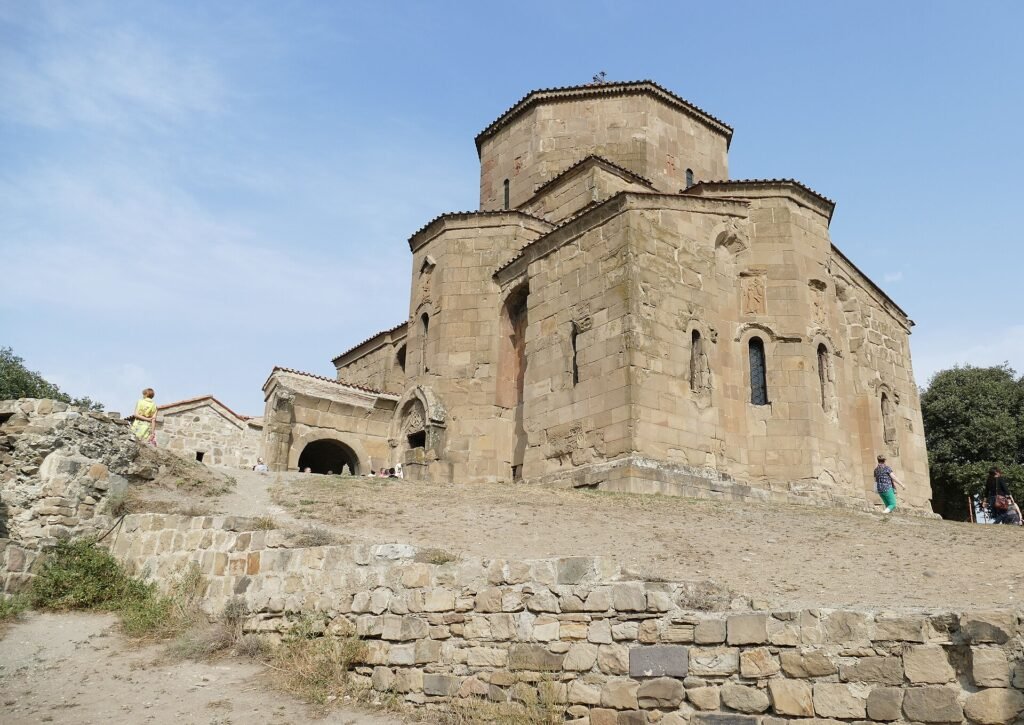
- Georgia: Jvari (6th century) and Svetitskhoveli (built 1010 to 1029), both in Mtskheta; Gelati near Kutaisi (founded 1106, with a 12th-century apse mosaic); and Gergeti Trinity Church, a 14th-century church at about 2,170 m above Kazbegi.
Both nations date their Christian history to the early 4th century (Armenia’s state conversion is traditionally put at 301), so the buildings come from related but distinct traditions. Our honest take: Georgia’s famous churches are larger and often sit in more dramatic settings, and Mtskheta is an easy half-day from Tbilisi. Armenia offers more monasteries per kilometre, more rock-cut and gorge-edge sites, and fewer people at each of them.
Which country has the better caves and ancient sites?
Armenia’s headline is Areni-1, a cave complex in Vayots Dzor where a winery from the Chalcolithic period (roughly 4300 to 3500 BC) was uncovered in 2011, after the discovery of a leather shoe in 2008. Near Sisian stands Karahunj (Zorats Karer), with 223 numbered stones. Claims that it is the world’s oldest observatory are disputed; surveys also point to a Bronze to Iron Age burial site. We explain both readings in our Karahunj guide.
Georgia’s equivalents are Uplistsikhe, a rock-cut town about 10 km east of Gori with human presence from the end of the 2nd millennium BC, and Vardzia, a cave monastery begun under Giorgi III (1156 to 1184) and expanded under Queen Tamar, with more than a dozen churches. Vardzia is the single most impressive cave site of the two countries; Areni-1 is the more important one for archaeology. Vardzia lies south-west, roughly 60 km beyond Akhaltsikhe, so budget a full day.
Mountains, lakes and hiking: where do the landscapes win?
Georgia wins on high mountains. Shkhara, about 5,200 m, is its highest point, Kazbek is around 5,050 m, and Upper Svaneti is a UNESCO-listed region of medieval tower houses; the Mestia to Ushguli trek usually takes four days. The Jvari Pass (2,395 m) on the road to Kazbegi can close after heavy snow, even in May, so check conditions. Borjomi, 165 km from Tbilisi, adds forests and a national park of about 85,000 hectares.
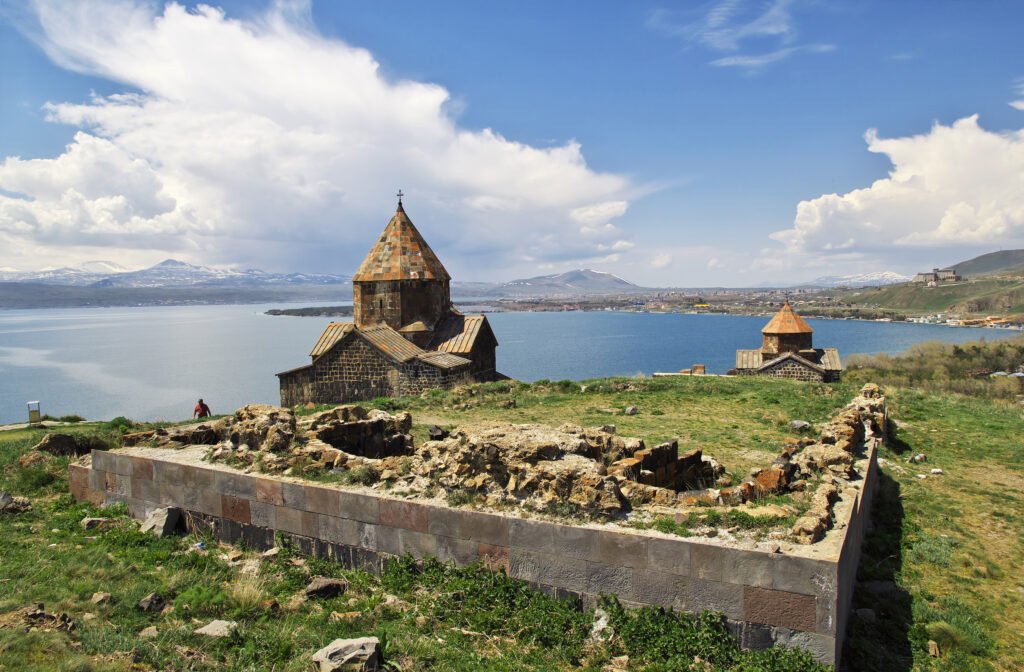
Armenia’s mountains are lower and gentler. Aragats reaches 4,090 m and can be done as a summer walk from Lake Kari (see our Aragats guide). Lake Sevan sits at about 1,900 m and covers roughly 1,242 km², and Dilijan National Park covers about 240 km² of oak and beech forest between 1,070 and 2,300 m. The Transcaucasian Trail crosses both countries, so keen hikers can link them.
Wine and food: how do they compare?
Georgia has the stronger wine-tourism offer. Kakheti, with Telavi and Sighnaghi as the usual bases, is the main wine region, and the qvevri method, wine fermented in buried egg-shaped clay vessels, has been on UNESCO’s intangible heritage list since 2013. Estates there are used to visitors.
Armenia’s centre is Vayots Dzor around Areni, where the grape and the cave winery are the story. It is smaller, with fewer estates ready for tourists, but it combines easily with Noravank in one day. Read our Areni wine guide for what to order.
On the table, Georgia offers khachapuri, khinkali and walnut sauces. Armenia offers khorovats (barbecue), dolma, fresh herbs and lavash, which UNESCO inscribed in 2014. Neither country is a bad choice for eating; Georgia has the wider restaurant variety, Armenia the cheaper private driver to get between meals.
How do cost, entry rules, crowds and season compare?
- Cost: close. Our rough 2026 estimate is 35 to 50 euros a day on a budget and 70 to 110 euros mid-range with private transport, in either country. Beds and beer lean cheaper in Georgia, drivers and tours cheaper in Armenia.
- Entry: EU, US and UK citizens enter Armenia without a visa for up to 180 days a year. Georgia allows EU and UK citizens one year; US citizens are also visa-free, but confirm the permitted stay. Rules change, so check the foreign ministry pages before you book.
- Crowds: Georgia counted about 6.9 million international visits in 2025 (Geostat), Armenia about 2.26 million tourist visits (Tourism Committee). The methods differ, but the gap is real: Armenian monasteries are quieter, Georgian summers in Tbilisi, Kazbegi and Batumi are busier.
- Season: May to June and September to October suit both countries. July and August are peak season in Kazbegi and hot in the lowlands.
What are the limits of this comparison, and who should skip which country?
Three honest caveats. We run tours in Armenia, so we are not neutral. Counting UNESCO sites or kilometres does not measure how a place feels. And the figures above are as of 2026: entry rules, road closures and cable-car schedules change.
Skip Armenia if you want a beach, 5,000 m peaks or well-developed wine routes as the core of your trip. Think twice about Georgia if you only have five days and want quiet monasteries and a single base. Also note that, at the time of writing (October 2026), Armenia’s land borders with Turkey and Azerbaijan are closed to ordinary travellers, so a circular route runs through Georgia. Check before you plan around it.
Armenia, Georgia or both: how do you choose?
Choose Armenia if you care most about medieval architecture and rock-cut churches, want a compact trip from one city, or prefer quieter sites. A good test is our Khor Virap, Areni and Noravank day tour.
Choose Georgia if your priority is high mountains, the Black Sea coast, a bigger wine scene or an old-town city break.
Do both if you have 10 to 14 days. Cross at Bagratashen and Sadakhlo, stop at Haghpat and Sanahin on the way, and read the transport guide before you go. Fly into one and out of the other to avoid backtracking.
Want Armenia’s monasteries and wine country without planning every transfer? Browse our small-group and private tours, or ask us for a tailor-made route.
Frequently asked questions
Is Armenia or Georgia better for a first trip?
For 5 to 7 days with monasteries and one base, Armenia is easier. For 7 to 10 days with mountains, wine and a lively old town, Georgia gives more variety. With two weeks, do both.
How many UNESCO World Heritage sites do Armenia and Georgia have?
According to UNESCO, Armenia has 3 (all cultural) and Georgia has 4 (three cultural and the natural Colchic Rainforests and Wetlands). The lists can change, so check UNESCO before you go.
Which country is cheaper, Armenia or Georgia?
They are close. By our rough 2026 estimate a budget traveller spends 35 to 50 euros a day in either. Armenia tends to be cheaper for drivers and tours, Georgia for beds and beer.
Do I need a visa for Armenia and Georgia?
EU, US and UK citizens can enter both without a visa. Armenia allows up to 180 days a year and Georgia up to one year for EU and UK citizens. Always confirm with the foreign ministries.
How far is it from Yerevan to Tbilisi?
About 270 to 280 km by road. Allow 5 to 6 hours by car or minibus including the Bagratashen to Sadakhlo border, and about 10 hours on the overnight train.