If you only visit one memorial in Armenia, make it Tsitsernakaberd, the hilltop complex above Yerevan that commemorates the victims of the Armenian Genocide of 1915, recognised by Armenia, many other countries and a large body of scholars. This guide explains how to visit it respectfully, then covers the Matenadaran manuscript museum and the other Yerevan museums that deserve your time, with plans for half a day, a full day and bad weather.
| Question | Short answer |
|---|---|
| What is Tsitsernakaberd? | The national memorial to the victims of the 1915 genocide, with an underground museum |
| How long does it take? | About 60 minutes for the memorial and museum |
| Is it free? | Yes, entry has been free; check current hours before going |
| Matenadaran tickets? | Adults 2,000 AMD, school-age 1,000 AMD (2026, check before you go) |
| Matenadaran days? | Tuesday to Saturday, roughly 10:00 to 18:00; closed Sunday and Monday |
| Best other museum? | History Museum of Armenia on Republic Square |
| Getting there | Taxi app from the centre, 10 to 15 minutes to the memorial |
| Dress | Smart-casual, shoulders and knees covered at the memorial |
What is Tsitsernakaberd and why do people visit?
Tsitsernakaberd means “swallow fortress” hill. The memorial complex was completed in 1967 and the museum was added underground in 1995, so you walk down into the exhibition rather than up. In 1915 and the following years, the Ottoman government deported and killed a large part of its Armenian population. Armenia, many other countries and most genocide scholars call this a genocide. The memorial exists to remember the dead, and Armenians of every background visit it on ordinary days as well as on memorial days.
For most foreign visitors it is the most important hour of a trip to Yerevan. It explains much of what you will later hear about the diaspora, about family histories, and about why so many Armenians live abroad.
What will you see at the Armenian Genocide Memorial?
- The Eternal Flame: twelve basalt slabs lean inwards around a flame, set below ground level. Visitors leave flowers here, often carnations.
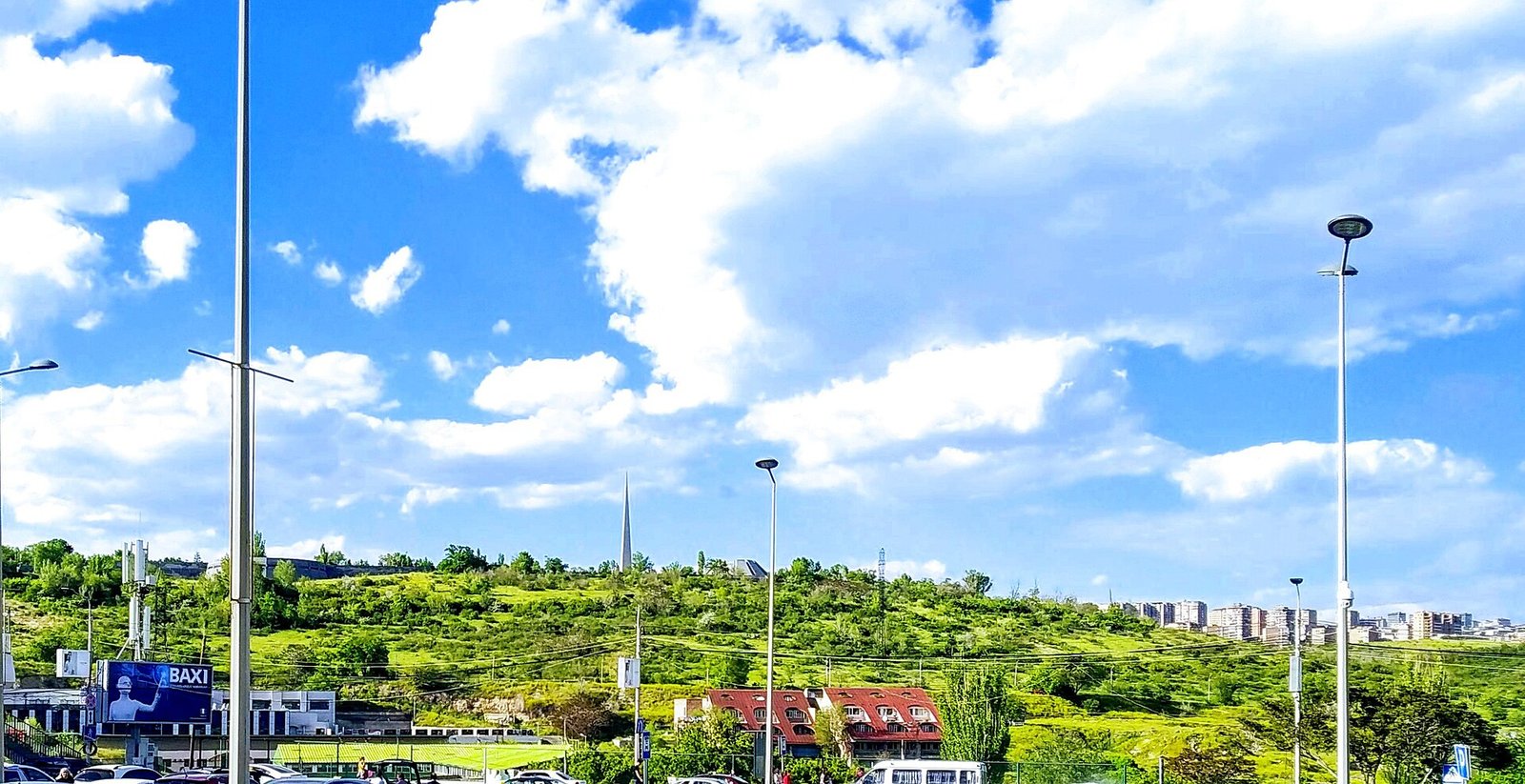
- The memorial stele: a pointed granite column about 44 metres high, split in two, symbolising the reborn nation and the part that was lost.
- The memorial wall: a long wall inscribed with the names of towns and villages from which people were deported.
- The museum-institute: an underground exhibition with photographs, documents, testimonies and maps, plus a research institute. Exhibits are in Armenian with English labelling; ask at the desk whether a guide or audio guide is currently available.
Some photographs are graphic. If you travel with children, decide beforehand whether they are old enough, and be ready to leave the exhibition rooms. The outdoor memorial is calm and suitable for everyone.
How do you visit respectfully?
- Dress modestly: covered shoulders and knees, no beachwear.
- Speak quietly, and keep phones silent near the eternal flame.
- If you lay flowers, place them at the flame as others do and step back. Do not step on the slabs or flower beds.
- Photography of the monument is normal. Do not take selfies at the flame, and ask before photographing other people, as many are there for private reasons.
- Do not turn a question about history into a political argument with a guide or a local. Listen first.
When is Tsitsernakaberd crowded?
The national day of remembrance is 24 April. On that day very large numbers of people walk up to lay flowers, there is a heavy security presence and some roads close. It is a deeply moving day, but it is not a day for a relaxed museum visit, and the museum itself may follow a different schedule. If you are in Yerevan then, go to observe quietly, arrive early or late in the day, and choose another date for the exhibition. Other days, especially weekday mornings, are quiet.
How do you get to Tsitsernakaberd and what are the hours?
The complex sits on a hill south-west of the centre, above the Hrazdan gorge. By taxi app it is about 10 to 15 minutes from Republic Square and costs little by European standards. Walking up from the road takes a few minutes along a paved path. Buses also run in this direction, but a taxi is simpler. Our guide to getting around Yerevan covers taxi apps and the metro.
The memorial grounds are open every day. The museum-institute has shorter hours, closes on Mondays, and in the sources we checked it opened late morning and shut mid-afternoon, with a shorter Sunday. We could not confirm the current timetable, so check it on the day before you travel. Entry has been free.
Is the Matenadaran worth a visit even if you are not into manuscripts?
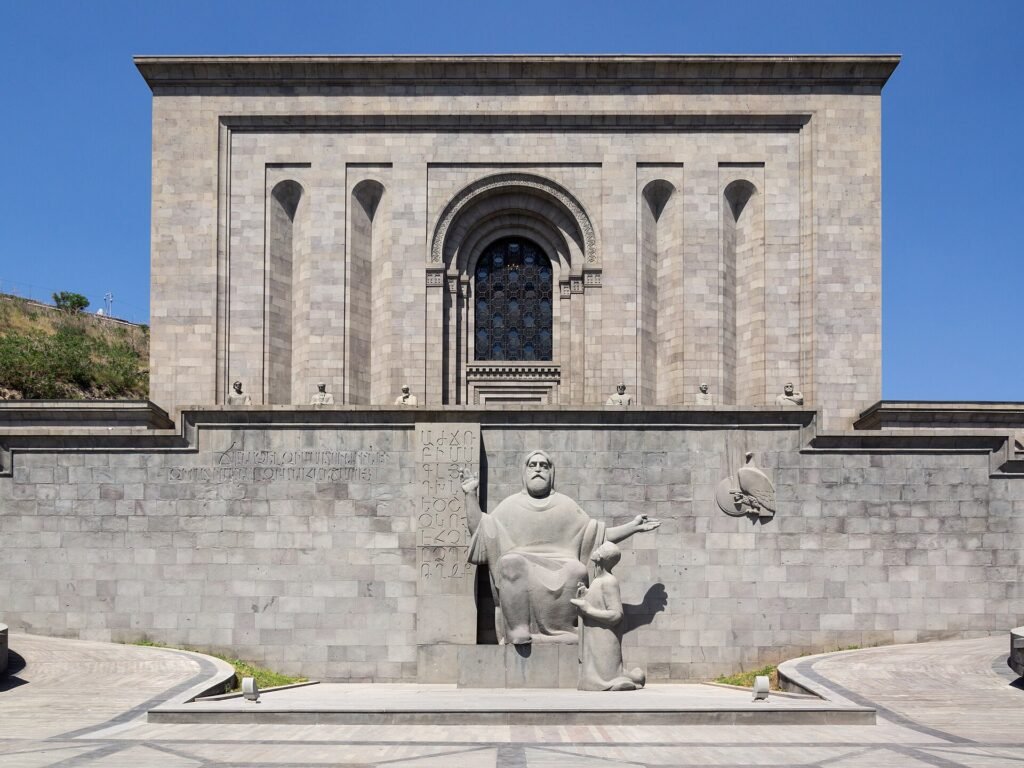
Yes, for most people. The Matenadaran, formally the Mesrop Mashtots Institute of Ancient Manuscripts, stands at the top of Mashtots Avenue, fronted by statues of Armenian scholars and Mashtots, who created the Armenian alphabet around 405 AD. It holds one of the world’s largest collections of manuscripts, with tens of thousands of items in Armenian and other languages, covering medicine, astronomy, law, history and religion.
The museum floors show only a small selection under dim light: illuminated gospels with bright pigments that survived centuries, enormous bindings, and some of the oldest Armenian texts. You do not need to read Armenian to see why this matters, but a guide helps.
Tickets, tours and practical points
- Open Tuesday to Saturday, about 10:00 to 18:00; closed Sunday, Monday and some public holidays.
- Adult entry 2,000 AMD, ages 6 to 18 1,000 AMD, students 300 AMD with ID (2026 prices from the museum, check before you go).
- Guided tours in foreign languages cost 5,000 AMD for a group of up to ten, booked in advance through the museum.
- Allow 60 to 90 minutes. Photography rules are strict in the manuscript halls, so ask at the entrance.
Which other Yerevan museums are worth your time?
- History Museum of Armenia: on Republic Square, a clear walk through Armenian history from prehistory to modern times, with Urartian bronzes and a good ethnographic section. Open Tuesday to Sunday, about 11:00 to 18:00, closed Monday; permanent exhibition about 2,500 AMD (2026, check before you go).
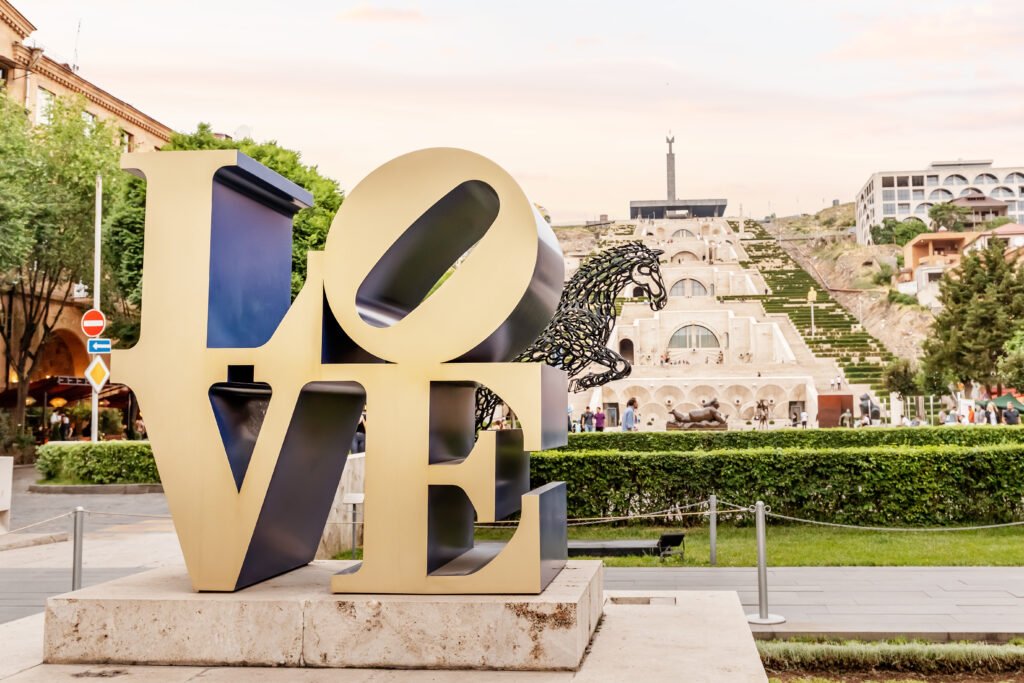
- Cafesjian Center for the Arts: inside the Cascade complex, with contemporary art and a sculpture garden that you can walk through at any hour. Gallery hours have varied by season and exhibition, so check the current timetable first.
- Parajanov Museum: a small, lively museum of the filmmaker Sergei Parajanov’s collages and objects. We could not verify current hours, so confirm before you go.
- National Gallery of Armenia: next to the History Museum, a large painting collection. Check which wings are open.
For a broader list of sights and neighbourhoods, see our guide to things to do in Yerevan.
What does a half-day or a full-day museum plan look like?
Half day (4 hours)
Take a taxi to Tsitsernakaberd for 10:30, spend an hour there, then ride to the Matenadaran for a guided tour. Finish with lunch on Mashtots Avenue.
Full day
Start at Tsitsernakaberd, lunch in the centre, Matenadaran in the early afternoon (it closes before 18:00), then the History Museum if time allows, or walk the Cascade at sunset. The Cascade steps and sculptures are free and open all the time. Plan sit-down breaks, because museum days tire more than people expect.
Where does this fit in three days?
Museum day works well as day two of our 3 days in Yerevan itinerary, with cafes and evening walks afterwards. For places to eat and stay nearby, see Yerevan cafes, nightlife and where to stay.
Are museums a good rainy-day or winter plan?
Yes. Yerevan has cold winters and some rainy spells in spring and autumn, and museums are the obvious answer. Group sites by area so you spend less time outside: Matenadaran and the Cascade are both a short taxi ride apart, while the History Museum is on Republic Square. Keep a layer for the hilltop memorial, which is exposed and windy. Always check closing days, since many museums close on Mondays.
What do travellers complain about, and who should skip this?
- Surprise closures: Mondays, public holidays and remembrance days. This is the most common complaint.
- Limited English: labelling is mixed, which is why a guide or audio guide helps at the Matenadaran and the History Museum.
- Heaviness: the genocide museum is emotionally demanding. Put it earlier in the day and keep the afternoon light.
- Not for everyone: if you dislike museums, see Tsitsernakaberd and the Matenadaran exterior and spend the rest of the day outdoors.
If you would like context from a local guide at the memorial and the Matenadaran, our private and small-group Yerevan tours handle the timing and the booking. See our tours and tell us how much history you want.
Remember that all hours and prices here were checked in 2026 and can change, so confirm them shortly before you go.
Frequently asked questions
Is Tsitsernakaberd free to visit?
Entry to the memorial grounds and, according to the sources we checked, to the underground Armenian Genocide Museum-Institute is free. Hours are limited and change around memorial days, so check the museum's current schedule before you go. Plan about an hour for the full visit.
How do I dress for the Armenian Genocide Memorial?
Dress as you would for a church or a memorial service: covered shoulders and knees are sensible, shoes you can walk uphill in, and nothing with slogans. Speak quietly at the eternal flame, do not pose for smiling photos there, and ask before photographing other visitors.
How long do I need at the Matenadaran?
Allow 60 to 90 minutes. The ticket covers the museum floors with illuminated manuscripts, and a guide, booked in advance, makes the collection much easier to understand. Visit between Tuesday and Saturday, because it is closed on Sundays and Mondays.
Which Yerevan museums are worth it if I only have one day?
Pair a morning at Tsitsernakaberd with an afternoon at the Matenadaran, then add the History Museum of Armenia on Republic Square if you have energy left. Walk the Cascade at the end of the day for views and open-air sculpture.
Can I visit Yerevan museums on a rainy or winter day?
Yes. Most major museums are indoors and heated, and Yerevan winters are cold rather than snowbound in the centre. Group two or three museums into one day, and use a taxi app between them. Check opening days first, as many close on Mondays.