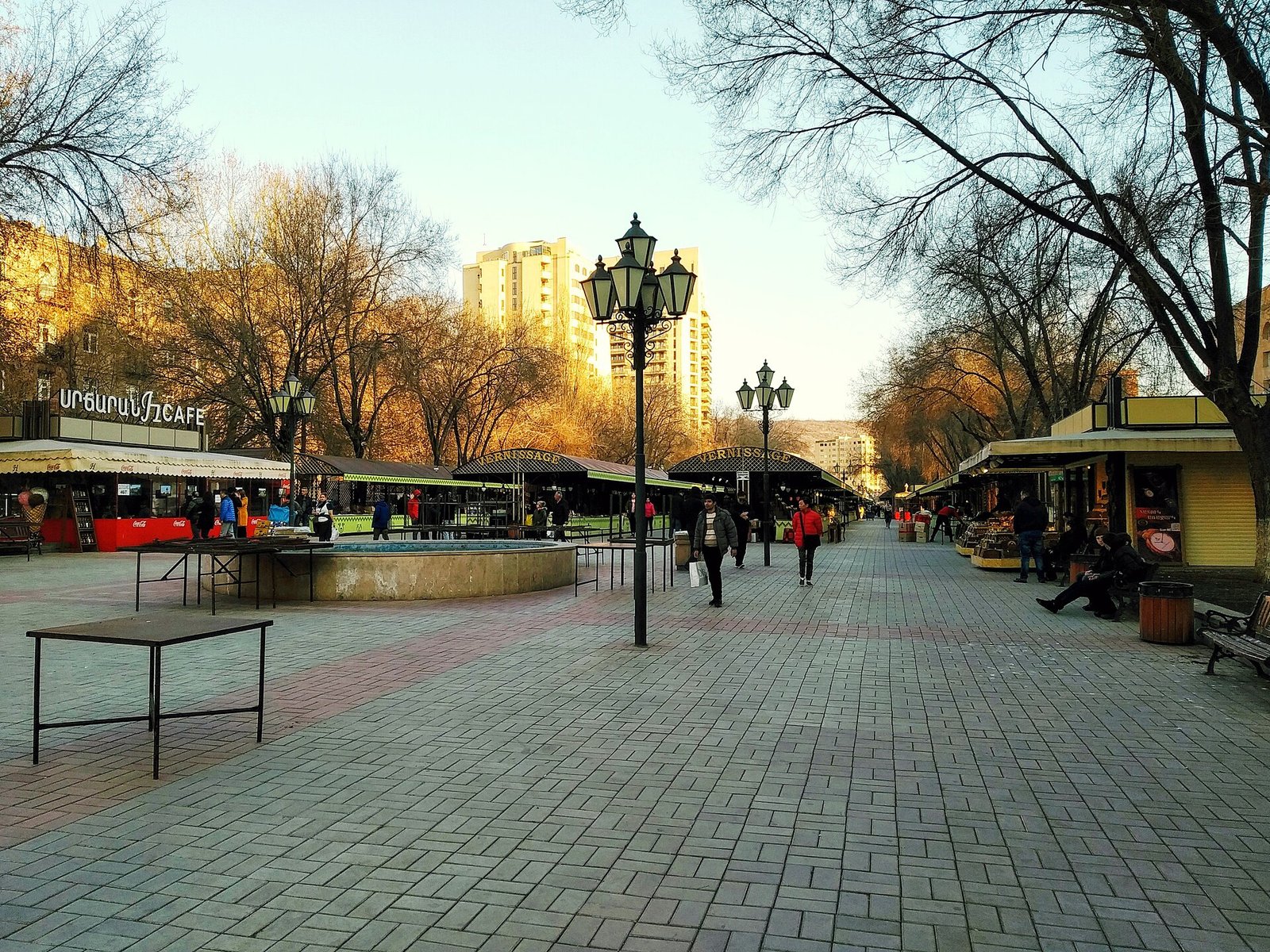
The best souvenirs from Armenia are things you can eat, drink or hang on a wall: brandy, dried apricots, spice and herb mixes, jam, wine, hand-painted ceramics and, if you have the space, a small kilim. You will find most of them at the Vernissage open-air market near Republic Square on weekends, at the GUM food market, and in a handful of reliable shops in central Yerevan.
| Question | Short answer |
|---|---|
| Best all-round place to browse? | Vernissage open-air market, a few minutes’ walk from Republic Square, busiest on weekends |
| Best place for food gifts? | GUM market on Movses Khorenatsi Street: dried fruit, nuts, spices, herbs, cheese, sold by weight, cash preferred |
| Safe, light gifts? | Dried apricots, fruit leather, spice mixes, herbal tea, jam, small ceramics |
| Typical budget? | Roughly 5,000 to 30,000 AMD for a bag of small gifts in 2026; brandy and carpets cost more |
| Can I bargain? | At Vernissage yes, politely; in shops and for food, no |
| Anything needing a permit? | Carpets, antiques and old items: ask for receipts and export paperwork before paying |
| What to skip? | Mass-made trinkets, unmarked “antiques”, stalls that will not state a price or origin |
Where should I shop for souvenirs in Yerevan?
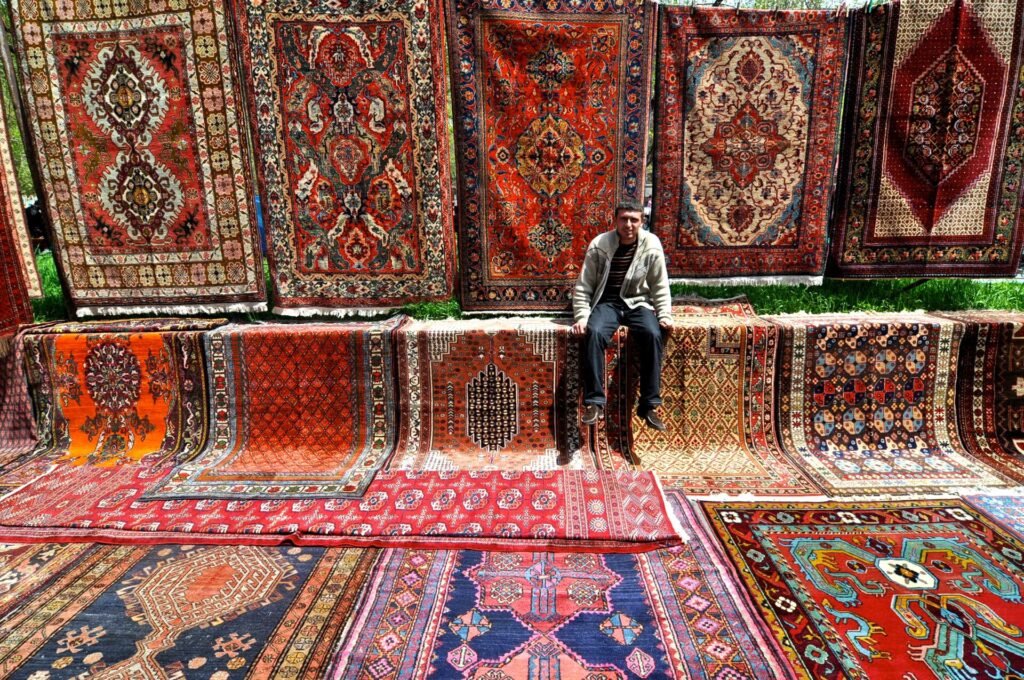
Most travellers combine three stops. The first is the Vernissage, the open-air craft and flea market in the park next to Republic Square. It is the one place where wood carvings, hand-painted ceramics, silverwork, books, backgammon sets, carpets, Soviet-era badges and watches sit side by side. Weekends are the main event, with the full range of stalls from late morning; on weekdays only a few sellers are out, so check before making a special trip.
The second is the GUM market (Gumi Shuka) on Movses Khorenatsi Street, a covered food market that opens daily, mostly in the morning and early afternoon. This is where locals buy dried apricots, nuts, sujukh, pickles, herbs and cheese. Almost everything is sold by weight, so ask the price per kilo first and bring cash.
The third is a short list of specialist shops: brandy and wine stores, ceramic and jewellery workshops, and bookshops, mostly around the centre. Fixed prices and receipts make them the right place for anything valuable. If you are also planning a food day, our guide to Yerevan street food, coffee and sweets pairs well with a GUM visit.
What is actually worth buying?
Brandy and wine
Armenian brandy is the classic gift. Prices run from affordable everyday bottles to aged collector bottles costing many times more, so decide your budget before you walk in. Buy from a shop or the producer, not from a stall, and check that the seal and label are intact. Our guide to Armenian brandy and the Yerevan Brandy Company explains the age statements. For wine, look for bottles from Areni and Vayots Dzor, and read our Armenian wine guide before you choose.
Dried fruit, fruit leather, spices and jam
Dried apricots are the obvious pick, and they cost far less at GUM than in a tourist shop. Look for fruit leather (tklapour), sujukh (walnuts in thickened grape juice), dried herbs for tea, mountain thyme and spice blends. Jams made from walnuts, green figs, cornelian cherries or rose petals are unusual, but glass jars are heavy in a suitcase. Fruit leather and dried fruit pack flat and last for months.
Pomegranate products
The pomegranate is a national symbol, and you will see it in painted ceramics, fabric, wine, juice and syrup. The painted and carved versions are decorative; for something to eat, a bottle of pomegranate wine or a jar of narsharab (reduced pomegranate sauce) is a useful kitchen gift.
Ceramics, silver, wood and paper
Hand-painted ceramics, small silver pieces with Armenian motifs, carved wooden khachkar replicas and hand-bound notebooks are all reasonable buys. Ask who made the item. A seller who can tell you the workshop or village is usually a better bet than one who shrugs.
Duduk and music
The duduk, an apricot-wood double-reed instrument, is a lovely but demanding buy. Playing it takes practice, and the cheapest instruments can sound poor. If you are serious, buy from a music shop or a maker, test it, and ask about spare reeds. A recording is the easy alternative.
Carpets and kilims
A carpet is the biggest purchase and the biggest mistake risk. See the section on export below, and do not buy in a hurry on your last afternoon.
What should I skip?
- Generic magnets and trinkets that are identical in every stall and often imported. A small ceramic piece costs little more and means more.
- “Antique” items without paperwork. Old coins, icons, manuscript pages and medals can be restricted for export, and some are fakes.
- Brandy from unlabelled bottles or bottles with broken seals, however good the story.
- Heavy pottery if you have only hand luggage.
- Anything sold with pressure or without a price. For a wider list of traps see our guide to Armenia travel mistakes and scams.
How do I bargain politely at Vernissage?
Bargaining is normal at Vernissage and not expected in shops or at GUM. Ask the price, look at the item properly, then offer a little lower. A reasonable range is 10 to 25 percent below the first price; opening at half the asking price is rude, especially when the seller is the maker. Buying two or three items at the same stall is the easiest way to a good price. If you cannot agree, say thank you and walk on. Many sellers will call you back with a better figure.
Carry small notes. Many stalls do not take cards, and a seller who has to hunt for change is less willing to cut the price.
How can I tell quality from fakes?
- Textiles and carpets: turn the carpet over. Hand-knotted pieces show the pattern clearly on the back, with irregular knots. A machine-made carpet has a perfectly regular back and often a stiff backing.
- Silver: ask about hallmarks, and treat a very low price per gram with suspicion. Silver-plated pieces are common.
- Ceramics: check the glaze for cracks and the underside for a maker’s mark.
- Brandy and wine: look at the seal, the label printing and the excise stamp, and buy from a shop.
- Honey, jam and spices: choose sealed jars, and smell the spices before buying.
Can I take it all home? Liquids, alcohol and customs
Wrap bottles in clothes, put them in checked baggage and pad them well. Hand luggage is limited to small liquid containers on most airlines, but bottles bought in the airport duty-free area after security are usually allowed in a sealed bag, subject to transfer rules at your connecting airport. Check your airline.
Alcohol allowances depend on where you land, and rules change. In general terms: travellers entering the EU from outside it may bring about one litre of spirits and about four litres of still wine duty-free; the UK allows a similar one litre of spirits and four litres of still wine; the US treats roughly one litre per adult as the usual duty-free amount, with state rules on top. Treat these as a guide and check the official customs page for your country before you fly. Food rules also apply: honey, cheese and meat products can be restricted when entering some countries, while dried fruit and sealed spices rarely cause trouble.
Carpets and antiques: what about export rules?
Armenia protects cultural property, so old carpets, icons, manuscripts and similar items can need an export permit. Travellers report that reputable shops provide a receipt and a certificate for customs, while carpets from open-air markets may need to be assessed by the culture authorities first, which takes time. We could not confirm one single current rule for every case, so ask the seller what paperwork they provide, get it in writing, and allow several days before your flight. If a seller says no paperwork is needed for an old piece, be careful.
How should I pack and budget?
Pack fragile items in clothes, leave room in your bag, and buy heavy items last. Dried fruit, tea and spices fit in any corner. For budgeting, a bag of small gifts typically costs 5,000 to 30,000 AMD in 2026, a decent bottle of brandy costs noticeably more, and a hand-knotted carpet is a major purchase. Prices change, so check before you go. For the wider budget picture, see our Armenia travel costs guide.
What do travellers complain about?
On Reddit and TripAdvisor, the same points come up: pushy sellers on the first day, items that look hand-made but are mass-produced, carpets bought without export paperwork, bottles that broke in luggage, and the Vernissage being much quieter on weekdays than expected. The fixes are simple: browse once without buying, compare prices at two stalls, buy valuable items in shops, and wrap everything.
If you only have a short stay, fit the market into a weekend morning of a 3-day Yerevan itinerary.
Want to shop with a local who knows which stalls are worth your time? Our small-group and private tours can include a market stop, a brandy tasting and help with packing and paperwork. See our tours and ask us anything.
Frequently asked questions
What are the best souvenirs from Armenia?
The safest buys are Armenian brandy, dried apricots and fruit leather (sujukh and tklapour), spice and herb mixes, jam, wine, pomegranate products, hand-painted ceramics and small silver pieces. They travel well, cost little and are made or grown locally, unlike much of the generic tourist stock.
When is Vernissage market open?
Vernissage near Republic Square is at its fullest on Saturdays and Sundays, when most stalls open from late morning. Some sellers trade on weekdays, but far fewer. Hours are informal and many stalls pack up by late afternoon, so go before lunch and do not rely on weekday visits.
Can I take Armenian brandy and wine on a plane?
Yes, in checked baggage, well wrapped and within your destination's allowance. Liquids over 100 ml are not allowed in hand luggage, though bottles bought in the airport duty-free area after security are usually fine if sealed in the shop's tamper-evident bag. Check your airline and your arrival airport's rules.
Do I need a permit to take a carpet out of Armenia?
Often yes, or at least paperwork. Reputable shops give a receipt and an export certificate, and carpets bought at open markets may need an assessment by the culture authorities. Antiques and old items face stricter rules. Ask the seller in writing and allow several days before departure.
How do I bargain politely in Armenia?
Smile, ask the price, and offer a little lower, roughly 10 to 25 percent below the first price at Vernissage. Buy several items from one stall for a better deal. Do not haggle in shops with fixed prices or over food and drink. If you walk away politely, the price often drops.