Is Armenia worth visiting? In our experience as local guides in Yerevan, yes, provided you come for what the country actually offers: ancient monasteries in dramatic landscapes, a high mountain plateau, serious wine and food, and a population that talks to visitors. If you want beaches, big resorts or polished mass tourism, you will probably prefer somewhere else. Below is the honest case for and against, a short factual overview of the country, and what disappoints people.
| Question | Short answer |
|---|---|
| Worth it overall? | Yes for history, scenery, food and wine; no for beaches and nightlife |
| Best for | Culture travellers, hikers, wine lovers, solo travellers, small groups |
| How many days? | 5 to 7 for the highlights, 10 for the south and hiking |
| Ease of travel | Compact distances, but public transport is basic outside Yerevan |
| Cost level | Generally cheaper than Western Europe; check 2026 prices before you go |
| Language | Armenian; Russian widely spoken, English common among younger people in Yerevan |
| Main drawback | Distances by road are slow, and there is no sea coast |
Armenia at a glance
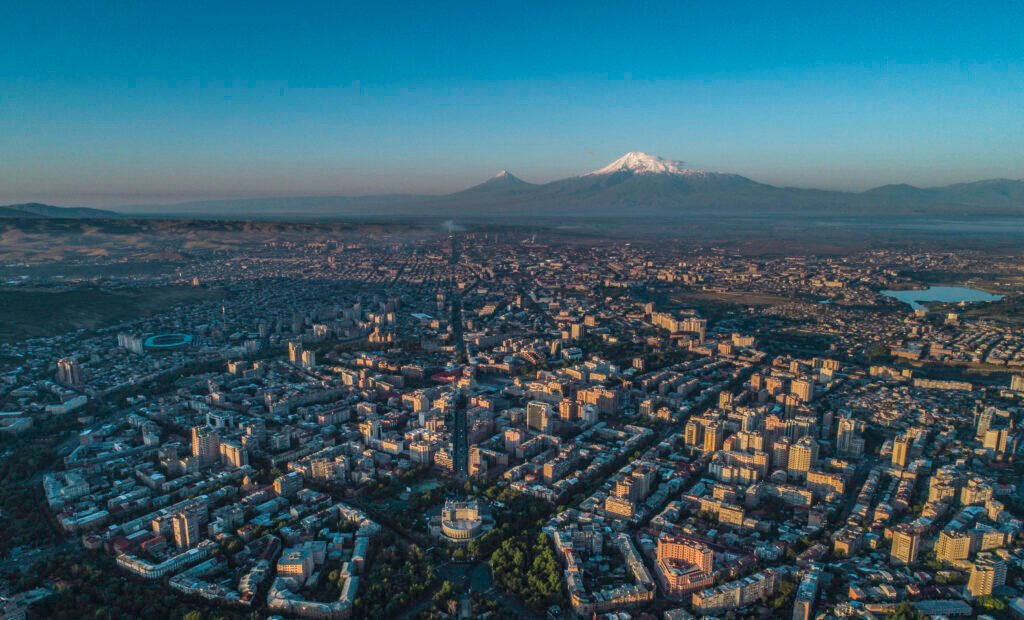
If you landed here searching simply for “Armenia”, these are the basics. Armenia is a small landlocked country in the South Caucasus, roughly 29,800 square kilometres, about the size of Belgium. Its population is around three million, and around a third of people live in the capital, Yerevan. Neighbours are Georgia to the north, Azerbaijan to the east, Iran to the south and Turkey to the west. Only the Georgian and Iranian borders are open to tourists.
- Capital: Yerevan, at roughly 1,000 metres above sea level.
- Language: Armenian, with its own alphabet created in the early fifth century. Russian is widely understood, and English is common in Yerevan’s cafes and hotels.
- Currency: the Armenian dram (AMD). Cards are accepted in Yerevan and larger towns; carry cash for villages and marshrutkas.
- Terrain: a high plateau with an average altitude of around 1,800 metres. The highest point is Mount Aragats at about 4,090 metres. Lake Sevan sits near 1,900 metres.
- Administrative divisions: ten provinces plus Yerevan. Visitors mostly think in regions: Ararat Valley and Yerevan, Vayots Dzor (wine), Syunik (south, Tatev), Lake Sevan, Tavush and Lori (north, forests and canyons), Shirak (Gyumri).
- Religion and history: one of the first states to adopt Christianity as an official religion, traditionally dated to 301. That is why so many monasteries are centuries old.
For entry rules, citizens of many countries, including the EU, UK and US, can currently visit for short stays without a visa, but rules change, so check the official Armenian foreign ministry or e-visa portal before booking. Our visa and entry guide keeps the details.
Why travellers say Armenia is worth the trip
Monasteries in landscapes, not behind ticket queues
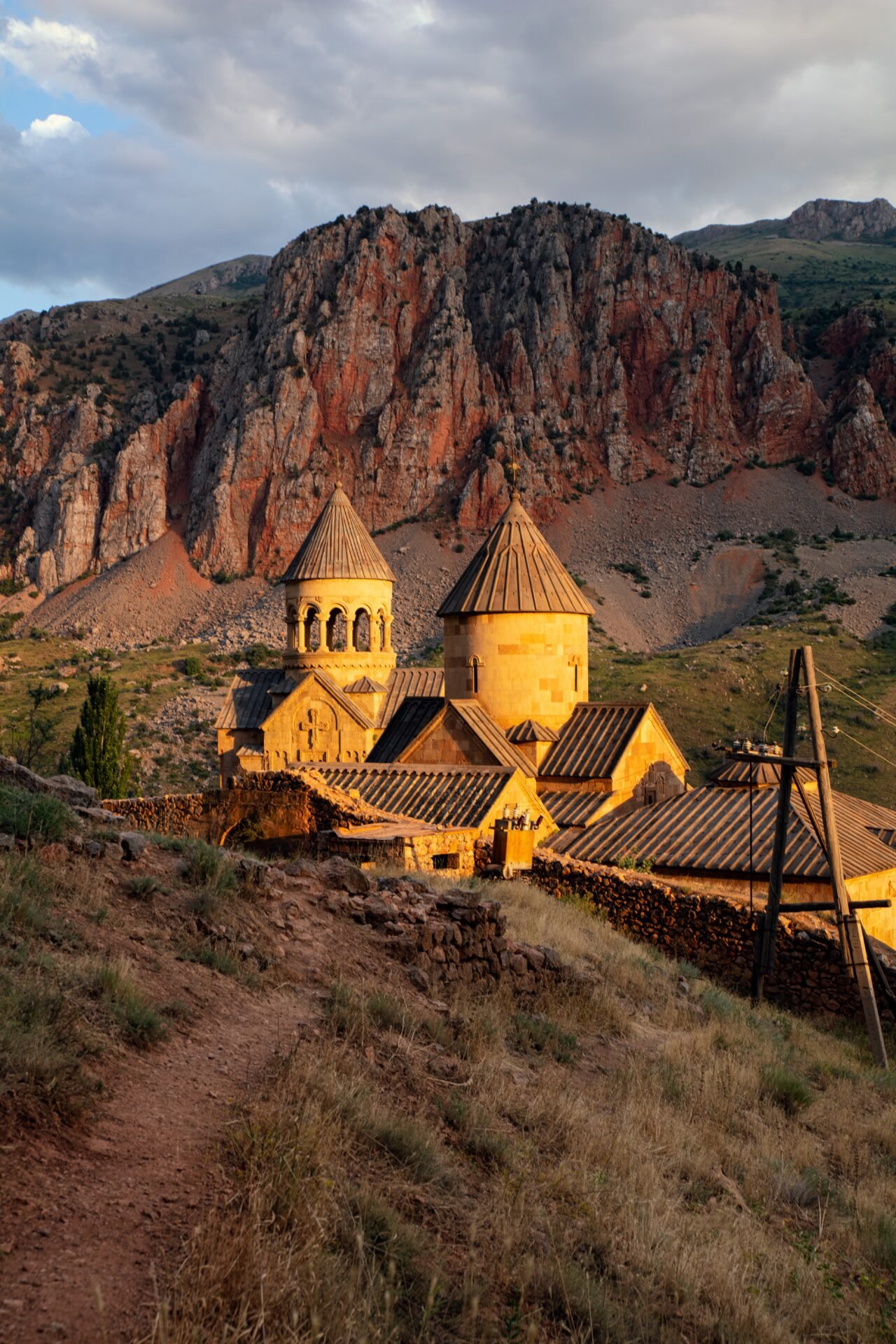
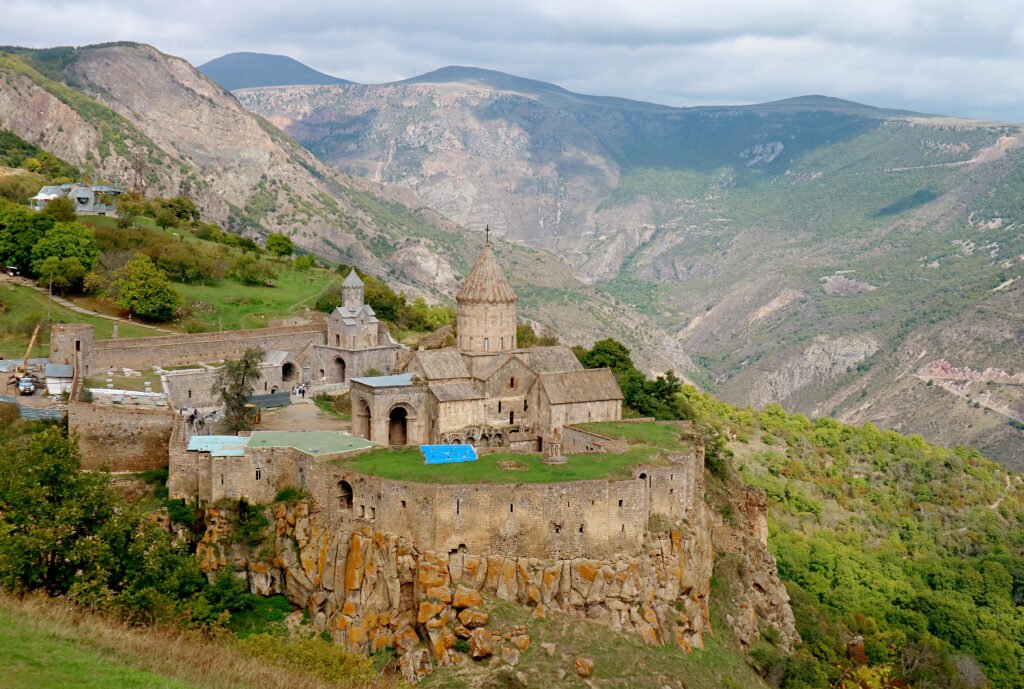
Khor Virap with Mount Ararat behind it, Noravank in its red cliff canyon, Tatev above the Vorotan gorge, Geghard carved into rock. Many of these sites are quiet enough that you can sit inside for ten minutes without a tour group arriving. Travellers on Reddit and TripAdvisor often name the churches as the main reason they would return.
Food and wine that are better than expected
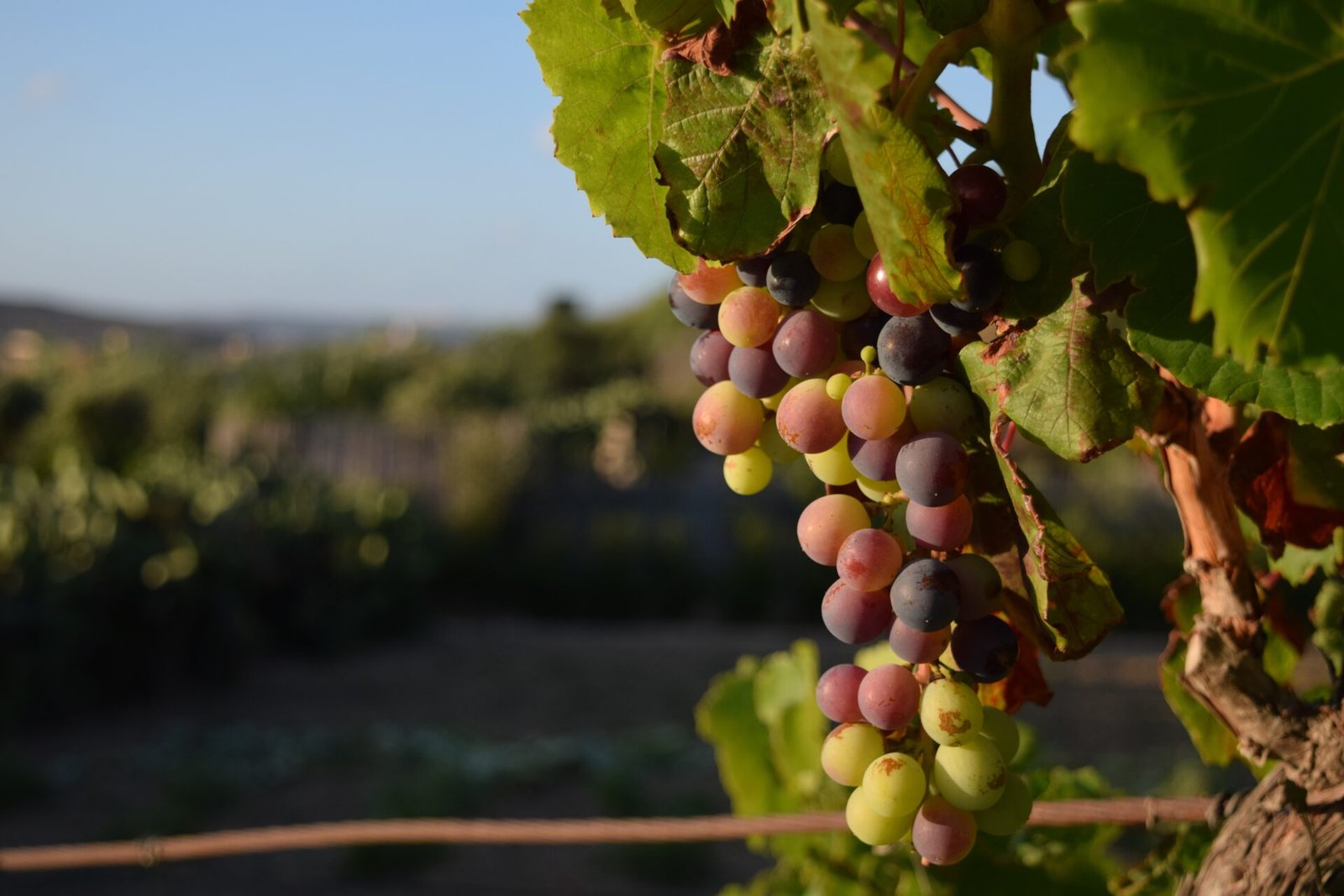
Khorovats (grilled meat), fresh herbs, lavash, dolma, apricots and a wine tradition with some of the oldest evidence of winemaking known. Our posts on Areni wine and wine tasting in Yerevan show how to do it well.
Distances that make sense
From Yerevan you can reach Garni and Geghard in under an hour, Khor Virap in about an hour, and Lake Sevan in about an hour and a half. That makes a base in the capital a real option instead of constant packing.
Hospitality that does not feel staged
Travellers often mention being invited for coffee or offered a taste of something by strangers. It is not universal and you should still use ordinary judgement, but it is a recurring theme in visitor reports.
Who will love Armenia, and who should skip it
You will probably love it if you like history and architecture, hiking without crowds, wine and food, or you are a solo traveller who values a country that is easy to base yourself in. It also suits second-time visitors to the Caucasus who already know Georgia.
You may want to skip it if your idea of a holiday is a beach, a spa resort or a large nightlife scene. Armenia has Lake Sevan for swimming in summer, but it is a high-altitude lake, not the sea. Also skip it if you dislike long drives on winding roads, or you need everything run on tight, predictable schedules.
What disappoints travellers
- Public transport outside Yerevan. Marshrutkas run on demand rather than to a printed timetable, and reaching remote monasteries without a car or driver can take planning. See our getting around Armenia guide.
- Soviet-era architecture and traffic. Yerevan has beautiful pink-tuff buildings, but also grey blocks, heavy traffic and summer heat. Some visitors expect a more picturesque capital.
- Limited coastline and winter variation. No sea, and winter can be cold and snowy at altitude. Roads in the south can be affected.
- Short stays feel rushed. Two days is too little; people who try to cover everything in four days usually spend most of it in a car.
- Tourist infrastructure is uneven. Signage, opening hours and restaurant standards vary outside the main route. Trips are rewarding but occasionally untidy.
Armenia or Georgia, and what about Turkey?
This comparison comes up constantly in forum threads. Georgia is more developed for tourism, has the Black Sea coast and bigger mountain-trekking areas such as Svaneti. Armenia is smaller, quieter and more compact, with stronger concentrations of ancient churches and a clear wine story. For many visitors the best answer is to do both: our Yerevan to Tbilisi transport guide shows how.
Some travellers arrive expecting an experience similar to Turkey because of geography. In practice Armenia has its own language, alphabet, cuisine and church tradition, and the land border with Turkey is closed to normal tourist crossing. Treat Armenia on its own terms rather than as part of another itinerary.
How much does Armenia cost, and is it easy to travel?
Armenia is generally cheaper than Western Europe for meals, local taxis, guesthouses and mid-range hotels. Flights, car hire and imported goods are not especially cheap, and prices in central Yerevan and the summer season are higher. Check the latest numbers in our budget guide before you finalise a plan; we deliberately avoid quoting a single figure here because exchange rates and seasons move.
Ease of travel is good for a first visit: Yerevan has a metro, and taxi apps work well. Outside the capital the easiest options are a driver, a small-group tour or a hire car. Our guide on guided tour or DIY explains the trade-offs honestly.
How long should you stay, and when should you go?
Five to seven days covers Yerevan, Garni and Geghard, Khor Virap, Lake Sevan, and one longer trip south toward Tatev. Ten days adds Dilijan, the Vayots Dzor wine region and hiking. The best weather is generally late spring and early autumn; summer is hot in Yerevan, and winter suits skiers and people who want empty monasteries. See our 7-day itinerary or the step-by-step planning guide.
Is Armenia safe?
Day-to-day street safety is generally good, including for solo travellers, and violent crime against visitors is uncommon. The main practical risks are traffic, taxi overcharging and some tourist-facing scams. Land borders with Turkey and Azerbaijan are closed to tourists, and some border areas are best avoided. Read your government’s travel advice shortly before departure; the situation can change. We cover details in our safety guide.
If you want the sights without the logistics, our small-group and private tours cover the highlights with a local guide and driver. Have a look at our Armenia tours and tell us what you want to see.
Frequently asked questions
Is Armenia worth visiting for a first-time traveller?
Yes, if you enjoy history, mountain scenery, food and wine. The country is compact, so one week covers Yerevan, Garni, Geghard, Khor Virap, Lake Sevan and a southern monastery. It is less suited to travellers who mainly want beaches, resorts or nightlife on a large scale.
How many days do you need in Armenia?
Five to seven days is enough for the main sights from a base in Yerevan, and ten days lets you add Dilijan, the south and some hiking. Four days works for a short break if you stay around Yerevan and pick day trips carefully.
Is Armenia better than Georgia?
Neither is better; they suit different tastes. Armenia is quieter, more mountainous and stronger on ancient monasteries and wine history. Georgia has the Black Sea coast, more developed tourism and a larger hiking scene in the Caucasus. Many travellers combine both in one trip.
Is Armenia expensive for tourists?
Not by Western European standards. Food, local transport and mid-range hotels cost noticeably less than in most of Europe, while imported goods, car hire and flights are not especially cheap. Prices rise in the high season and in central Yerevan, so check current rates before you go.
Is Armenia safe to visit in 2026?
Day-to-day street safety is generally good, including for solo travellers. The land borders with Turkey and Azerbaijan are closed to tourists, and some border areas are best avoided. Read your government's travel advice shortly before departure, because the situation can change.