
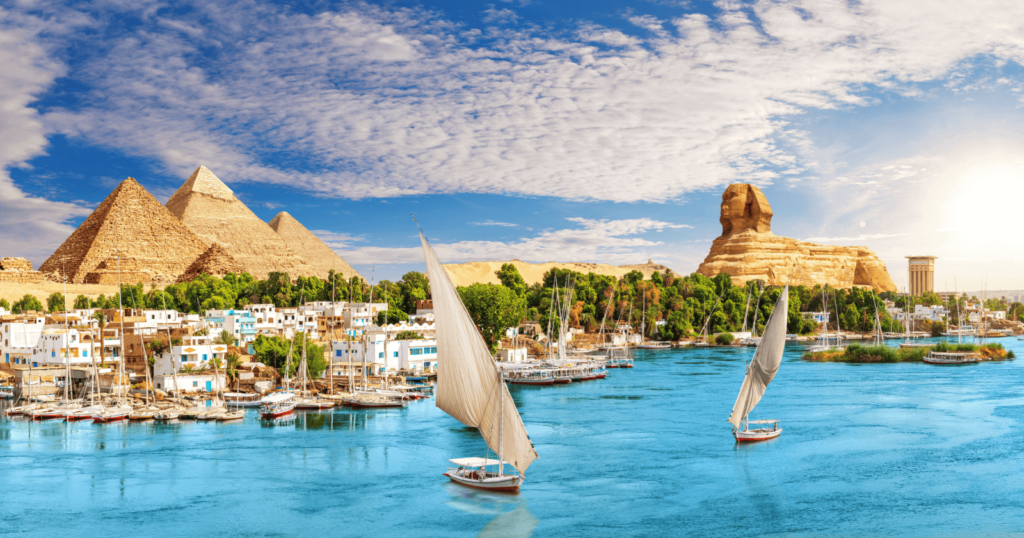
Egypt is a top tourist destination globally, famous for its rich history and iconic attractions like the Pyramids of Giza and the Great Sphinx. However, amid the crowds and popular sites, there are hidden gems waiting to be explored. Here are five lesser-known but captivating places in Egypt that shouldn’t be missed:
The Catacombs of Kom Al-Shoqafa, Alexandria:
The Catacombs of Kom Al-Shoqafa is an ancient underground cemetery in Alexandria, Egypt, dating back to the second century AD. It is the largest Roman burial site in Egypt and showcases a blend of Pharaonic and Greek architectural styles. Discovered accidentally in 1900, it features chambers, a banquet room with sculptures, sarcophagi, and religious symbols.
Cleopatra’s Baths, Marsa Matrouh:
Cleopatra’s Baths in Marsa Matrouh is a historic site where Queen Cleopatra is believed to have bathed during her honeymoon with Marc Antony. The natural pool of warm, fresh water in a cave is a result of unique water movements, making it a special attraction. The site, surrounded by pine trees and a stunning crater lake, offers a picturesque landscape worth exploring.
The City of the Dead:
Zawiyyet al-Mayyiteen, also known as the City of the Dead, is a vast cemetery in Egypt that includes Muslim and Christian burial sites. Some tombs here date back to the seventh century, featuring ornate designs resembling small houses with gardens. Today, it’s also a residential area for around half a million people, known for its quiet, atmospheric streets, particularly beautiful at sunrise and sunset.
The Sannur Cave, Bani Sueif:
The Sannur Cave is a unique natural wonder with ancient limestone formations, discovered in the 1980s during quarry operations. These 60-million-year-old rock formations create a mesmerizing sight, resembling scenes from a fairytale with stalactites and stalagmites. The caves, around 700 meters long, are a rare example of karst caves in the region and are protected by the government since 1992.
Elephantine Island:
Elephantine Island, located in Aswan, is a peaceful retreat from the bustling tourist areas. Its name originates from its historical significance in the ivory trade. Throughout history, it served as a strategic trade and military port, and a cult center for the god Khnum. Today, it’s a paradise for visitors, offering temples, gardens, museums, and ancient forts to explore.
 English
  Հայերեն